
Your employees clock out
at 5 on the dot?
I know why they do it.
And I can help you change that. Structured systems to build stable, productive and genuinely motivated teams.
Motivation cannot be bought.
It is built.
Bonuses, perks and one-off rewards generate temporary enthusiasm. Then they fade. Real motivation | the kind that drives consistent results, reduces turnover and makes a team actually work | comes from precise organisational conditions: role clarity, a sense of contribution, trust in management.
I work with companies to build these conditions. Not through team-building workshops or motivational speeches, but through structured interventions that act on the real factors driving employee motivation.
Let’s talk| Gallup Global Workplace Report
| Gallup
| Gallup
| SHRM
consigliata
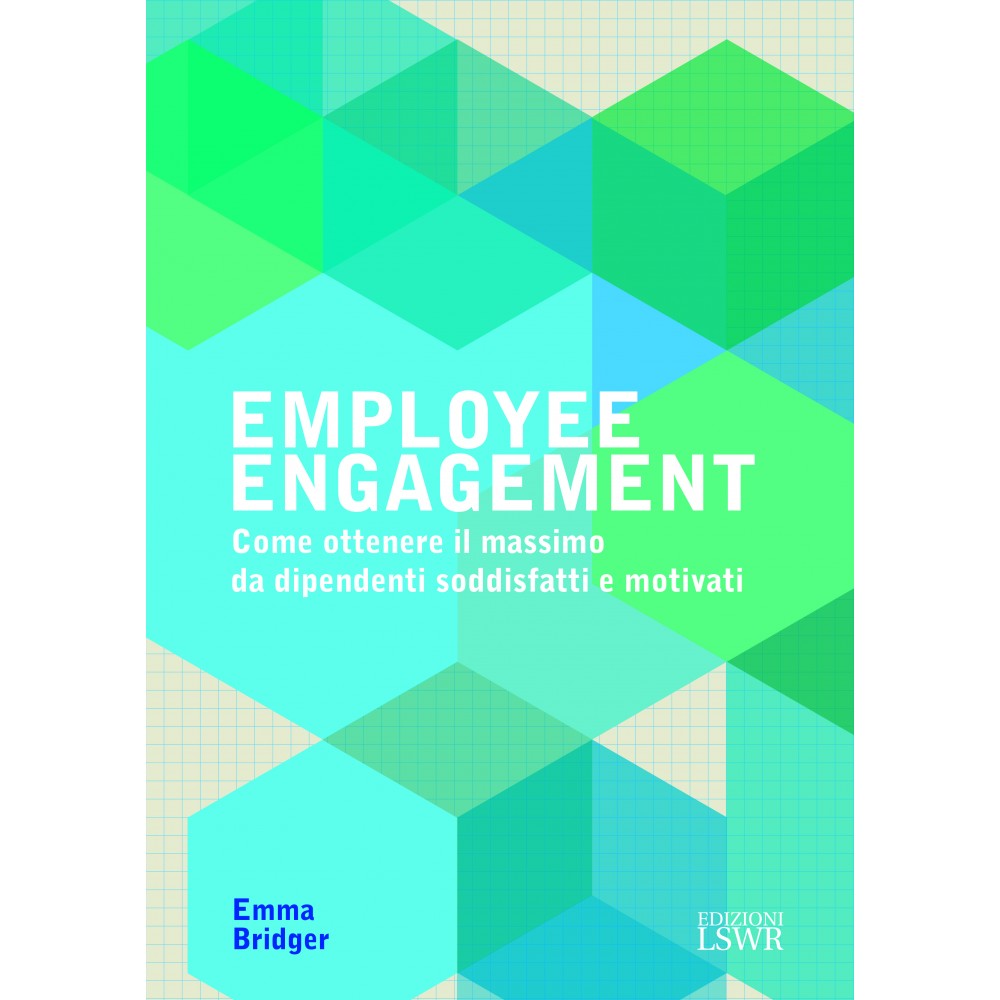
Employee Engagement
A practical and comprehensive guide to understanding, measuring and building employee engagement. With psychological models, diagnostic tools and real case studies | British Gas, Capital One, Asda, the UK Ministry of Justice | the book offers a structured path for any organisation. Emma Bridger is an award-winning employee engagement specialist and Director of People Lab, a consultancy with clients worldwide. She contributed to the UK Government Review Engaging for Success and is a member of its “guru group”.
The key themes of motivation
Defining and measuring motivation
Bridger clarifies what employee motivation really means | distinguishing it from general satisfaction. Motivation is a positive psychological state tied to work, characterised by vigour, dedication and absorption. Without a precise definition, any intervention risks hitting the wrong target.
What really drives motivation
The book analyses the organisational factors that drive or inhibit motivation: direct leadership, goal clarity, autonomy, sense of contribution, trust in the company, quality of relationships. Not benefits or salary | but the quality of the daily work experience.
Psychological and organisational frameworks
Bridger presents the main theoretical models | from Kahn’s model to Gallup’s research and the Engage for Success framework | explaining how they apply in real contexts. Theoretical rigour is the foundation of any effective practical strategy.
How to measure motivation levels
Diagnostic tools, surveys, focus groups and quantitative indicators to understand where the organisation actually stands. Without measurement there is no starting point. The book guides the selection of tools best suited to the company’s size and culture.
Building a motivation plan
How to design a motivation strategy aligned to business objectives: setting priorities, involving management, communicating internally, managing change. Bridger provides ready-to-use templates and practical tools to kick off the process.
How leading organisations did it
Detailed analysis of real interventions at British Gas, Capital One, Asda, the UK Ministry of Justice, Mace and RSA. Each case shows the challenges faced, solutions adopted and measurable results achieved | making it a concrete reference, not just a theoretical one.
How motivated
is your team?
Most managers overestimate their team’s motivation level. The questionnaire helps you understand where you really stand | and what to address first.
10 questions. 5 minutes. A clear picture of the situation.
- Assess the real factors driving your team’s motivation
- Identify the critical areas to address as a priority
- Get an immediate result | no waiting, no obligation
- Based on Bridger’s models and Gallup’s research on employee motivation
Employee motivation: answers to the most common questions
Want a genuinely
motivated team?
Let’s analyse your company’s situation together and define a concrete path to increase your team’s motivation.
Book a call
rispondo personalmente
I recommend this book to every business owner and HR manager because it brings the conversation about employee engagement back where it belongs: in data, in behaviours, in organisational structures. Not in motivational slides.
In my work with companies I apply exactly this approach: precise diagnosis, identification of real drivers, targeted interventions. Results are measured in reduced turnover, process quality and team stability | not in smiles at meetings.