
1. Introduction
Organizational culture directly impacts productivity, well-being, collaboration and the ability to innovate. Research shows that organizations with a positive culture achieve greater performance and higher engagement rates, with a significant reduction in stress and turnover levels. However, changing corporate culture is complex, especially in SMEs, where entrepreneurial leadership has a decisive impact on the definition of values, practices and behaviors.
Culture is not static. It can evolve through targeted actions, as long as there is will, coherence and a structured approach. It is in this process that the greatest difficulties often emerge.
2. Communication: foundation of organizational culture
Communication is the architecture on which culture is built. Schein (2010) highlights that organizational values do not live in declarations, but in the communication behaviors of management. Open communication allows employees to understand company direction and contribute actively. On the contrary, poor or hierarchical communication promotes conflicts, misunderstandings and inefficiency.
Periodic meetings, listening channels and transparency facilitate relationships of trust, reducing the risk that ordinary problems turn into profound cultural problems.
3. Engagement: involvement as a cultural lever
Engagement is a structural component of culture. According to Schaufeli and Bakker (2004), engaged employees demonstrate dedication, energy and the ability to contribute beyond assigned tasks. Involvement starts already in the selection phase: evaluating personalities, values and relational methods allows us to include people consistent with the desired culture.
Gallup (2023) indicates that teams with high engagement record significantly higher performance. A positive culture is only possible when workers feel part of the organization’s path.
4. Transparency: Building trust and accountability
Transparency is a cornerstone of trust. Rousseau (1995), through the theory of psychological contract, demonstrates that people are committed when they perceive consistency between what is communicated and what is achieved by management. Sharing decisions, results and critical issues strengthens the sense of fairness and involves workers in operational choices.
5. Feedback: continuous system, not annual ritual
The evidence on performance management show that effective feedback is frequent, specific, and developmentally oriented. London (2003) highlights that continuous feedback stimulates learning, empowerment and growth. Companies that adopt a culture of open and constant feedback reduce stress, misunderstandings and drops in performance.
6. Flexibility: a new cultural paradigm
Flexibility is one of the main demands of the labor market today. Autonomy in working methods and times increases well-being, reduces stress and promotes engagement. Hybrid models and technology facilitate more adaptive forms of work. Flexibility is a cultural choice before an organizational one, because it implies trust and responsibility.
7. Resistance to change from owners, CEOs and entrepreneurs
One of the main obstacles to improving culture in SMEs is represented by resistance to change on the part of entrepreneurial leadership.
7.1 Rooting in past models
Many entrepreneurs coming from traditional managerial cultures tend to propose management methods based on control, verticality and centralization. These models, effective in the initial stages of growth, lose effectiveness when the organization increases in complexity.
7.2 Fear of losing control
The move towards open communication, feedback, autonomy and flexibility is often perceived as a loss of power or a weakening of the hierarchical structure. In reality, the evidence shows that empowerment increases responsibility and does not reduce it.
7.3 Emotional overinvestment in the company
Many entrepreneurs interpret culture as an extension of their personal identity. Changing it implies a change in the perception of oneself as a leader, triggering deep psychological resistance.
7.4 Cognitive biases
Owners can fall intoillusion of cultural competence (“our company is already a good place to work”) or inillusion of stability (“we’ve always done it this way”). These biases prevent the adoption of more modern and effective practices.
7.5 Rooted informal structures
SMEs often grow without organizational planning. Processes, roles and responsibilities are consolidated informally. Changing these dynamics requires a major overhaul, which may appear threatening or too burdensome.
Research shows that no culture can change unless leadership changes first.
The resistance of property is therefore the main predictor of the failure of cultural transformation processes.
8. Conclusions
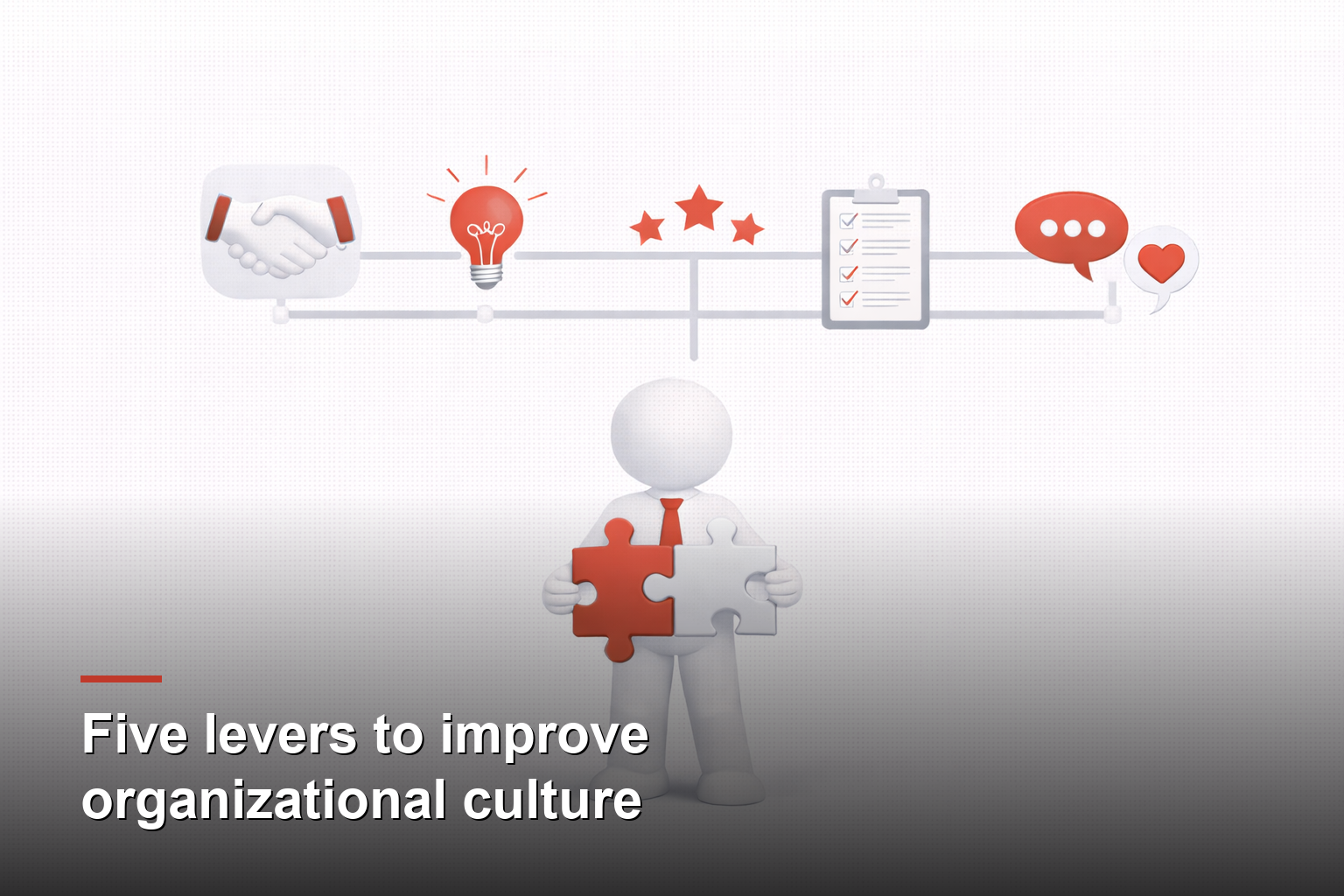
Improving corporate culture requires systemic intervention on communication, engagement, transparency, feedback and flexibility. However, the real turning point is represented by the willingness of owners, CEOs and entrepreneurs to review their mental and managerial models.
A positive culture does not arise from isolated initiatives. It is the result of consistent behavior over time, supported by a leadership willing to evolve. Organizations that manage to combine these elements will be more resilient, competitive and able to attract talent in an increasingly selective job market.
Bibliography
- Gallup. (2023). State of the Global Workplace. Gallup Press.
- London, M. (2003). Job Feedback: Giving, Seeking, and Using Feedback for Performance Improvement. Lawrence Erlbaum.
- Rousseau, D. (1995). Psychological Contracts in Organizations. Sage Publications.
- Schein, E. H. (2010). Organizational Culture and Leadership. Jossey Bass.
- Schaufeli, W., & Bakker, A. (2004). Job demands, job resources and their relationship with burnout and engagement. Journal of Organizational Behavior.
- Kotter, J. P. (1996). Leading Change. Harvard Business School Press.
- Argyris, C. (1990). Overcoming Organizational Defenses. Allyn & Bacon.
Webography
- Gallup – Organizational Culture & Engagement
https://www.gallup.com/workplace - Harvard Business Review – Culture Transformation
https://hbr.org - CIPD – Leadership & Change
https://www.cipd.co.uk - McKinsey – Organizational Transformation
https://www.mckinsey.com - Engage for Success – Culture and Engagement Hub
https://engageforsuccess.org