Chiudi
Alberto Venturini — Il valore delle risorse umane
Menu
Scrivimi
Tutti gli articoli

Il primo passo è
una conversazione.

Raccontami la tua situazione e costruiamo insieme un percorso su misura per la tua azienda o la tua carriera.

Prenota una call

Categoria: English

English articles

  • What is motivation really?

    What is motivation really?

    Engagement · 4-minute read

    1. Introduction

    In modern organisations, the concept of Employee Engagement has become central to understanding competitiveness and the sustainability of work. The literature defines it as a set of psychological states, behaviours and organisational conditions that lead employees to commit themselves voluntarily, with energy, responsibility and a sense of belonging. It is not about ‘being satisfied’, but about feeling like an active part of the value created by the organisation.

    The Macleod Review (2009), a landmark study of the phenomenon, summarises the concept with a very effective definition:
    Employee engagement is about how we create the conditions in which employees offer more of their capability and potential.”


    2. The fundamental components of Employee Engagement

    Research indicates that engagement is the result of alignment between three dimensions:

    • cognitive: understanding of the role, strategy and objectives of the organisation;
    • affective: sense of belonging, trust, perceived integrity;
    • behavioural: energy, proactivity and discretionary contribution to improvement.

    These dimensions emerge only under specific conditions, the result of a genuine relationship between people and the organisation.

    2.1 Trust and organisational integrity

    Trust is the cornerstone of engagement. Employees become engaged when they perceive fairness, consistency and respect. The Psychological Contract (Rousseau, 1995) suggests that people commit themselves when promises, commitments and corporate values are clear and upheld.

    2.2 Communication and reciprocity

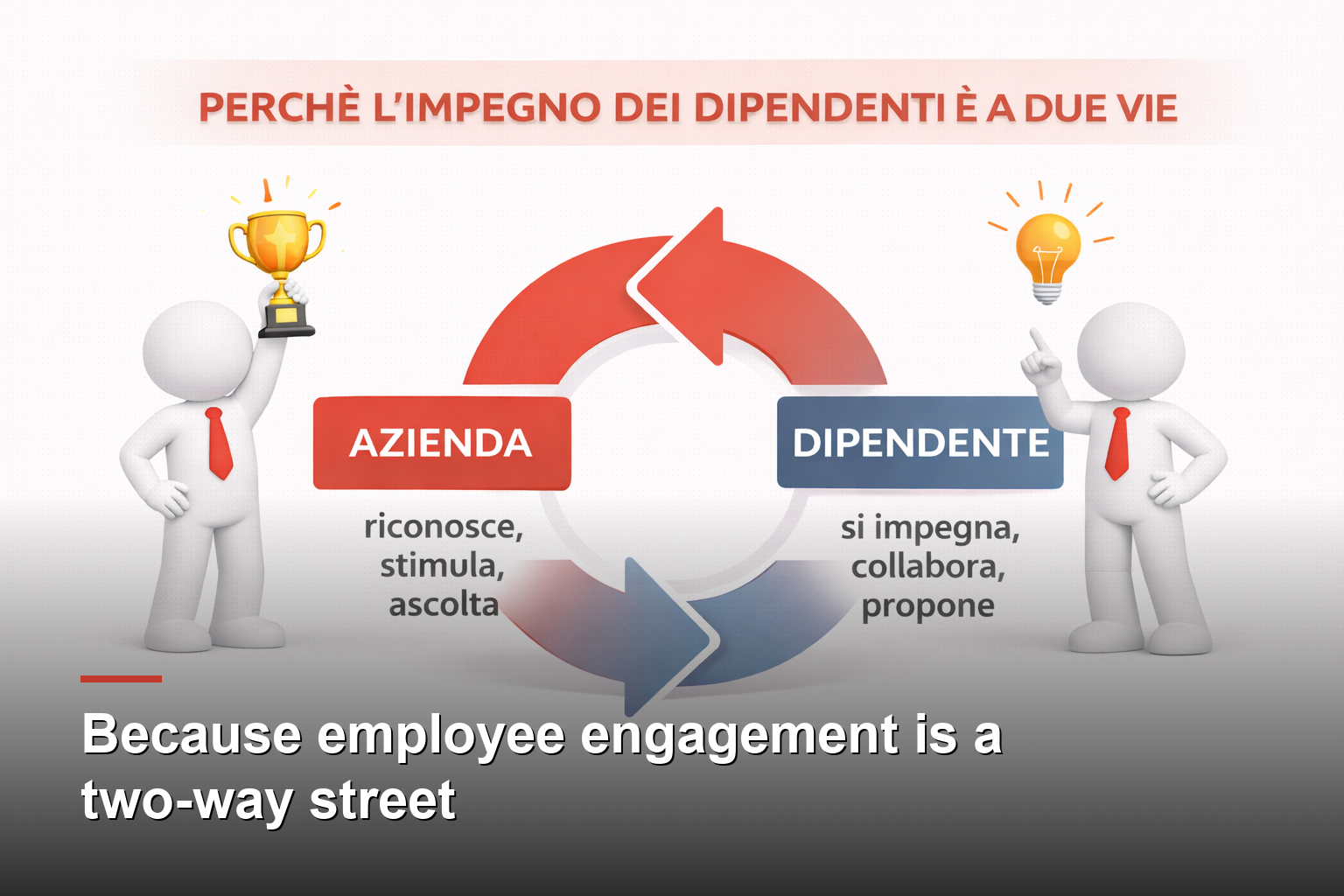
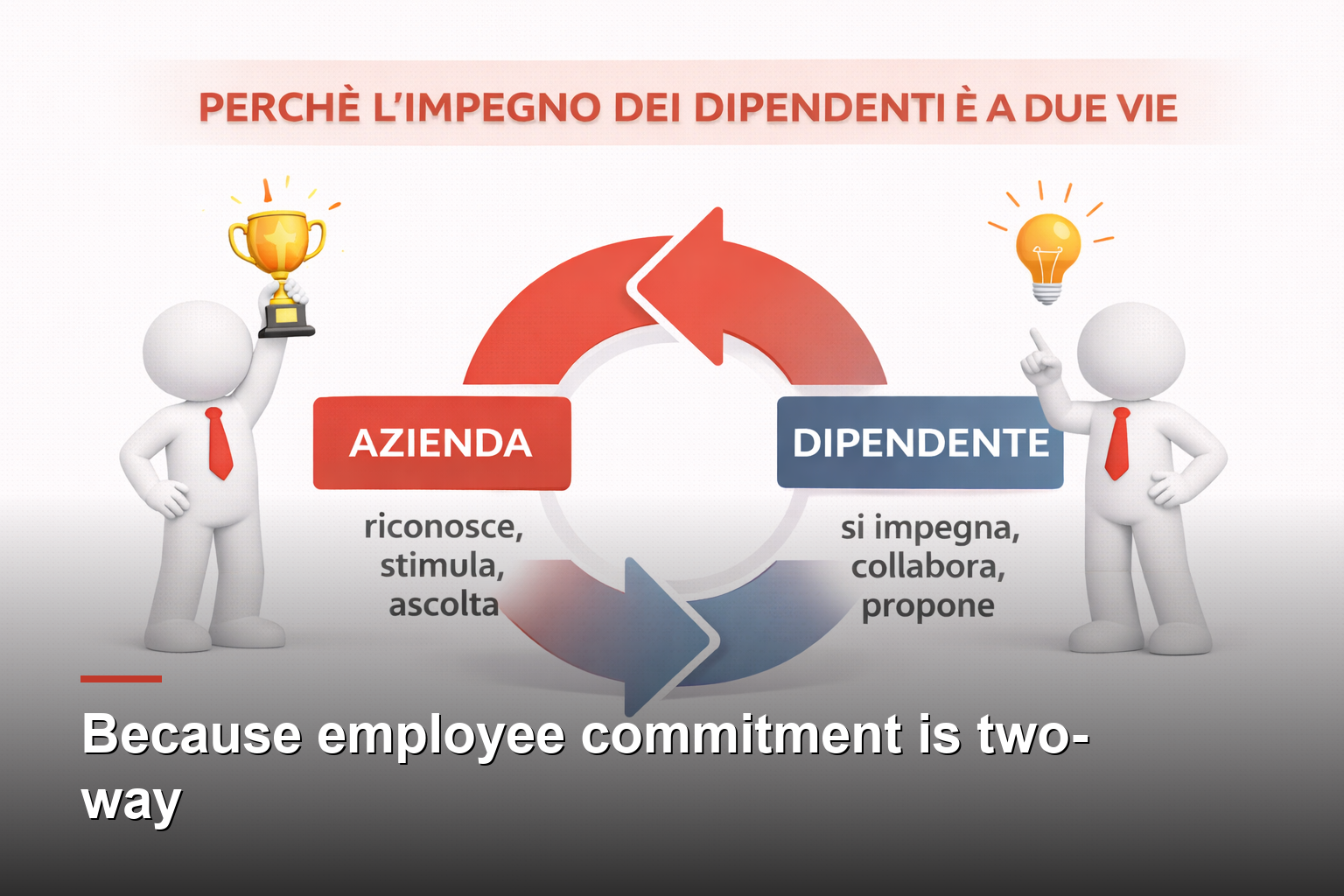
    Engagement is a ‘two-way’ process: you cannot ask for commitment without creating stable channels for listening, dialogue and participation. Organisations that foster engagement are those that involve employees in discussions about processes, priorities and changes, offering real opportunities to contribute ideas and opinions.

    2.3 Empowerment and role clarity

    Engagement requires a clear understanding of the company’s purpose and one’s own contribution. Engaged people know how the company intends to achieve its goals and how their role fits into this trajectory.


    3. The employee’s and employer’s perspective

    3.1 For the employee

    An engaged employee approaches their daily work with energy, proactivity and a sense of direction. They join the company knowing what is expected of them, feeling valued, supported in their development and connected to a purpose.

    3.2 For the employer

    For the company, engagement manifests itself as:

    • increased productivity;
    • better customer focus;
    • a reduction in absenteeism, accidents, conflicts and staff turnover;
    • greater innovation and voluntary contribution;
    • greater competitive strength.

    Employees’ ideas, experience and commitment become a strategic resource that is difficult to replicate.


    4. What Employee Engagement is NOT

    Engagement is not emotional manipulation, nor is it a mechanical attempt to elicit greater effort through slogans, superficial rewards or token initiatives. Studies show that employees quickly recognise such practices and react with cynicism and disaffection.

    Engagement is not created through tools, posters or motivational meetings.
    It is built through everyday behaviour, governance, consistency and well-designed systems.


    5. Why Employee Engagement is crucial today

    The contemporary socio-economic context presents new challenges:

    • an ageing Italian population;
    • a shrinking workforce;
    • global competition based on skills;
    • rising levels of education and workers’ expectations;
    • growth in innovation, fuelled by complex human ideas and contributions.

    Organisations that neglect engagement risk losing their best talent, failing to attract new talent and slowing down their ability to adapt.


    6. Employee Engagement: a competitive factor

    Evidence from Gallup, CIPD, Harvard Business Review and various meta-analyses confirms that high levels of engagement generate:

    • +21 per cent in productivity
    • +10 per cent in customer satisfaction
    • -41 per cent in absenteeism
    • -59 per cent in involuntary turnover

    Engagement therefore proves to be a robust predictor of business performance, with effects on innovation, service quality and resilience in turbulent markets.

    Engagement-focused organisations build fairer, more participatory and accountable working systems. They do not ‘motivate’, but empower.


    References

    • MacLeod, D., & Clarke, N. (2009). Engaging for Success: Enhancing Performance Through Employee Engagement. UK Government Report.
    • Kahn, W. A. (1990). Psychological Conditions of Personal Engagement and Disengagement at Work. Academy of Management Journal.
    • Gallup (2023). State of the Global Workplace Report. Gallup Press.
    • Rousseau, D. (1995). Psychological Contracts in Organizations: Understanding Written and Unwritten Agreements. Sage Publications.
    • Saks, A. M. (2006). Antecedents and consequences of employee engagement. Journal of Managerial Psychology.
    • Schaufeli, W. B., & Bakker, A. B. (2004). Job demands, job resources, and their relationship with burnout and engagement. Journal of Organizational Behavior.

    Webography

  • Tips on motivation in the company

    Tips on motivation in the company

    Engagement · 5-minute read

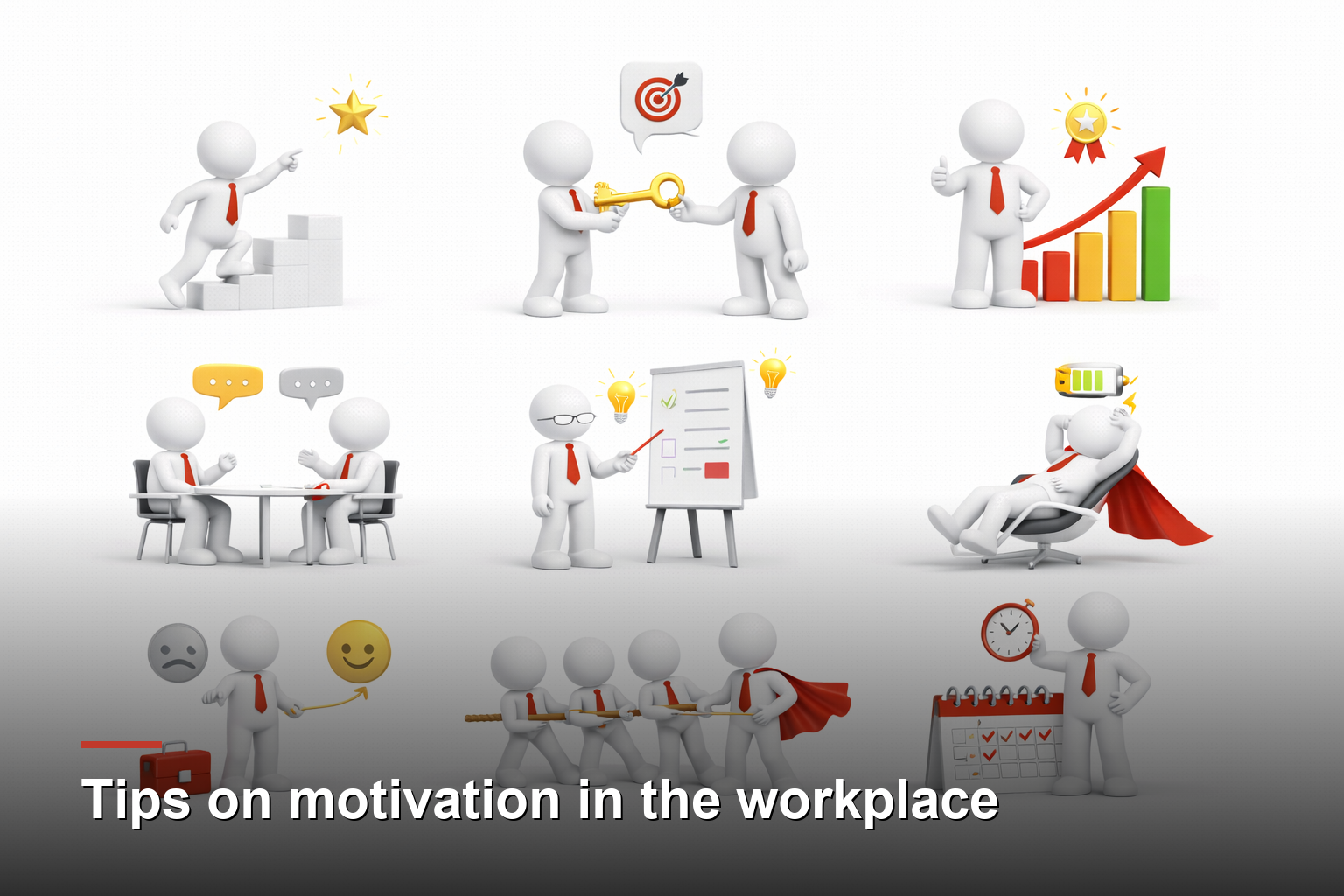
    Tips on motivation in the workplace

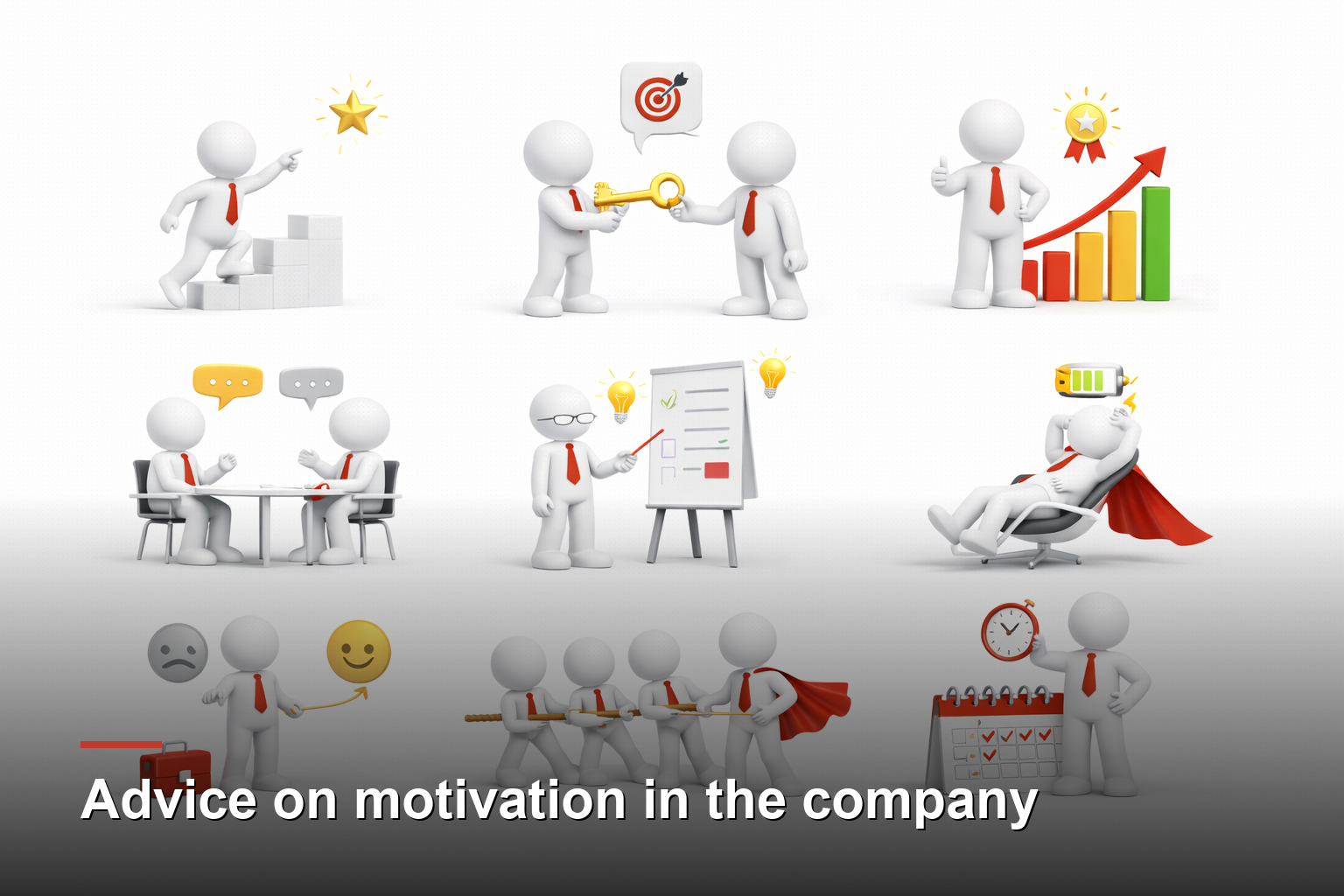
    It sounds simple, and it is! Spending time with employees and getting to know them is an easy and effective way to engage them, and also to get their advice on motivation.

    Getting to know their families, backgrounds and personal goals allows a business owner or manager to build a stronger relationship with them. Find a moment during the day to say hello, ask how their families are, or find out about their hobbies. This is a quick and straightforward practice that can make an employee feel that you care about them as a person, not just as a worker.

    Equip them with the tools for success. As a manager, you need to ensure your employees understand what they are doing. Training within the scope of their specific job descriptions can give them greater confidence in their work. When a team member is unsure of what to do or how to handle a situation, productivity can grind to a halt whilst they try to resolve the issue. If it becomes too overwhelming, there is a chance that a minor hiccup could turn into a much bigger problem. Even if additional coaching or training is required, providing employees with a solid foundation for future tasks is a good step towards increasing their level of engagement.

    Let them know how the company is doing. They are the backbone of the business and, often, its success or failure will depend on them. It is beneficial for them to take an interest in the company, and they should be made aware of its successes, concerns and struggles. Brief employees not only on the company’s successful initiatives, but also on those that haven’t gone so well. This allows your team to understand what works and what doesn’t, giving them the opportunity to develop new ideas for weaker areas and to remain proactive in the sectors where they operate.

    Allow them to grow. You have spoken to them and seen the potential in their ability to help your company grow. The team you have assembled was chosen for a reason. Now, as their manager, you must give them the chance to demonstrate the skills required to carry out the task assigned to them.

    Among the important pieces of advice on motivation is one that seems to be the least understood by companies. Give them the chance to express themselves so they can do their job well. If an employee comes to you with an idea that might not be what you’re looking for, choose to respond in a way that doesn’t discourage them from continuing to try and develop other concepts.

    Offering encouragement and appreciation for their work is important. Many companies have various levels of management, each requiring everyone to report to someone else. One of the key practices for employee engagement, and among the tips on motivation, is supporting employees when they face a difficult situation. Regardless of the type of business, employees will face adversity from customers, other staff, and probably even from you. As a manager, you may be required to step in to rectify a situation and, at times, this may mean choosing sides. This is not always an easy task, but supporting employees is vital within the company.

    Recognise your team’s hard work. A manager who acknowledges hard work and a job well done is a key motivator in developing best practices for employee engagement. To be a successful manager, it is important to understand which form of recognition works best for your staff. Words of encouragement can go a long way in this regard. A “well done” or “thank you” regarding a task might be just what that employee needed to hear to carry on with their work.

    Listen to and act on employee feedback. Listening to what your customers have to say is important, but so is listening to your employees. Holding regular meetings to identify which areas of the workplace need improvement is a key part of motivation within the company. Using a company survey or even a monthly meeting to give your staff a voice is essential to making them feel part of the company. If there is a situation within the company that goes unnoticed or unacknowledged by management, it sends a negative message to your staff. If they know that management cares and listens to their concerns, they will continue to maintain a high level of commitment rather than becoming discouraged and disengaged.

    Create a fear-free workplace. So many companies tend to operate in a performance-based environment. This kind of atmosphere is a breeding ground for fear and uncertainty, making it particularly difficult, if not impossible, to maintain consistent employee engagement.

    Allow employees to make decisions without having to run everything up the chain of command: autonomy. These environments lacking operational autonomy can also lead to a fear of constant reprimand, and motivation plummets. Running a business where employees are punished for mistakes is the wrong approach!!!

    Motivate, inspire and train employees. Not only should your employees understand the scope of their work, but as their manager, you should too. Creating a positive working environment starts with happy employees, but it doesn’t stop there. The tone is set by management right from the start, and a good way to set a positive tone is to be more than just their boss: be the best coach they could have. If you see an employee struggling with a task, approach them to see if you can help in any way. Let them show you just how well they can perform. For employees to feel passionate about their work and strive for the best results, they need to know that the company has faith in them.

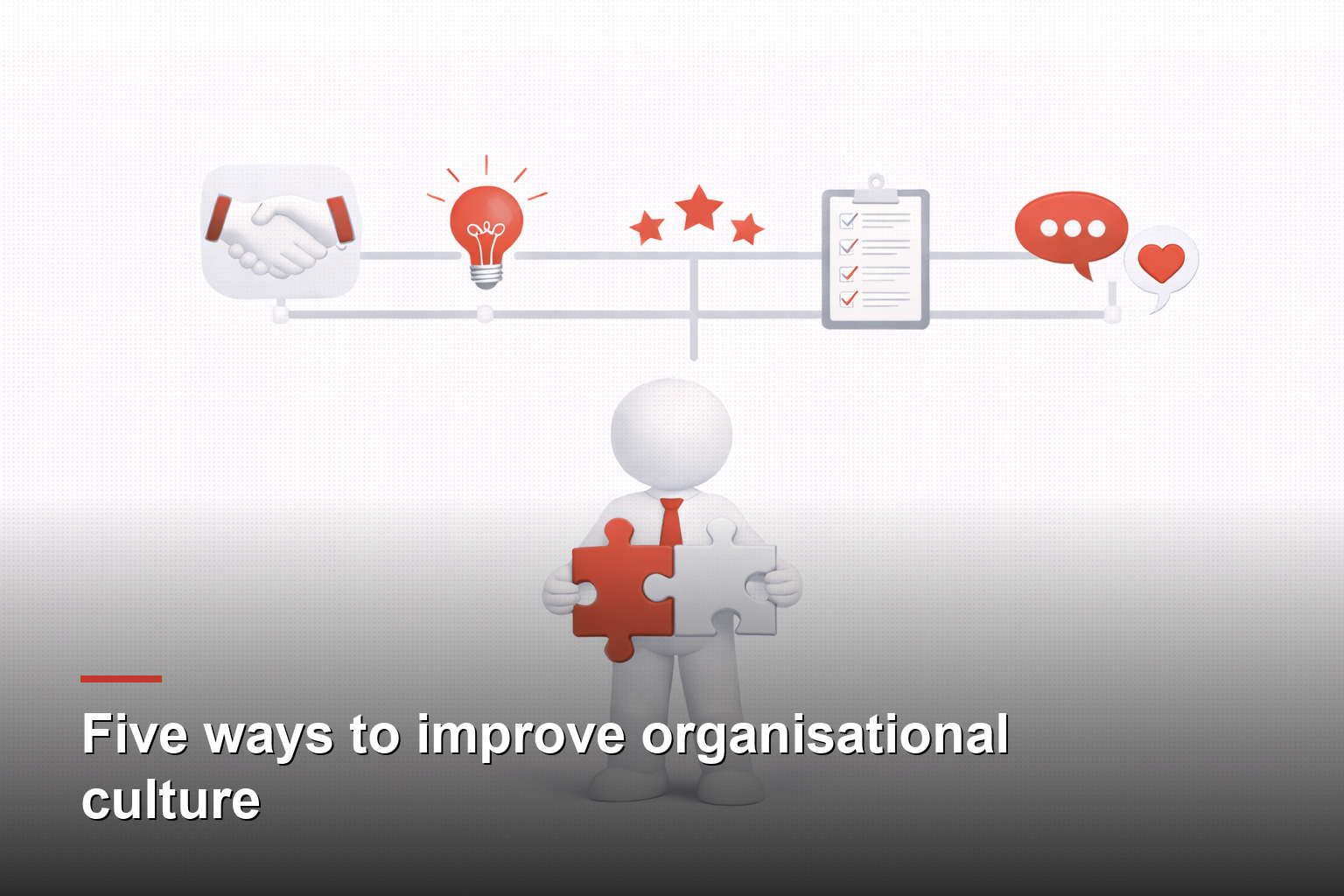
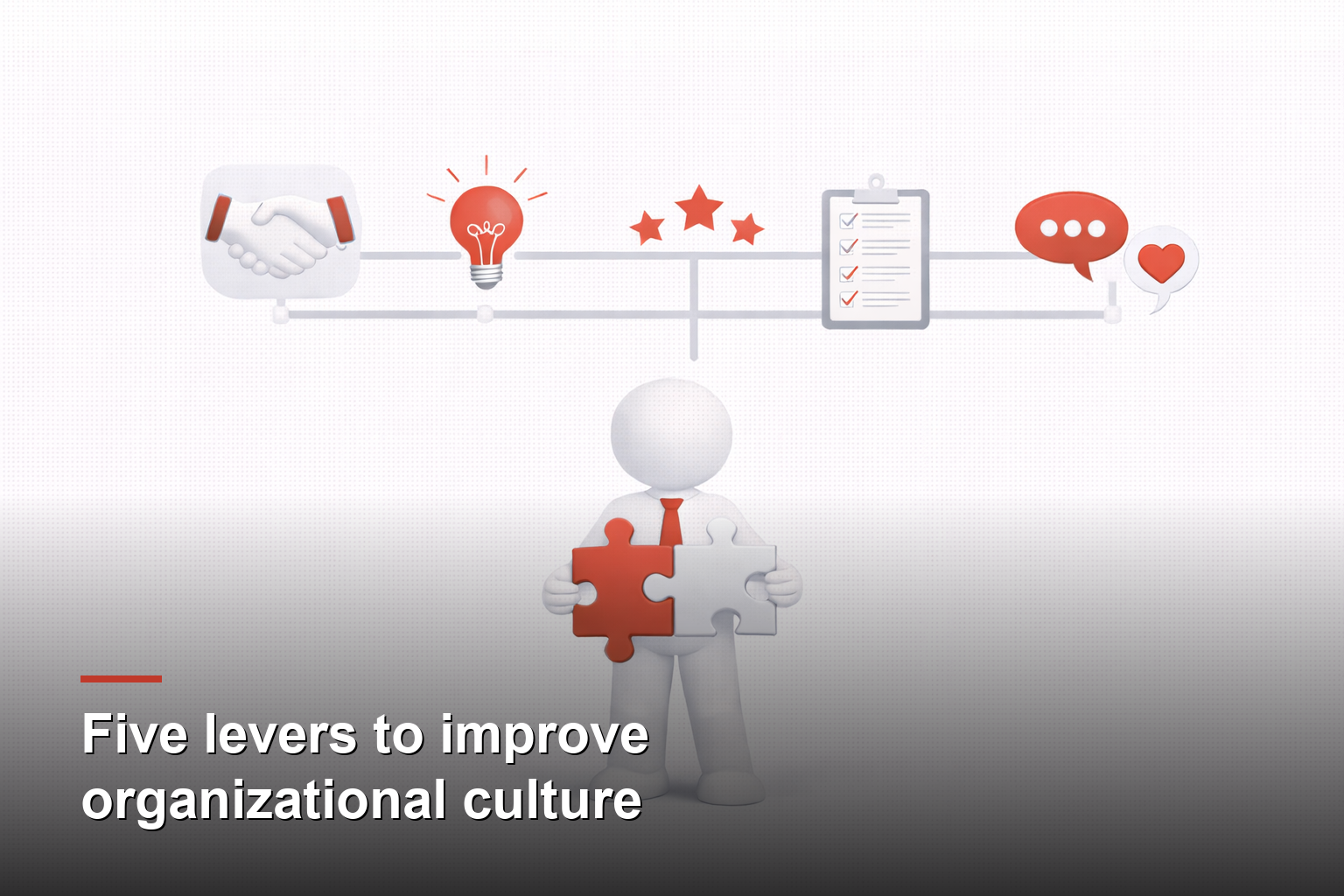
  • Five levers to improve organisational culture

    Engagement · 4-minute read

    1. Introduction

    Organisational culture has a direct impact on productivity, well-being, collaboration and the ability to innovate. Research shows that organisations with a positive culture achieve better performance and higher engagement rates, with a significant reduction in stress levels and staff turnover. However, changing corporate culture is complex, especially in SMEs, where leadership plays a decisive role in defining values, practices and behaviours.

    Culture is not static. It can evolve through targeted actions, provided there is the will, consistency and a structured approach. It is in this process that the greatest difficulties often arise.


    2. Communication: the foundation of organisational culture

    Communication is the framework upon which culture is built. Schein (2010) highlights that organisational values do not reside in statements, but in the communicative behaviours of management. Open communication allows employees to understand the company’s direction and to contribute actively. Conversely, poor or top-down communication fosters conflict, misunderstandings and inefficiency.

    Regular meetings, channels for listening and transparency foster relationships of trust, reducing the risk that ordinary problems turn into deep-seated cultural issues.


    3. Engagement: involvement as a cultural lever

    Engagement is a structural component of culture. According to Schaufeli and Bakker (2004), engaged employees demonstrate dedication, energy and the ability to contribute beyond their assigned tasks. Engagement begins as early as the recruitment stage: assessing personality, values and interpersonal skills allows for the recruitment of people who align with the desired culture.

    Gallup (2023) indicates that teams with high engagement levels perform significantly better. A positive culture is only possible when employees feel they are part of the organisation’s journey.


    4. Transparency: building trust and accountability

    Transparency is a cornerstone of trust. Rousseau (1995), through his theory of the psychological contract, demonstrates that people commit themselves when they perceive consistency between what is communicated and what is actually achieved by management. Sharing decisions, results and critical issues reinforces a sense of fairness and involves employees in operational choices.


    5. Feedback: a continuous process, not an annual ritual

    Evidence on performance management shows that effective feedback is frequent, specific and development-oriented. London (2003) emphasises that continuous feedback stimulates learning, accountability and growth. Companies that adopt a culture of open and constant feedback reduce stress, misunderstandings and drops in performance.


    6. Flexibility: a new cultural paradigm

    Flexibility is now one of the labour market’s key demands. Autonomy in working methods and hours increases well-being, reduces stress and fosters engagement. Hybrid models and technology facilitate more adaptable ways of working. Flexibility is a cultural choice rather than an organisational one, because it implies trust and empowerment.


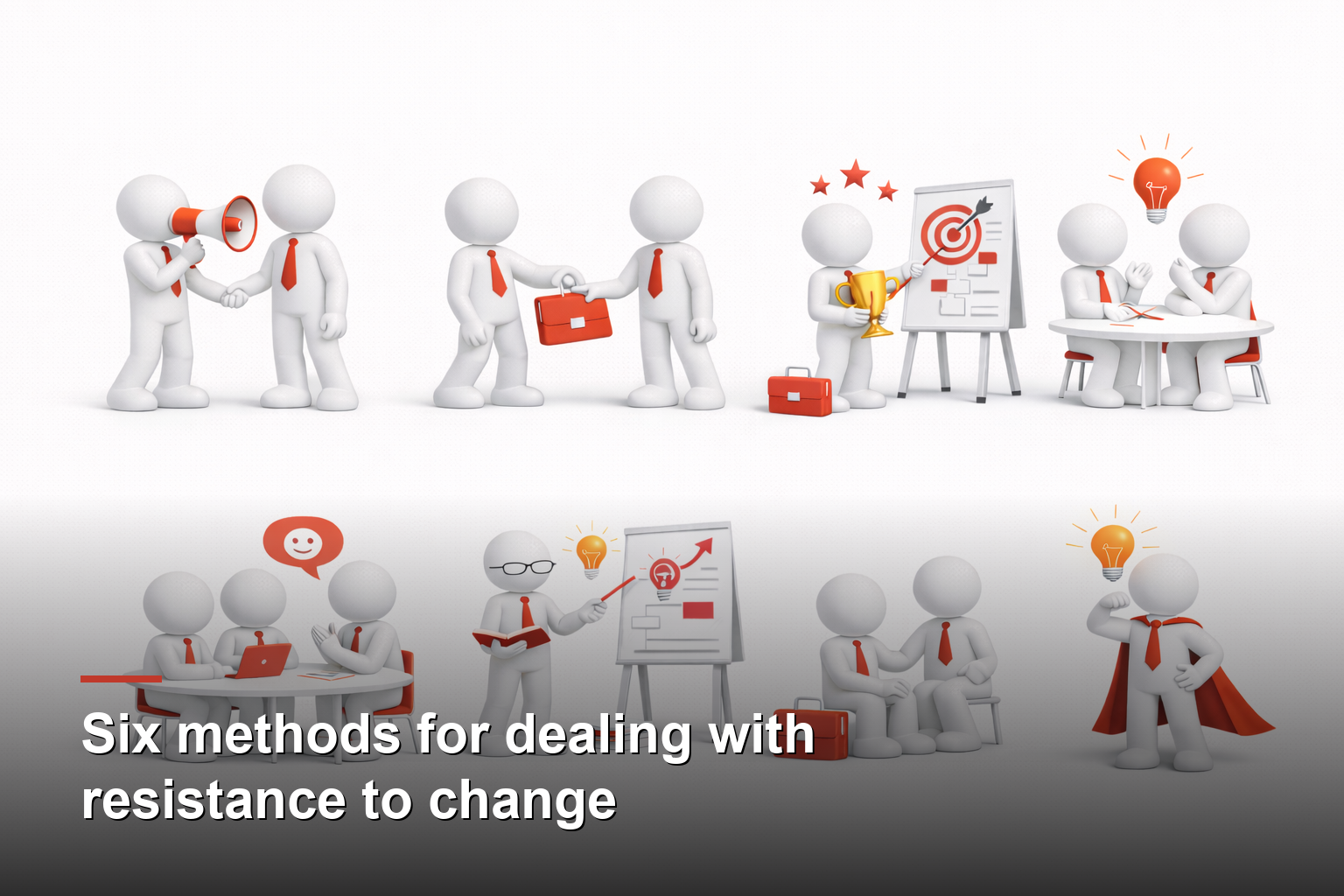
    7. Resistance to change among owners, CEOs and entrepreneurs

    One of the main obstacles to improving culture in SMEs is resistance to change on the part of business leadership.

    7.1 Entrenchment in past models

    Many entrepreneurs from traditional managerial backgrounds tend to replicate management styles based on control, verticality and centralisation. These models, effective in the early stages of growth, lose their effectiveness as the organisation becomes more complex.

    7.2 Fear of losing control

    The shift towards open communication, feedback, autonomy and flexibility is often perceived as a loss of power or a weakening of the hierarchical structure. In reality, evidence shows that empowerment increases accountability rather than reducing it.

    7.3 Emotional over-investment in the company

    Many entrepreneurs view the culture as an extension of their own personal identity. Changing it implies a shift in their perception of themselves as leaders, triggering deep psychological resistance.

    7.4 Cognitive biases

    Owners may fall into the illusion of cultural competence (“our company is already a great place to work”) or the illusion of stability (“we’ve always done it this way”). These biases prevent the adoption of more modern and effective practices.

    7.5 Deep-rooted informal structures

    SMEs often grow without any organisational planning. Processes, roles and responsibilities become established informally. Changing these dynamics requires a thorough overhaul, which may seem threatening or too burdensome.

    Research shows that no culture can change unless leadership changes first.

    Resistance from ownership is therefore the main predictor of the failure of cultural transformation processes.


    8. Conclusions

    Improving corporate culture requires a systemic approach to communication, engagement, transparency, feedback and flexibility. However, the real turning point lies in the willingness of owners, CEOs and entrepreneurs to review their own mental and managerial models.

    A positive culture does not arise from isolated initiatives. It is the result of consistent behaviour over time, supported by leadership willing to evolve. Organisations that succeed in combining these elements will be more resilient, competitive and capable of attracting talent in an increasingly selective labour market.


    Bibliography

    • Gallup. (2023). State of the Global Workplace. Gallup Press.
    • London, M. (2003). Job Feedback: Giving, Seeking, and Using Feedback for Performance Improvement. Lawrence Erlbaum.
    • Rousseau, D. (1995). Psychological Contracts in Organizations. Sage Publications.
    • Schein, E. H. (2010). Organizational Culture and Leadership. Jossey-Bass.
    • Schaufeli, W., & Bakker, A. (2004). Job demands, job resources and their relationship with burnout and engagement. Journal of Organizational Behaviour.
    • Kotter, J. P. (1996). Leading Change. Harvard Business School Press.
    • Argyris, C. (1990). Overcoming Organizational Defenses. Allyn & Bacon.

    Webography

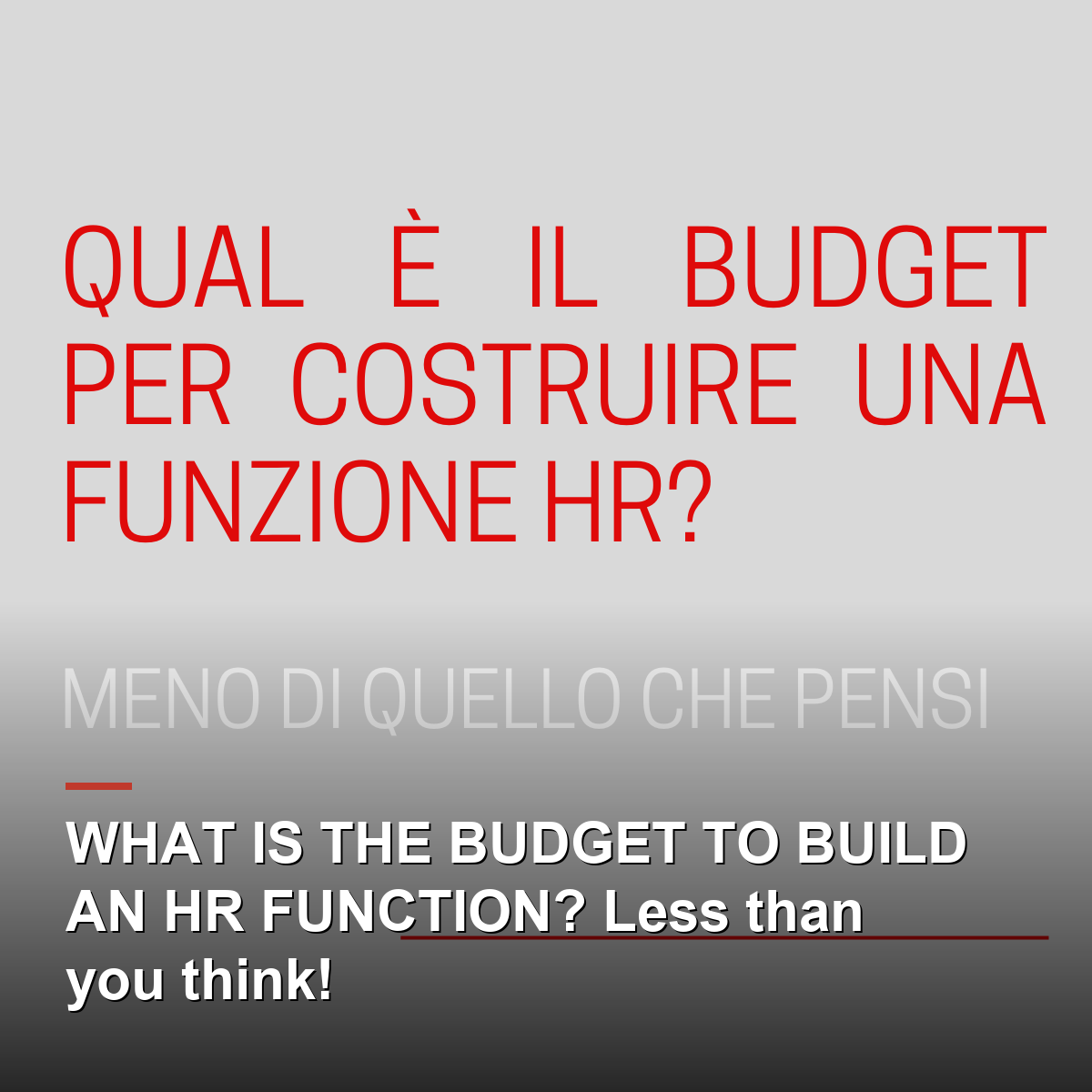
  • WHAT IS THE BUDGET FOR BUILDING AN HR FUNCTION? Less than you think!

    WHAT IS THE BUDGET FOR BUILDING AN HR FUNCTION? Less than you think!

    Engagement · 2-minute read

    Almost every CEO I meet for the first time tells me the same thing: “I need to set up HR, but I don’t have the budget for a whole department.”

    That’s the wrong way to look at it. You don’t need a department. You need a minimal, functional system.

    I have built and reorganised HR functions in dozens of Italian companies over the last 27 years. The minimum that works is always the same combination.

    3 tools. 

    2 processes. 

    1 dedicated person.  

    🟥 The 3 tools without which there is no HR function: A standard job description system; for every role, there must be a document describing responsibilities, expected KPIs and required skills. Without this, you’re recruiting in a vacuum and assessing based on gut feeling. A written onboarding protocol; the first 30–90 days of a new hire must be planned, not improvised. 20% of voluntary resignations occur within this window. An HR dashboard with 4 minimum KPIs: turnover by department, time-to-hire, absenteeism, cost per hire. If you don’t measure it, you can’t manage it.

    🟥 The two processes that hold everything else together: Structured recruitment; not a free-form interview, but a process with defined stages, explicit assessment criteria and traceability of decisions. It takes the same amount of time and significantly reduces hiring errors. Performance appraisal; at least two or three structured sessions a year where manager and employee discuss objectives, feedback and development. An informal chat in the corridor isn’t enough.

    🟥 The dedicated person: This does not need to be a full-time senior role, at least initially, and they must have one essential thing: dedicated time to do HR. Not half an hour squeezed in between emergencies. Not just when there’s time left over. HR done this way does not exist; there is only emergency management disguised as staff management. This is the bare minimum. It does not solve everything, but it creates the conditions for people to be managed methodically rather than on a whim.

    And this alone, in an average company, translates to a 10–20% reduction in staff turnover within 12–18 months.

    Message me privately if you want to know where to start in your specific situation.

  • The principles of motivation in business

    The principles of motivation in business

    Engagement · 2-minute read

    The principles of motivation in the workplace

    Lack of motivation in the workplace costs American industry hundreds of billions of dollars a year in lost productivity and reduced sales. However, this is changing rapidly. In recent years, hundreds of companies have entrusted their top management with strategies to motivate their employees and find ways to increase staff loyalty and productivity. More and more of these executives have the word ‘motivation’ high on their list of priorities. 

    The Occupy Wall Street movement and the famous TV series
    Undercover Boss reflect underlying needs that are driving the emergence of a growing and more precise focus on motivation within companies. The world is calling for a more humane form of work that truly values people. Many Americans, and others, enjoy watching episodes of Undercover Boss that demonstrate how top management understands the importance and personal needs of employees. Apple suffered a heavy loss on Wall Street when it became clear that its new iPad would be built by hundreds of thousands of Chinese workers labouring in conditions that almost no American would tolerate. It subsequently changed its business practices.

    For decades, it was easy to ignore the principles of motivation in the workplace because motivation itself was difficult to define and almost impossible to measure. But for a growing number of organisations, the question is no longer whether motivation is important, but rather how to achieve it and perform at their best. 

    For organisations committed to employee engagement and the principles of workplace motivation—such as McDonald’s, the New York Stock Exchange, Whole Foods, The Container Store, Southwest Airlines, Stew Leonard’s and many others—it is more of a field test than an exact science, as books offer little guidance on how to proceed.

    It is, however, easy to confuse leadership with engagement and motivation. Leadership, of course, is essential for engagement and motivation. It simply describes the personal skills required of people who manage others at any level to achieve results. The process of effectively motivating people within a company requires more than just good leadership and a general objective. It requires everyone in the company to be informed and to have a clear understanding of the company’s mission and how they can contribute to it and also benefit from it. It also requires equipping people with the skills or abilities to contribute and encouraging them to get involved, share and collaborate. It is about translating leadership into results through an appropriate framework of tools and tactics. It requires not only making promises, but also keeping them at every stage of the journey.  

  • Human behaviour is shaped to a large extent …

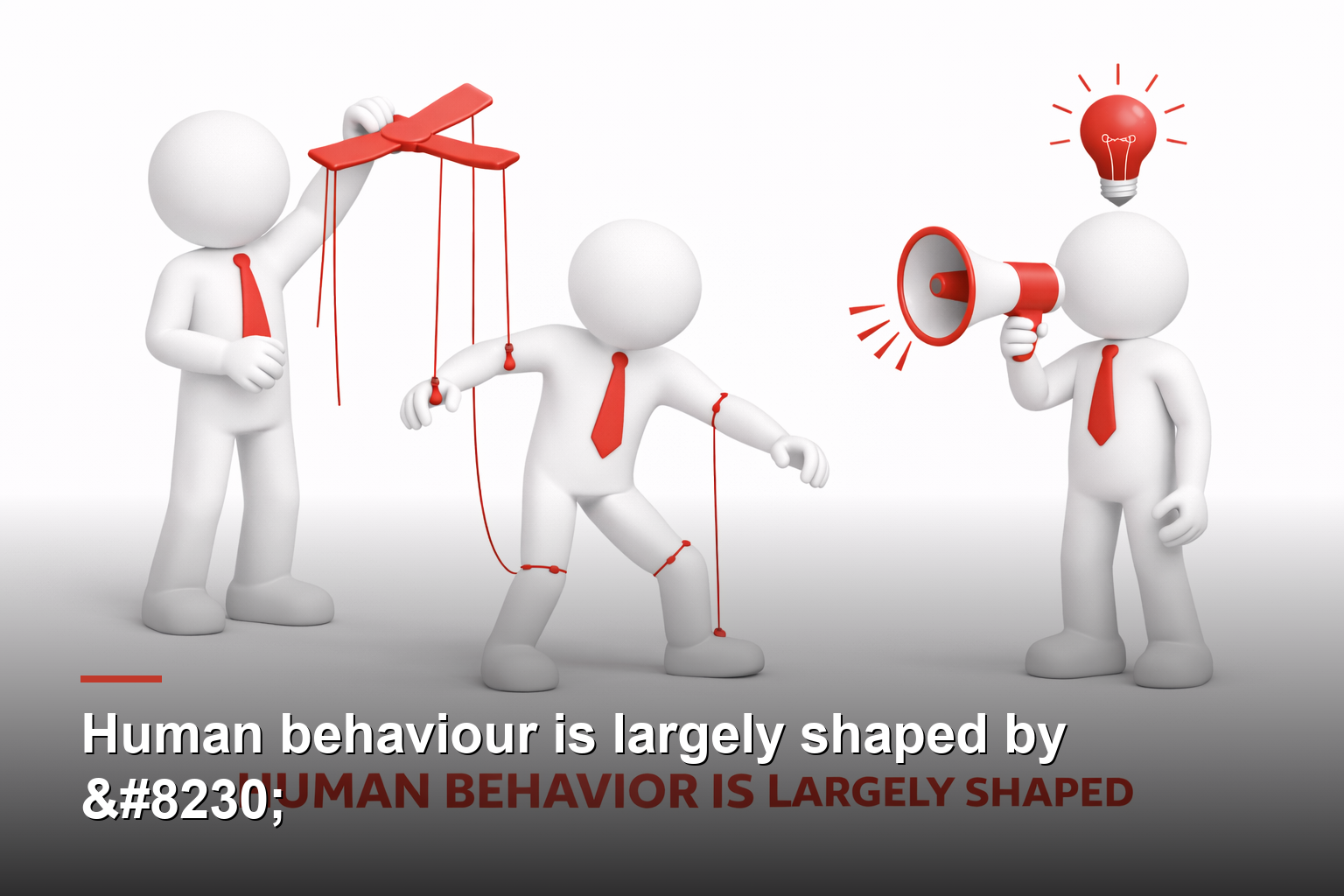
    Human behaviour is shaped to a large extent …

    Engagement · 3-minute read

    The quality of professional relationships shapes career paths, performance and well-being. Relational capital influences choices, the interpretation of events and emotional stability within organisational contexts. The people we work with shape our daily decisions, influence our priorities and set informal standards that, over time, become implicit criteria for behaviour. Bandura’s social learning theory shows that observing the group builds internalised norms and models of action that guide conduct at work.

    In a business context, this assumption takes on an operational role. Relationships do not act as neutral factors. Every interaction alters the level of our professionalism. An environment with dysfunctional behaviours normalises dynamics that lower the quality of decisions. Clarity is reduced. The organisational climate slows down performance and weakens decision-making capacity. Manuals on organisational wellbeing show that the structure of relationships influences stress, psychological safety and the perception of fairness – elements that either support or weaken intrinsic motivation.

    Strategic human resource management identifies relationships as a critical node in the value cycle. Observable behaviour within groups affects commitment, performance and the quality of decision-making processes. The literature places the relational dimension amongst the factors that underpin sustainable performance and the continuity of organisational systems. When relationships become inconsistent, manipulative or fragmented, the organisation loses its internal coherence. Managers switch to reactive mode. Processes are based on emergency fixes rather than method.

    Choosing healthy professional relationships represents a strategic investment. Surrounding oneself with people who maintain high standards, honour commitments, make clear requests and take responsibility fosters environments that support discipline, focus and the quality of decisions. Work psychology highlights how the quality of relational exchange supports professional identity, self-regulation and a sense of autonomy. Models for assessing work-related stress published by INAIL reveal the link between effective relationships, a sense of control and the reduction of psychosocial risk factors.

    Working with reliable people fosters a culture of professionalism. It enhances the quality of work and reduces costs arising from staff turnover and inefficiencies, as demonstrated by leading human capital management manuals. The informal structure of relationships becomes a lever that supports HR systems and stabilises performance over time. Organisational research confirms that the quality of interpersonal interaction influences motivation, learning and the ability to maintain behaviour consistent with corporate objectives.

    Some studies on HR management highlight that internal relationships act as a governance mechanism rather than a peripheral variable. High standards of interaction define a context that fosters clarity, alignment and continuity. They become a component of the system, not an incidental factor. In the absence of this safeguard, organisations normalise ambiguity, generate hidden costs and fuel dynamics that compromise performance.

    In short, relationships become a predictor of professional success. Choosing healthy environments is an individual responsibility and a strategic lever for HR systems. As Bandura states, ‘individuals build their competence through observing the actions of others’, reminding us that the environment is not merely a backdrop but a force that shapes our trajectory.


    ESSENTIAL BIBLIOGRAPHY

    Bandura A., Social Learning Theory, Prentice Hall.
    Avallone F., Bonaretti M., Organisational Well-being.
    Kaiser S., Ringlstetter M.J., Strategic Management of Professional Service Firms.
    Womack J., Jones D., Roos D., The Machine That Changed the World.


    WEBGRAFIA

    Inail, Methodology for the assessment and management of work-related stress (2017) .
    Springer, Strategic Management of Professional Service Firms .


  • Three key levers for companies

    Three key levers for companies

    Work · 3-minute read

    vThree key levers for companies

    Developing a diversity strategy is a structural priority for many organisations. Diversity is not an isolated initiative. It is a paradigm that permeates the entire work experience and influences the quality of decision-making processes, innovation and competitive capacity. The literature on strategic human resource management shows that highly diverse systems promote learning, reduce bias and lead to the development of more robust solutions. Diversity therefore becomes a value-driven factor, not a symbolic goal.

    The first step is to recognise the broad nature of the issue. Diversity concerns talent acquisition, culture, leadership, assessment, career paths and listening practices. The organisation must ask itself how these processes influence attraction, selection, motivation and retention. Guides on organisational well-being show that a sense of belonging, perceived fairness and the quality of relationships are the pillars of an inclusive environment.

    Talent acquisition is the first area of application. Bringing diverse profiles into the company requires the ability to broaden the search pool and review language, criteria and channels. Evidence shows that the presence of a single diverse candidate on a shortlist reduces the likelihood of that candidate being hired, because the assessment process tends to focus on the profile perceived as most familiar. Diversity must therefore be integrated into the design of the process, not added as an afterthought. HR management is tasked with defining broader pipelines, collaborating with professional communities and reviewing assessment metrics in light of the expected cultural impact.

    Recruitment requires an active presence in the digital spaces where professional conversations take place. Selection cannot be based simply on posting job advertisements. The search for diverse candidates involves listening, dialogue and observing social networks representing under-represented groups. Digital platforms enable the mapping of skills, interests and career paths. Strategic management in professional services firms reminds us that the ability to attract talent stems from reputation, clarity of value and the quality of the initial interaction.

    A diversity strategy also requires attention to organisational commitment. Inclusion is manifested in the continuity of relationships and in the perception of opportunities for growth. A culture that values diversity must make internal career paths visible, ensure access to development programmes and build a leadership model that supports equity and participation. An analysis of remuneration policies and reward systems shows how much recognition mechanisms affect the motivation and retention of employees from different groups.

    Listening is an essential element. Surveys and focus groups help to understand perceptions, obstacles and expectations. Organisational psychology highlights that a sense of belonging stems from the opportunity to have one’s voice heard and to see one’s experience recognised within business processes. An organisation that listens develops a greater capacity for adaptation. It reduces staff turnover. It strengthens cohesion and encourages participation in decision-making processes.

    An effective diversity strategy is built through cycles of observation, intervention and learning. The company must monitor the impact of decisions, identify inconsistencies, assess data on burnout and interpret differences between areas or functions. Diversity thus becomes a central component of the HR system. Not merely a PR initiative.

    An inclusive culture requires continuity and accountability. Organisations that achieve lasting results treat diversity as a strategic factor that generates value over time. HR management is tasked with creating the conditions that allow employees to contribute according to their abilities and perspectives. Every individual brings a wealth of knowledge that broadens the company’s vision. Diversity becomes a competitive advantage when the organisation recognises and integrates this diversity.


    ESSENTIAL READING

    Avallone F., Bonaretti M., Organisational Well-being.
    University Handbook of Human Resource Strategy.
    Kaiser S., Ringlstetter M.J., Strategic Management of Professional Services Firms.
    OD&M Consulting, Reward Systems. A Guide to Design.


    WEBGRAFIA


    Harvard Business Review, Why Diverse Teams Are Smarter.

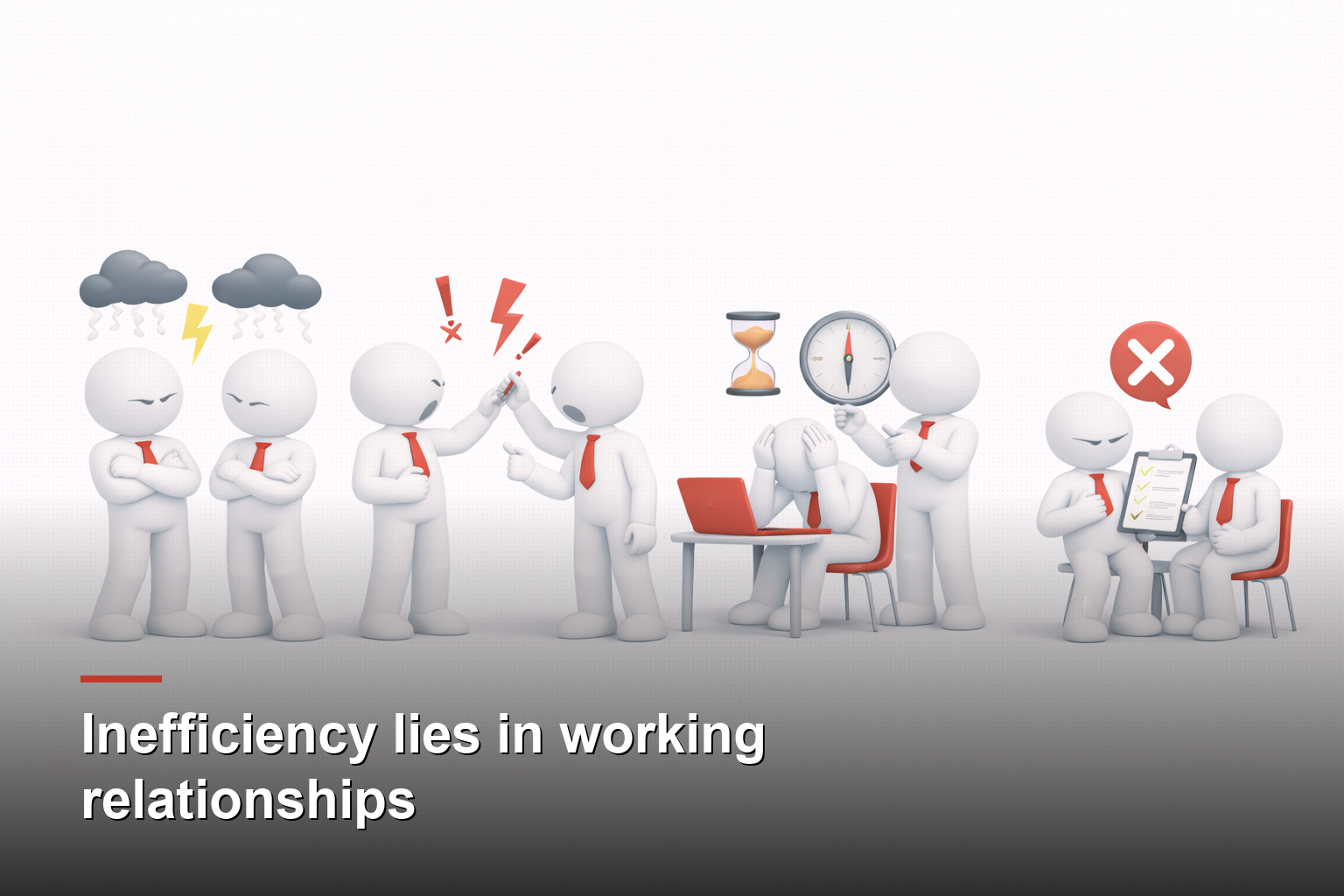
  • Inefficiency lies in labour relations

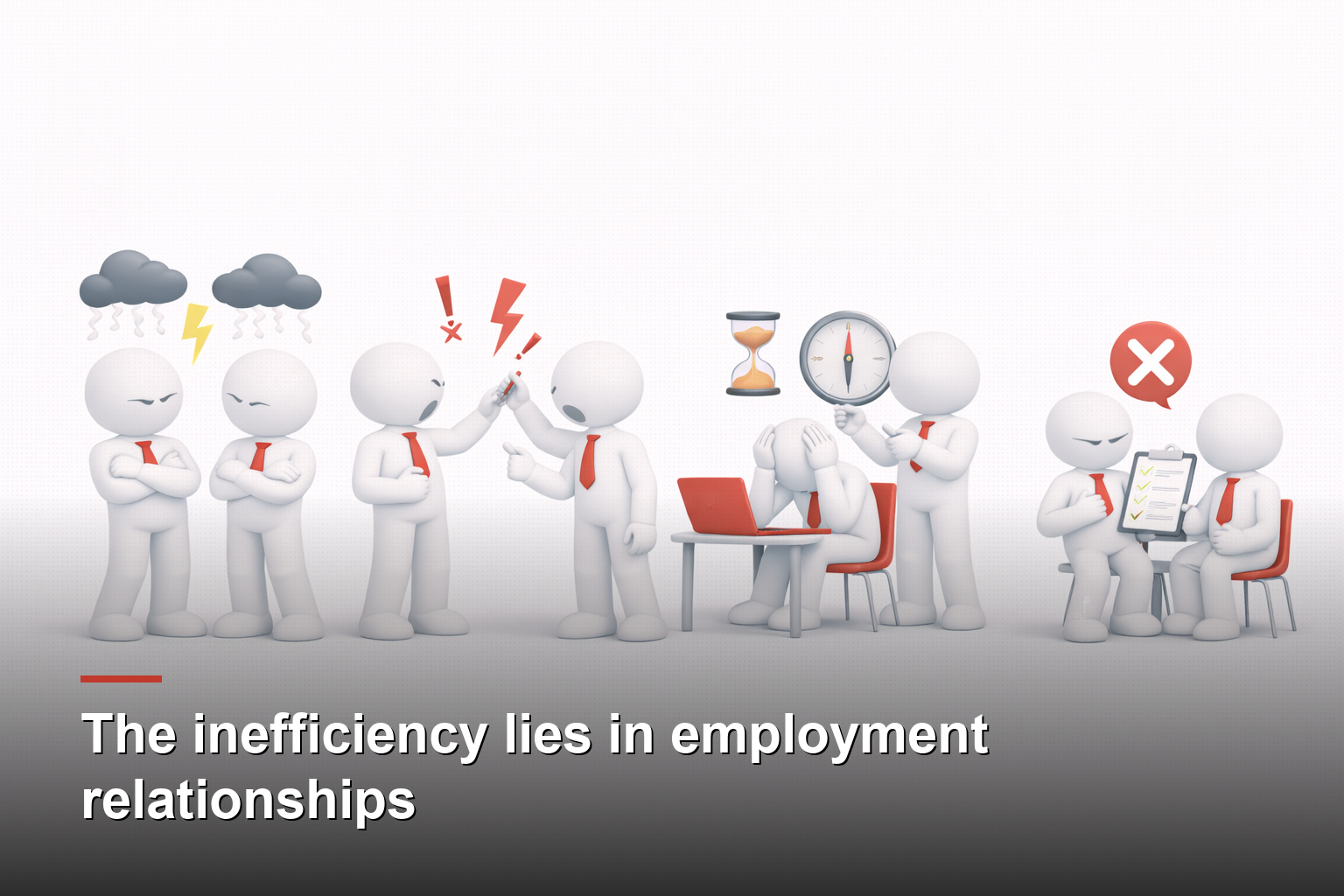
    Inefficiency lies in labour relations

    Work · 5-minute read

    1. Introduction

    Business productivity is often interpreted as the result of technical skills, operational tools or organisational models that are more or less advanced. However, a significant body of scientific literature suggests that the main source of inefficiency within organisations lies in working relationships. Professional relationships, the quality of leadership and the internal working environment have a direct impact on staff turnover, engagement and individual and collective performance.

    SMEs, due to their informal structure and the concentration of decision-making in a small number of individuals, are particularly vulnerable to the effects of unmanaged interpersonal conflicts. The evidence presented confirms the centrality of the human factor as a critical lever in organisational functioning.


    2. Evidence on the relational nature of inefficiency

    2.1 Conflicts, complaints and hidden costs

    According to the Chartered Institute of Personnel and Development (CIPD, 2017), an employee spends an average of 12 days a year complaining about processes, colleagues or management. This time, often invisible in the financial accounts, erodes productivity and fuels a negative organisational climate.

    At the same time, employers spend over 13 days a year managing internal conflicts. The opportunity cost of this effort impacts the company’s ability to devote time to strategic development and innovation.

    2.2 Engagement and the quality of relationships

    Only 30 per cent of workers say they are actively engaged (Gallup, 2023). This figure is not merely a cultural indicator, but a measure of the quality of professional relationships, the clarity of objectives and the level of perceived support.

    The Saratoga Institute highlights that 80 per cent of resignations are caused by relationship issues, particularly conflicts with the line manager. This evidence confirms the systemic impact of day-to-day leadership on organisational well-being.

    2.3 Managerial time wastage and lack of trust

    Managers spend between 25 and 30 per cent of their day dealing with unproductive discussions, misinterpretations, personal conflicts and procedural misunderstandings. Trust in managers is significantly low. Only 30 per cent of employees say they trust their manager, a figure that directly affects commitment and collaboration.

    Finally, two-thirds of workers feel undervalued, and when they are assessed, they believe the process does not accurately reflect their contribution.

    These phenomena paint a clear picture: the loss of efficiency does not lie in skills, processes or the labour market, but in the fragility of the relational system and the leadership models adopted.


    3. Theoretical interpretation: why do working relationships generate inefficiency?

    The theory of organisational relations (Schein, 2010) highlights that every corporate system operates on the basis of implicit norms, expectations and communication models. When these elements lack consistency or clarity, tensions emerge that manifest themselves in the form of:

    • interpersonal conflicts

    • declining engagement

    • increasing staff turnover

    • poor collaboration

    • operational inefficiency

    The literature on the Psychological Contract (Rousseau, 1995) confirms that the perception of fairness, recognition and support is a key determinant of performance. A breached psychological contract leads to defensive behaviour, demotivation and disengagement from the organisation.


    4. The new approach required of businesses

    If the main cause of inefficiency lies in working relationships, companies must adopt a model that goes beyond mere information provision to transform behaviour, relationships and culture. The evidence suggests a number of priority levers.

    4.1 Transform, do not merely inform

    Traditional training, focused on the transmission of content, has limited impact if it is not integrated with development programmes, coaching, feedback and growth-oriented performance systems.

    4.2 Promoting self-management

    Self-management reduces conflicts, increases autonomy and enables employees to resolve problems more quickly. Research by Hackman and Oldham (1976) on job design confirms that autonomy and meaningful work improve performance and satisfaction.

    4.3 Allowing operational autonomy

    Self-determination theory (Deci & Ryan, 2000) shows that people are more productive when they feel autonomy and trust. Excessive control generates resistance and defensive behaviour.

    4.4 Focusing on the future

    Developing concrete career development paths reduces staff turnover and fosters engagement. The learning organisation model (Senge, 1990) highlights that the ability to learn continuously is a prerequisite for competitiveness.

    4.5 Building lasting collaborative relationships

    Positive relationships reduce stress, enhance the quality of work and improve the ability to tackle complex problems. World Class Manufacturing and the Toyota Way (Liker & Meier, 2007) demonstrate that structured cooperation leads to superior performance and operational stability.


    5. Conclusions

    The data clearly show that the main source of organisational inefficiency does not stem from people, but from the way they interact. A weak relationship system generates high costs, delayed decisions, staff turnover, conflicts and inefficiencies that no software or technical reorganisation can compensate for.

    Companies that invest in the quality of relationships, leadership, clarity of roles and people development see a clear and stable improvement in performance.

    To identify the areas where an organisation is losing efficiency, a targeted preliminary assessment can be useful, capable of quickly analysing relational issues and management systems.


    Bibliography

    • CIPD. (2017). Managing conflict at work. Chartered Institute of Personnel and Development.

    • Deci, E., & Ryan, R. (2000). Self-Determination Theory. Psychological Inquiry.

    • Gallup. (2023). State of the Global Workplace Report. Gallup Press.

    • Hackman, J. R., & Oldham, G. R. (1976). Motivation through the design of work. Organizational Behavior and Human Performance.

    • Liker, J. K., & Meier, D. (2007). Toyota Talent. McGraw-Hill.

    • Rousseau, D. (1995). Psychological Contracts in Organizations. Sage Publications.

    • Schein, E. H. (2010). Organisational Culture and Leadership. Jossey-Bass.

    • Saratoga Institute. (2004). Employee Retention Survey. Saratoga Institute Research.

    • Senge, P. (1990). The Fifth Discipline. Doubleday.


    Webography

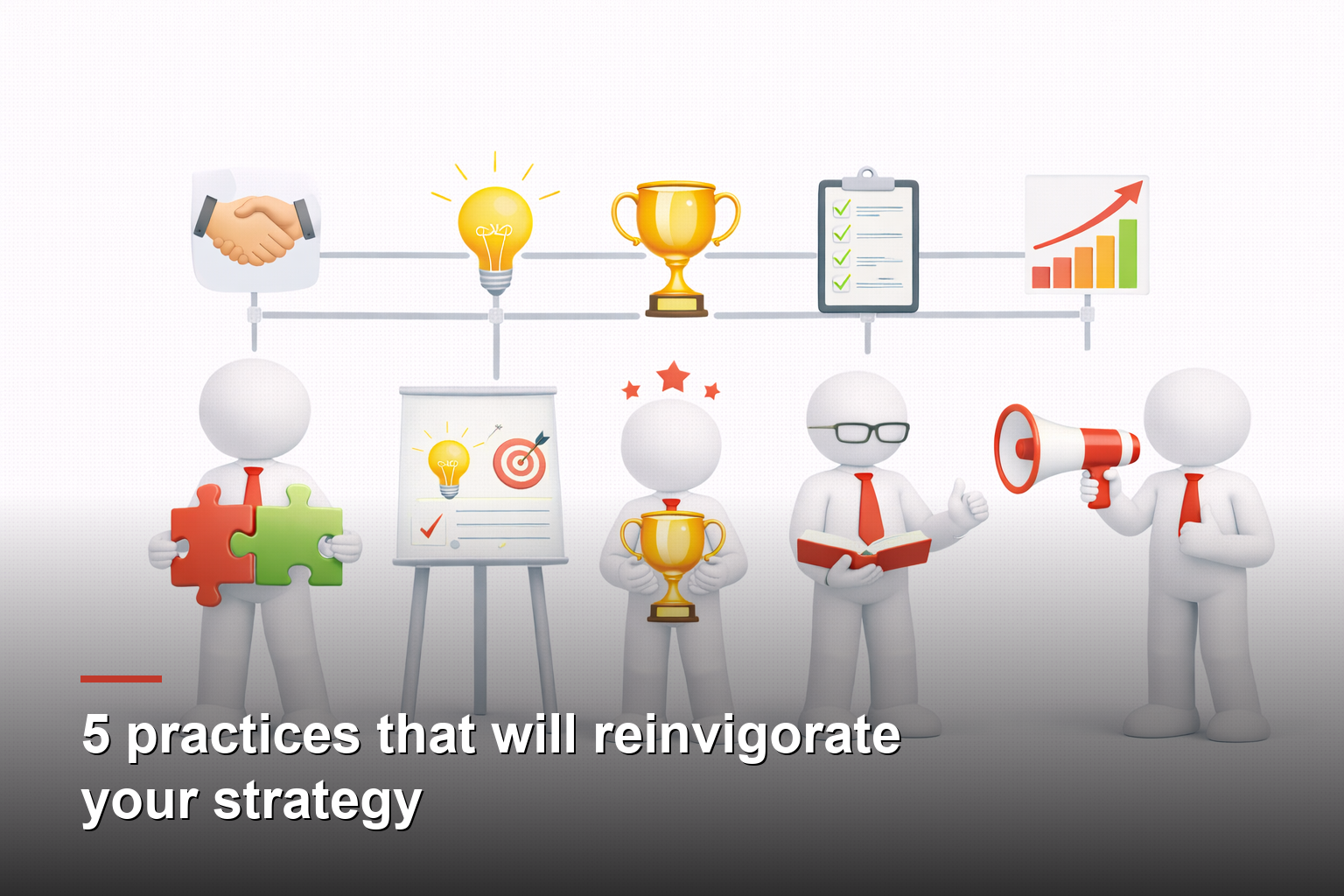
  • 5 practices that will reinvigorate the strategy

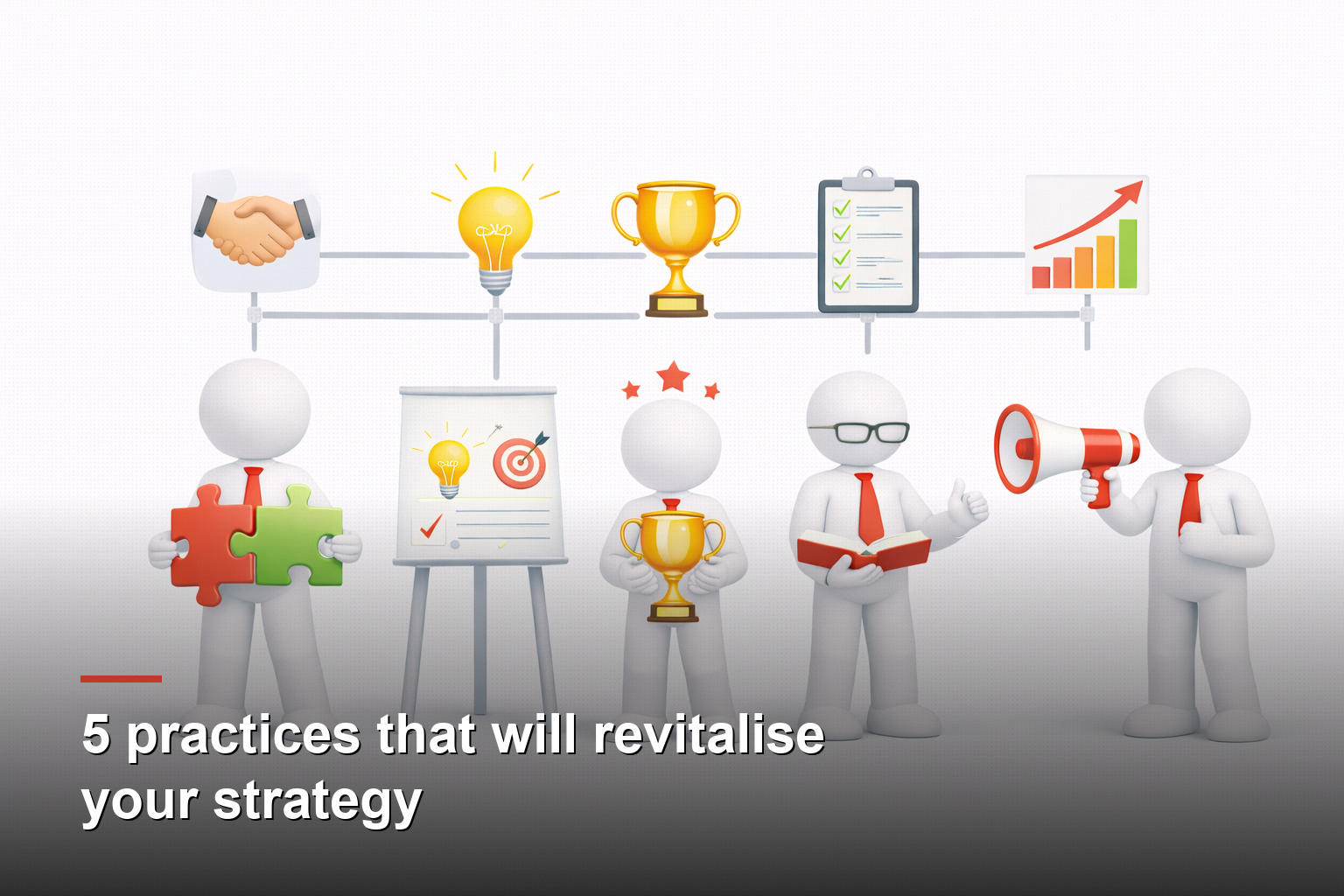
    5 practices that will reinvigorate the strategy

    Work · 3-minute read

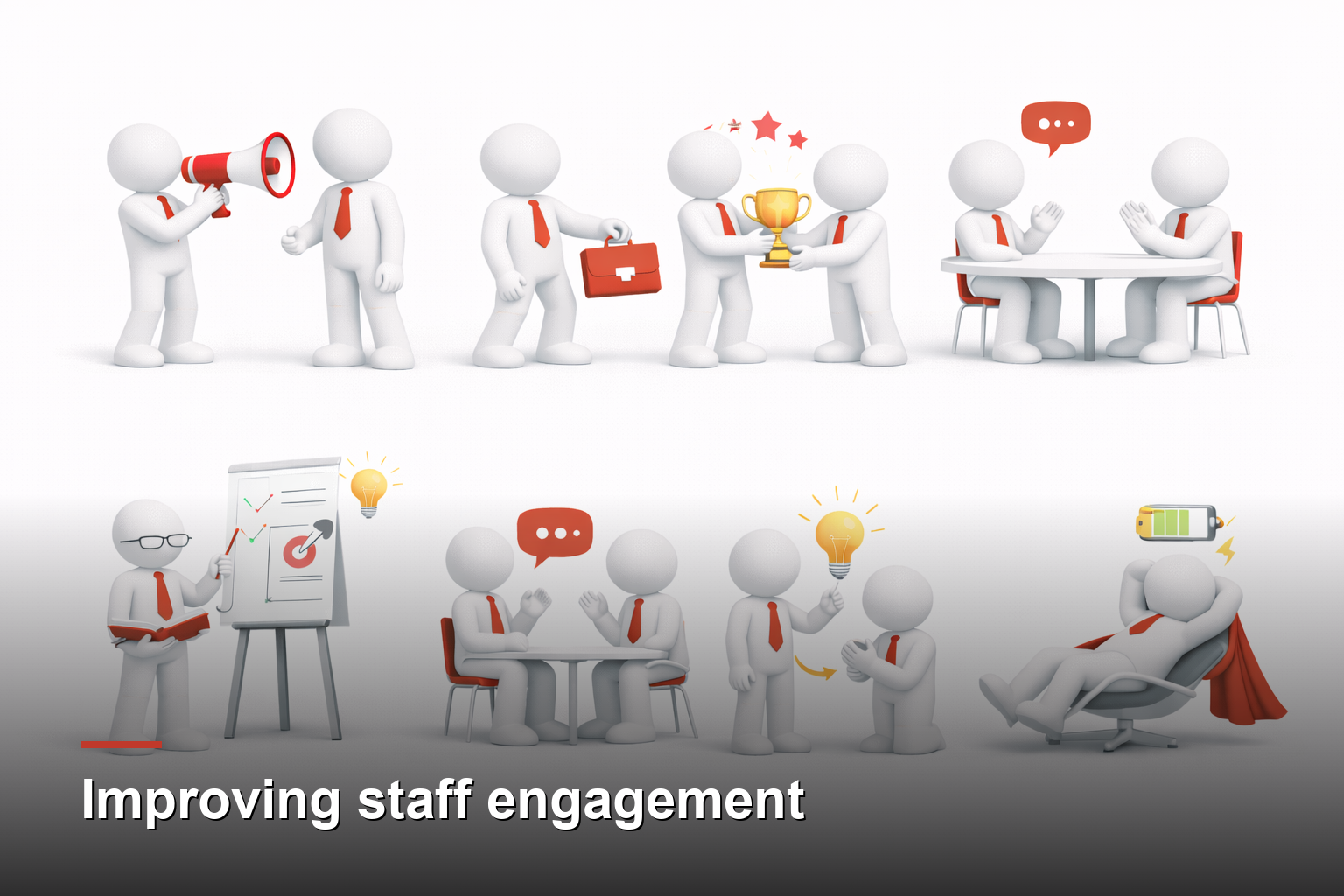
    Every HR professional or HR manager knows that people are an organisation’s key competitive advantage, but not all organisations live by this principle. It’s not that the company chooses to ignore its employees; it simply and unconsciously neglects its workforce. When you consider the ever-changing technological landscape and the sheer volume of innovation, it’s easy to see how this happens. Here are 5 practices that will revitalise your employee engagement strategy.

    1. Create a transparent workplace It sounds simple enough, doesn’t it? Find ways to let employees know and understand what is happening at all levels of the company. They will feel more engaged and more loyal than they would if left in the dark. Organisations often focus too much on hiding information from employees. This can lead to gossip and a sense of mistrust in the workplace. Being a transparent organisation means fostering an inclusive environment. This creates a greater sense of engagement and encourages employees to invest their future in the company.

    2. Encourage open communication The foundation of a transparent organisation is open communication. Encourage open communication at every level: from the newest employee right up to the CEO. Consider an open-door policy. Creating a culture of honesty can help manage a crisis should one arise. This will make employees feel more comfortable voicing their opinions and ultimately result in a happier workforce.

    3. Foster collaboration Being part of a team naturally fosters commitment. Teams function primarily on the basis that several people can work together. In other words, they must rely on one another to achieve a goal. Introduce new technologies to foster greater engagement and cohesion. For example, a simple cloud-based solution such as Google Docs or Hangouts will help alleviate concerns.

    4. Investing in employees This is vital for an engagement strategy. Undervalued employees will eventually look for potential employers who offer what they are seeking. It is important to provide development opportunities. Offer your employees the chance to improve or enhance their existing skills. This fosters greater connection with the business and engagement.

    5. Employee wellbeing. Among the five practices that will reinvigorate the strategy, this is the last but certainly a very important one: focus on creating an environment that promotes employee wellbeing and fosters a healthier workplace. Many employees place greater importance on leading a healthy lifestyle. A 2017 survey revealed that nearly half of the 1,000 employees surveyed would leave a job where an employer does not care about their wellbeing. This is why employee engagement programmes should incorporate healthy options.

    Engagement is about much more than simply getting employees to work together. It is about creating an environment that inspires loyalty and fosters ambition. A healthy employee engagement programme is also a vital component of a successful retention programme, and in a world that continues to face a shortage of skilled workers, retaining staff becomes essential.

  • 6 deadly vices of the carrot and stick

    6 deadly vices of the carrot and stick

    Entrepreneur · 3-minute read

    The 6 deadly sins of the carrot and stick approach, in summary:

    These are Daniel H. Pink’s deadly sins, which show us why it is inadvisable and entirely pointless to adopt ‘If… Then…’ type rewards:

    1) They can reduce performance

    2) They can stifle creativity

    3) They can stifle good deeds

    4) They can encourage cheating, shortcuts and misconduct

    5) They can create dependency

    6) They can encourage short-term thinking

    ‘If… Then’ rewards are widespread tools in managerial practice. Many reward systems continue to be based on this conditional framework, even though the literature highlights structural limitations. Daniel H. Pink summarises these limitations in a series of pitfalls that explain why such rewards prove ineffective in people management. Organisational evidence shows that such levers do not support performance, motivation and learning. Strategic human resource management requires systems that value autonomy, competence and meaning, avoiding models that reduce the complexity of human behaviour.

    The first flaw concerns the reduction in performance. Conditional rewards direct attention towards an external goal and distract from the quality of the task. Research on incentive systems shows that when attention shifts to the incentive, cognitive depth is reduced and performance declines, particularly in non-standardised activities. This effect is evident in roles requiring analysis, decision-making and the management of complexity.

    The second flaw concerns creativity. Studies on intrinsic motivation show that conditional rewards narrow the cognitive field, reduce the ability to generate alternatives and limit divergent thinking. Pink links this dynamic to a perceptual compression that hinders innovative solutions. HR systems geared towards professional development require contexts that encourage exploration, not structural constraints.

    The third pitfall concerns the stifling of prosocial actions. When behaviour stems from internal motivation, adding an external reward can reduce the perceived value of the act. Psychological contract theory demonstrates how motivation is based on implicit exchanges of trust and recognition. The introduction of conditional rewards alters this balance and reduces the spontaneous willingness to collaborate.

    The fourth pitfall concerns misconduct. The incentivising effect can lead to deviations, shortcuts or attempts to manipulate evaluation criteria. The literature on reward systems highlights this risk. Schemes such as profit-sharing or individual bonuses, if poorly designed, can fuel opportunistic behaviour and reduce the quality of interaction between colleagues. The system becomes fragile. The organisation suffers the consequences.

    The fifth vice concerns dependency. People begin to respond only to external stimuli. Intrinsic motivation weakens. Professional behaviour becomes reactive rather than self-regulated. Organisational psychology highlights how dependency on conditional rewards transforms the HR system into a costly and progressively ineffective mechanism. The organisation must increase the incentive leverage to maintain the same level of response. The cycle becomes unsustainable.

    An analysis of the ‘deadly sins’ described by Pink calls for a rethinking of reward systems. Companies that focus on quality, learning and responsibility build models based on autonomy, clear objectives and continuous feedback. Studies on organisational well-being show that systems which support intrinsic motivation improve the working atmosphere, cooperation and the stability of performance over time. HR management must therefore reduce reliance on conditional incentives and prioritise approaches that reinforce competence and meaning.

    As Pink states, ‘people don’t perform at their best when they are pushed. They do so when they feel free to commit themselves’. HR management has the task of creating environments that make this freedom possible.


    ESSENTIAL READING LIST

    Pink D.H., Drive. The Surprising Truth About What Motivates Us.
    Avallone F., Bonaretti M., Organisational Well-being.
    Kaiser S., Ringlstetter M.J., Strategic Management of Professional Service Firms.
    OD&M Consulting, Reward Systems. A Guide to Design.
    University Handbook of Human Resource Strategy.


    WEBGRAFIA

    INAIL, Work-related stress (2017) .
    Springer, Professional Service Firms Management .


  • Involving employees: 10 questions

    Engagement · 4-minute read

    Employee engagement does not happen by chance and cannot be achieved through sporadic rewards or a vague ‘we’ve always done it this way’. Instead, it stems from a deliberate, systematic process aimed at developing the organisational culture and empowering people.

    When an entrepreneur senses that their employees are listless, apathetic, lacking in responsibility or not particularly “committed” to the business, the first useful step is not to change the people, but to start with oneself and ask the right questions.
    Questions generate awareness, and awareness is the prerequisite for change.

    Below are ten fundamental questions, each of which helps identify a different aspect of employee engagement.

    1. How will employees adapt to new opportunities and keep their thinking up to date?

    Engagement stems from the organisation’s ability to offer continuous learning, skills development and opportunities for innovation. Without cognitive growth, there is no motivational growth.

    2. How are successes, challenges and changes communicated within your organisation?

    Communication is the backbone of engagement. If what happens within the company is not shared, interpreted and discussed, it breeds distance, mistrust and cynicism.

    3. Do your employees have a say in the critical decisions that influence the company’s success?

    People only feel involved when they feel they can make a real, rather than a symbolic, contribution. Giving a voice means including.

    4. Does your company clearly articulate its purpose, vision, objectives, strategies and values?

    And above all: are employees an active part of all this?
    A culture imposed from above does not foster a sense of belonging. A co-created culture, on the other hand, does.

    5. Do your employees trust you?

    Trust is the primary driver of engagement. Without trust, collaboration becomes defensive, the working atmosphere deteriorates and productivity falls.

    6. How do you know if your employees are truly motivated?

    Measuring engagement requires tools, metrics and structured conversations. An entrepreneur’s intuition is not enough.

    7. How do you motivate them?

    Rewards and incentives are not enough. Engagement stems from autonomy, meaning, fairness, recognition and relationships.

    8. Are your employees encouraged to work as a team?

    Collaboration does not emerge spontaneously. It must be designed through clear roles, processes, shared responsibilities and leadership that facilitates, rather than centralises.

    9. Are your departments and divisions truly effective?

    Effectiveness means alignment, clear lines of communication, defined responsibilities and the absence of silos. Without this, no culture can function.

    10. Is your company truly unique?

    The key question: why would anyone want to work for you specifically?
    If the answer isn’t obvious, it’s time to address the culture, even before you focus on recruitment.


    The real obstacle: the entrepreneur’s resistance

    Many entrepreneurs, especially in SMEs, consider asking these questions to be ‘a waste of time’.
    The ‘I can do everything myself’ mindset persists, leading to cultural stagnation. Yet research from the Massachusetts Institute of Technology shows that more engaged employees are more productive, more creative and more loyal to the company.

    Engagement is not an HR fad, but a performance driver: READ MORE


    Engagement: you don’t need new roles, you need the will

    You don’t need an “Employee Engagement Manager” to reflect on these 10 questions.
    What is needed is the ability to use the answers as a starting point for a structured action plan:

    • improve internal communication

    • redesign roles and responsibilities

    • implement listening practices

    • reduce counterproductive managerial behaviours

    • strengthen the culture of collaboration

    • increase trust, transparency and consistency

    There is just one final question:
    are you willing to take real action on your corporate culture?

    If so, you’ve already started on the journey, and if you wish to continue, I invite you to complete the free questionnaire here.


    References

    • Bakker, A. B., & Schaufeli, W. B. (2008). Positive Organisational Behaviour: Engaged Employees in Flourishing Organisations. Journal of Organisational Behaviour.

    • Edmondson, A. (2019). The Fearless Organisation. Wiley.

    • Gallup (2023). State of the Global Workplace. Gallup Press.

    • Kahn, W. A. (1990). Psychological Conditions of Personal Engagement and Disengagement at Work. Academy of Management Journal.

    • MacLeod, D., & Clarke, N. (2009). Engaging for Success. UK Government.

    • MIT Human Dynamics Lab. (2009). Workplace Productivity and Engagement Research. Massachusetts Institute of Technology.

    • Schein, E. H. (2010). Organizational Culture and Leadership. Jossey-Bass.

    • Ulrich, D. (2016). HR That Delivers Value. Harvard Business School Press.


    References


  • Engaging employees: 10 questions

    Engaging employees: 10 questions

    Engagement  ·  4 min read

    Employee involvement does not arise by chance and is not achieved with sporadic rewards or with a generic “we have always done it this way”. Instead, it derives from an intentional, systemic process, oriented towards the growth of organizational culture and the empowerment of people.

    When an entrepreneur perceives that his employees are listless, apathetic, not very responsible or poorly “attached” to the company, the first useful action is not to change people, but start from yourself and ask the right questions.
    Questions generate awareness, and awareness is the prerequisite for change.

    Below are ten fundamental questions, each of which allows us to identify a different component of theemployee engagement.

    1. How will employees adapt to new opportunities and stay current in their thinking?

    Engagement arises from the organization’s ability to offer continuous learning, skills development and spaces to innovate. Without cognitive growth, there is no motivational growth.

    2. How are successes, challenges and changes communicated in your organization?

    Communication is the backbone of engagement. If what happens in the company is not shared, interpreted and discussed, distance, mistrust and cynicism are generated.

    3. Do your employees have a say in critical relationships that influence business success?

    People only feel involved when they feel they can contribute in a real, not symbolic way. Giving voice means including.

    4. Does your company clearly express its purpose, vision, objectives, strategies and values?

    And above all: Are employees an active part of all this?
    A culture imposed from above does not generate belonging. A co-built culture, however, yes.

    5. Do your employees trust you?

    Trust is the first variable of engagement. Without trust, collaboration becomes defensive, the climate deteriorates and productivity drops.

    6. How do you know if your employees are truly motivated?

    Measuring engagement requires tools, metrics, structured conversations. The entrepreneur’s intuition is not enough.

    7. How do you motivate them?

    Rewards and incentives are not enough. Engagement arises from autonomy, meaning, equity, recognition and relationship.

    8. Are your employees encouraged to work in teams?

    Collaboration does not emerge spontaneously. It must be designed through clear roles, processes, shared responsibilities and leadership that facilitates, not centralizes.

    9. Are your departments and divisions truly effective?

    Effectiveness means alignment, clear communication flows, defined responsibilities and the absence of silos. Without this, no culture can function.

    10. Is your company truly unique?

    The central question: why would anyone want to work for you?
    If the answer is not obvious, it’s time to intervene on culture, even before recruiting.


    The real obstacle: the entrepreneur’s resistance

    Many entrepreneurs, especially in SMEs, consider it “a waste of time” to ask these questions.
    The mental model of “I can do everything myself” continues to resist, generating cultural stagnation. Yet, the search for Massachusetts Institute of Technology shows that more engaged employees are more productive, more creative and more loyal to the company.

    Engagement is not an HR quirk, but a performance factor: LEARN MORE


    Engagement: you don’t need new figures, you need willpower

    You don’t need an Employee Engagement Manager to think about these 10 questions.
    What is needed is the ability to use the answers as a starting point for a structured action plan:

    • improve internal communication

    • redesign roles and responsibilities

    • activate listening practices

    • reduce counterproductive managerial behaviors

    • strengthen the culture of collaboration

    • increase trust, transparency and consistency

    There is only one final question:
    are you willing to really intervene on your company culture?

    If yes, you have already started the journey and if you want to continue I invite you to do so free questionnaire here.


    Bibliography

    • Bakker, A. B., & Schaufeli, W. B. (2008). Positive Organizational Behavior: Engaged Employees in Flourishing Organizations. Journal of Organizational Behavior.

    • Edmondson, A. (2019). The Fearless Organization. Wiley.

    • Gallup (2023). State of the Global Workplace. Gallup Press.

    • Kahn, W. A. ​​(1990). Psychological Conditions of Personal Engagement and Disengagement at Work. Academy of Management Journal.

    • MacLeod, D., & Clarke, N. (2009). Engaging for Success. UK Government.

    • MIT Human Dynamics Lab. (2009). Workplace Productivity and Engagement Research. Massachusetts Institute of Technology.

    • Schein, E. H. (2010). Organizational Culture and Leadership. Jossey Bass.

    • Ulrich, D. (2016). HR That Delivers Value. Harvard Business School Press.


    Sitography


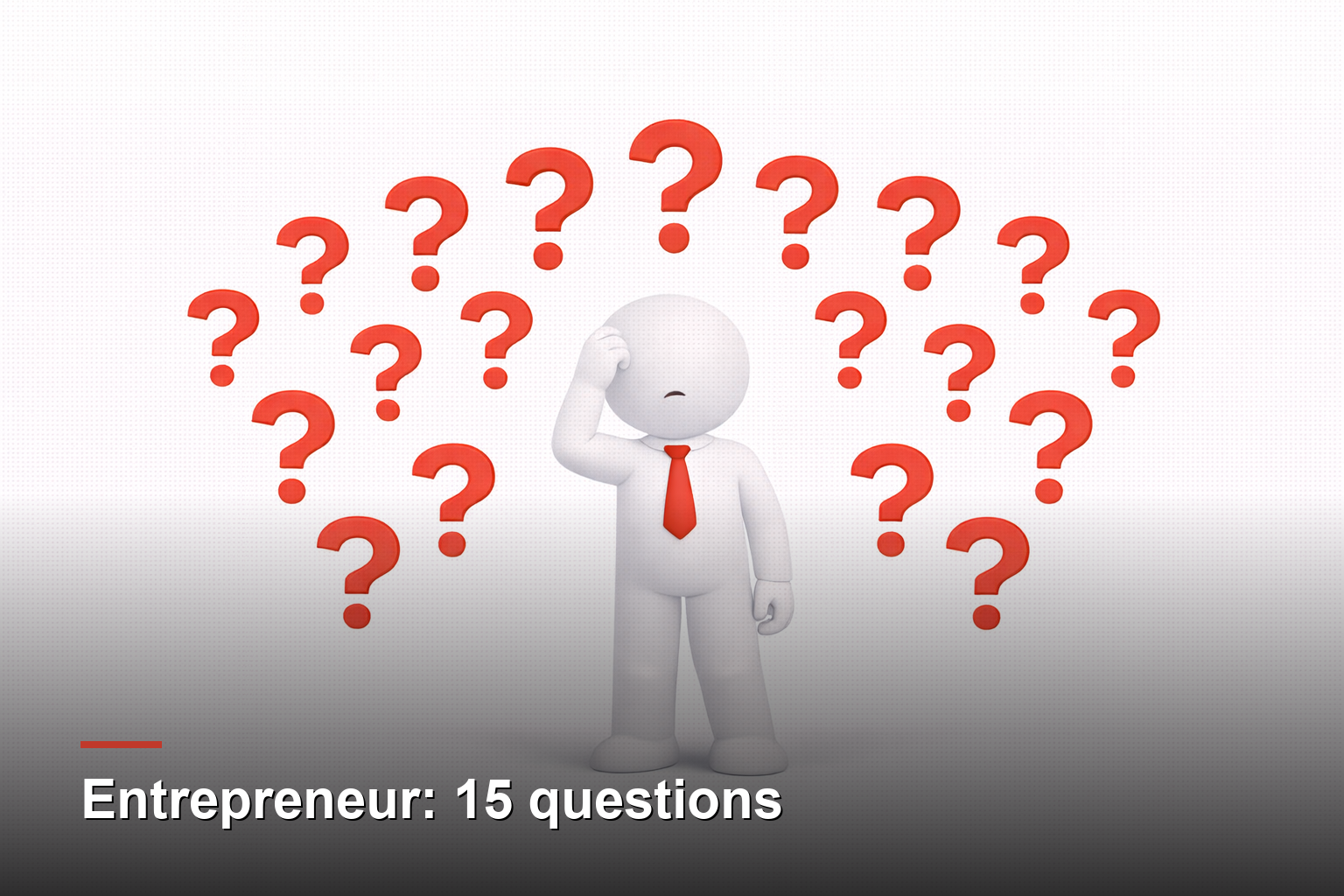
  • Entrepreneur: 15 questions

    Entrepreneur: 15 questions

    Entrepreneur  ·  3 min read

    Every entrepreneur who wants to grow their company needs to stop, observe, reflect. Without a moment of sincere self-evaluation, no strategy can work, no initiative can have an impact.
    This is why I propose to you 15 essential questions, simple but powerful, that will help you understand the level of involvement, culture and organizational maturity of your company.

    Reply with intellectual honesty. This is not a test to pass, but a tool for understanding if, where and how much to intervene.

    The 15 questions for your entrepreneurial self-assessment

    1. What is really working in my organization in terms of engagement and productivity?

    2. What’s the best idea I’ve heard about in another organization that I would like to bring to my own?

    3. How does my company measure the five enabling factors ofemployee engagement?

    4. What actions should I take to fill any gap?

    5. How can I have truly motivated employees and not simply present ones?

    6. How can I “galvanize” all collaborators, making them an active part of the company project?

    7. Who can I positively influence in my organization to accelerate change?

    8. What concrete evidence can I use to demonstrate that engagement is a strategic necessity?

    9. How can I transform the current culture into a more engaging and participatory culture?

    10. How can I intervene to change apathetic or disengaged behaviors?

    11. What actions can I take to build trust among everyone in my organization?

    12. How can I formulate a strategy employee engagement really sustainable over time?

    13. How can I increase staff commitment to my vision and shared goals?

    14. How can I make my work environment more pleasant, stimulating and “alive”?

    15. What can I do to transform my company into the place where people want to stay, grow and be their best?

    Because these questions really matter

    These questions are as simple as they are decisive.
    They’re not just about your organization.
    They are about TEA as a leader.

    There old entrepreneurial era, based on the principle “I can do everything myself”, is over.
    Businesses grow when entrepreneurs understand that the real competitive advantage today is not the procedures, it is not the products, it is not the technology. It’s the people.

    And no person truly commits without a system that supports:

    • trust

    • clarity

    • I listen

    • growth

    • membership

    This is what defines theemployee engagement, much more than extemporaneous motivation or isolated incentives.

    What to do after answering

    If you answered all the questions easily, you probably already understand what works, what doesn’t and what actions to take.

    If instead some answers are vague, incomplete or difficult to formulate, it means that:

    • There are critical areas in your organization,

    • the level of engagement is unclear,

    • company culture may not be aligned with future growth,

    • a targeted intervention is needed.

    In this case It’s not a problem: it’s an opportunity.
    An entrepreneur who recognizes a gap is already ahead of 90% of his competitors.

    If you want, I can support you in analyzing your answers, building a complete diagnostic or guide you in defining one engagement strategy and organizational culture.

    Just ask.

    Bibliography

    • Bakker, A. B., & Schaufeli, W. B. (2008). Positive Organizational Behavior: Engaged Employees in Flourishing Organizations. Journal of Organizational Behavior.

    • Gallup (2023). State of the Global Workplace Report. Gallup Press.

    • Kahn, W. A. ​​(1990). Psychological Conditions of Personal Engagement and Disengagement at Work. Academy of Management Journal.

    • Kotter, J. P. (1996). Leading Change. Harvard Business School Press.

    • MacLeod, D., & Clarke, N. (2009). Engaging for Success: Enhancing Performance Through Employee Engagement. UK Government.

    • Rousseau, D. (1995). Psychological Contracts in Organizations. Sage Publications.

    • Schein, E. H. (2010). Organizational Culture and Leadership. Jossey Bass.

    • Ulrich, D., Brockbank, W. (2005). The HR Value Proposition. Harvard Business Press.


    Sitography

    [/vc_column_text][/vc_column][/vc_row]

  • Five levers to improve organizational culture

    Five levers to improve organizational culture

    Engagement  ·  4 min read

    1. Introduction

    Organizational culture directly impacts productivity, well-being, collaboration and the ability to innovate. Research shows that organizations with a positive culture achieve greater performance and higher engagement rates, with a significant reduction in stress and turnover levels. However, changing corporate culture is complex, especially in SMEs, where entrepreneurial leadership has a decisive impact on the definition of values, practices and behaviors.

    Culture is not static. It can evolve through targeted actions, as long as there is will, coherence and a structured approach. It is in this process that the greatest difficulties often emerge.


    2. Communication: foundation of organizational culture

    Communication is the architecture on which culture is built. Schein (2010) highlights that organizational values ​​do not live in declarations, but in the communication behaviors of management. Open communication allows employees to understand company direction and contribute actively. On the contrary, poor or hierarchical communication promotes conflicts, misunderstandings and inefficiency.

    Periodic meetings, listening channels and transparency facilitate relationships of trust, reducing the risk that ordinary problems turn into profound cultural problems.


    3. Engagement: involvement as a cultural lever

    Engagement is a structural component of culture. According to Schaufeli and Bakker (2004), engaged employees demonstrate dedication, energy and the ability to contribute beyond assigned tasks. Involvement starts already in the selection phase: evaluating personalities, values ​​and relational methods allows us to include people consistent with the desired culture.

    Gallup (2023) indicates that teams with high engagement record significantly higher performance. A positive culture is only possible when workers feel part of the organization’s path.


    4. Transparency: Building trust and accountability

    Transparency is a cornerstone of trust. Rousseau (1995), through the theory of psychological contract, demonstrates that people are committed when they perceive consistency between what is communicated and what is achieved by management. Sharing decisions, results and critical issues strengthens the sense of fairness and involves workers in operational choices.


    5. Feedback: continuous system, not annual ritual

    The evidence on performance management show that effective feedback is frequent, specific, and developmentally oriented. London (2003) highlights that continuous feedback stimulates learning, empowerment and growth. Companies that adopt a culture of open and constant feedback reduce stress, misunderstandings and drops in performance.


    6. Flexibility: a new cultural paradigm

    Flexibility is one of the main demands of the labor market today. Autonomy in working methods and times increases well-being, reduces stress and promotes engagement. Hybrid models and technology facilitate more adaptive forms of work. Flexibility is a cultural choice before an organizational one, because it implies trust and responsibility.


    7. Resistance to change from owners, CEOs and entrepreneurs

    One of the main obstacles to improving culture in SMEs is represented by resistance to change on the part of entrepreneurial leadership.

    7.1 Rooting in past models

    Many entrepreneurs coming from traditional managerial cultures tend to propose management methods based on control, verticality and centralization. These models, effective in the initial stages of growth, lose effectiveness when the organization increases in complexity.

    7.2 Fear of losing control

    The move towards open communication, feedback, autonomy and flexibility is often perceived as a loss of power or a weakening of the hierarchical structure. In reality, the evidence shows that empowerment increases responsibility and does not reduce it.

    7.3 Emotional overinvestment in the company

    Many entrepreneurs interpret culture as an extension of their personal identity. Changing it implies a change in the perception of oneself as a leader, triggering deep psychological resistance.

    7.4 Cognitive biases

    Owners can fall intoillusion of cultural competence (“our company is already a good place to work”) or inillusion of stability (“we’ve always done it this way”). These biases prevent the adoption of more modern and effective practices.

    7.5 Rooted informal structures

    SMEs often grow without organizational planning. Processes, roles and responsibilities are consolidated informally. Changing these dynamics requires a major overhaul, which may appear threatening or too burdensome.

    Research shows that no culture can change unless leadership changes first.

    The resistance of property is therefore the main predictor of the failure of cultural transformation processes.


    8. Conclusions

    Improving corporate culture requires systemic intervention on communication, engagement, transparency, feedback and flexibility. However, the real turning point is represented by the willingness of owners, CEOs and entrepreneurs to review their mental and managerial models.

    A positive culture does not arise from isolated initiatives. It is the result of consistent behavior over time, supported by a leadership willing to evolve. Organizations that manage to combine these elements will be more resilient, competitive and able to attract talent in an increasingly selective job market.


    Bibliography

    • Gallup. (2023). State of the Global Workplace. Gallup Press.
    • London, M. (2003). Job Feedback: Giving, Seeking, and Using Feedback for Performance Improvement. Lawrence Erlbaum.
    • Rousseau, D. (1995). Psychological Contracts in Organizations. Sage Publications.
    • Schein, E. H. (2010). Organizational Culture and Leadership. Jossey Bass.
    • Schaufeli, W., & Bakker, A. (2004). Job demands, job resources and their relationship with burnout and engagement. Journal of Organizational Behavior.
    • Kotter, J. P. (1996). Leading Change. Harvard Business School Press.
    • Argyris, C. (1990). Overcoming Organizational Defenses. Allyn & Bacon.

    Webography

  • What really is motivation?

    What really is motivation?

    Engagement  ·  4 min read

    1. Introduction

    In contemporary organizations the notion of Employee Engagement (MOTIVATION) has become central to understanding the competitiveness and sustainability of work. The literature defines it as a set of psychological states, behaviors and organizational conditions that lead the employee to engage voluntarily, with energy, responsibility and a sense of belonging. It’s not about “being satisfied”, but about feeling an active part of the value created by the organization.

    The Macleod Review (2009), a milestone in the study of the phenomenon, summarizes the concept with an effective definition:
    Employee engagement is about how we create the conditions in which employees offer more of their capability and potential.”


    2. The fundamental components of Employee Engagement

    Research indicates that engagement is the result of alignment between three dimensions:

    • cognitive: understanding the role, strategy and objectives of the organization;
    • affective: sense of belonging, trust, perceived integrity;
    • behavioral: energy, proactivity and discretionary contribution to improvement.

    These dimensions emerge only in precise conditions, the result of an authentic relationship between people and the organization.

    2.1 Trust and organizational integrity

    Trust represents the first foundation of engagement. Employees become engaged when they perceive fairness, consistency and respect. The Psychological Contract (Rousseau, 1995) suggests that people become committed when promises, commitments and company values ​​are clear and respected.

    2.2 Communication and reciprocity

    Engagement is a “two-way” process: commitment cannot be asked for without creating stable channels of listening, dialogue and participation. Organizations that generate engagement are those that include employees in discussions about processes, priorities and changes, offering real spaces to contribute ideas and opinions.

    2.3 Empowerment and role clarity

    Engagement requires a clear understanding of the company’s purpose and your contribution. Engaged people know how the company intends to achieve its goals and how their role fits into this trajectory.


    3. The employee and employer perspective

    3.1 For the employee

    An engaged worker lives his daily activity with energy, proactivity and sense of direction. He joins the company knowing what he has to do, feeling valued, supported in his development and connected to a purpose.

    3.2 For the employer

    For the company, engagement manifests itself as:

    • greater productivity;
    • better customer orientation;
    • reduction of absences, accidents, conflicts and turnover;
    • greater innovation and voluntary contribution;
    • stronger competitive ability.

    The ideas, experience and commitment of employees become a strategic resource, difficult to imitate.


    4. What Employee Engagement is NOT

    Engagement is not emotional manipulation, nor a mechanistic attempt to obtain greater effort through slogans, superficial rewards or superficial initiatives. Studies show that employees quickly recognize and respond to such practices cynicism and disaffection.

    Engagement is not created with tools, posters or motivational meetings.
    It is built through daily behaviors, governance, consistency and well-designed systems.


    5. Why Employee Engagement is crucial today

    The contemporary socio-economic context presents new challenges:

    • aging of the Italian population;
    • reduction of the available workforce;
    • global competition based on skills;
    • increase in education levels and worker expectations;
    • growth of innovation, fueled by complex human ideas and contributions.

    Organizations that do not focus on engagement risk losing the best talent, failing to attract new ones and slowing down their ability to adapt.


    6. Employee Engagement: a competitive factor

    Evidence from Gallup, CIPD, Harvard Business Review and various meta-analyses confirm that high levels of engagement generate:

    • +21 percent productivity
    • +10 percent customer satisfaction
    • -41 percent absenteeism
    • -59 percent involuntary turnover

    Engagement is therefore revealed a robust predictor of firm performance, impacting innovation, service quality and resilience in turbulent markets.

    Engagement-oriented organizations build more equitable, participatory and accountable work systems. They don’t “motivate”, but they enable.


    Bibliography

    • MacLeod, D., & Clarke, N. (2009). Engaging for Success: Enhancing Performance Through Employee Engagement. UK Government Report.
    • Kahn, W. A. ​​(1990). Psychological Conditions of Personal Engagement and Disengagement at Work. Academy of Management Journal.
    • Gallup (2023). State of the Global Workplace Report. Gallup Press.
    • Rousseau, D. (1995). Psychological Contracts in Organizations: Understanding Written and Unwritten Agreements. Sage Publications.
    • Saks, A. M. (2006). Antecedents and consequences of employee engagement. Journal of Managerial Psychology.
    • Schaufeli, W. B., & Bakker, A. B. (2004). Job demands, job resources, and their relationship with burnout and engagement. Journal of Organizational Behavior.

    Webography

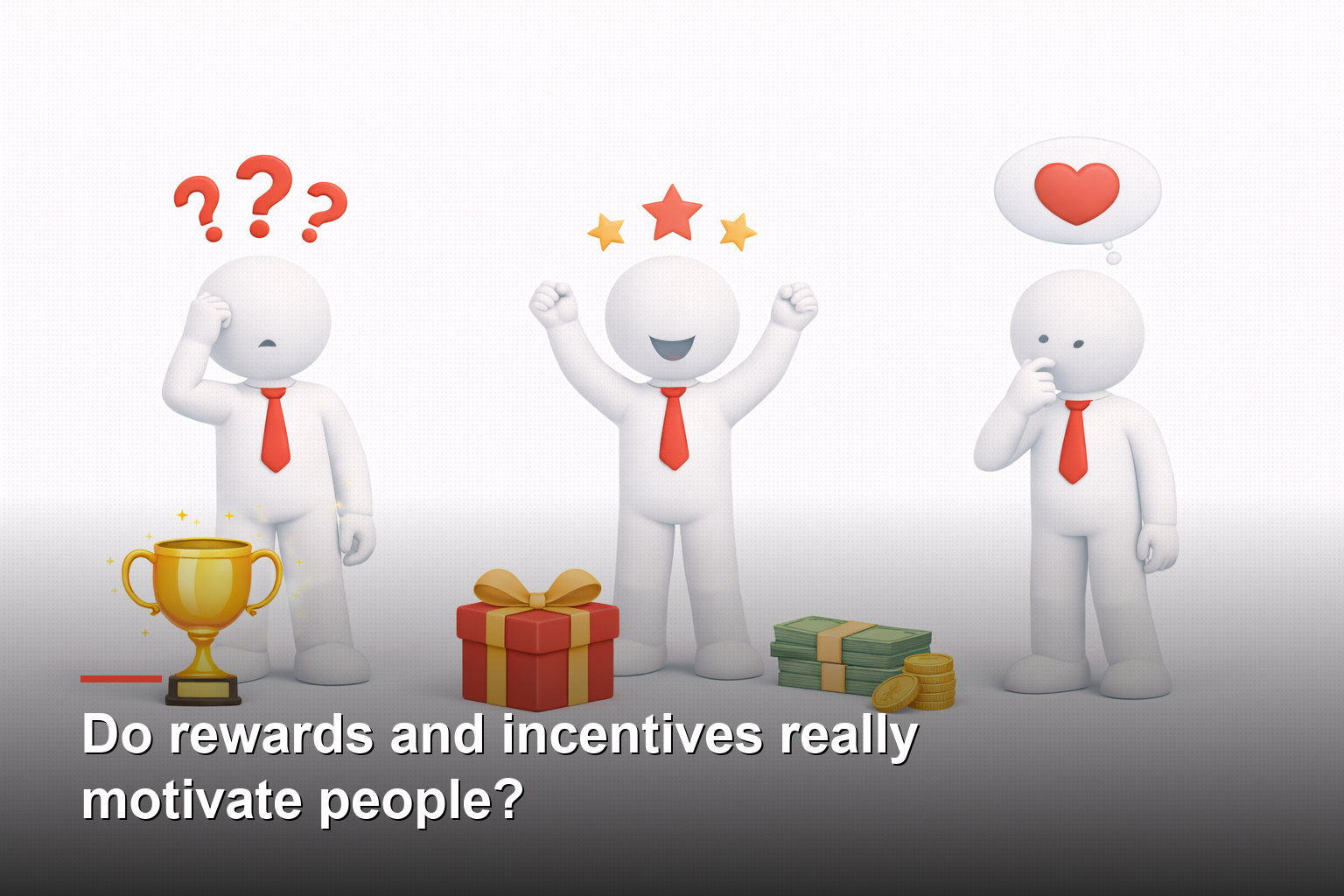
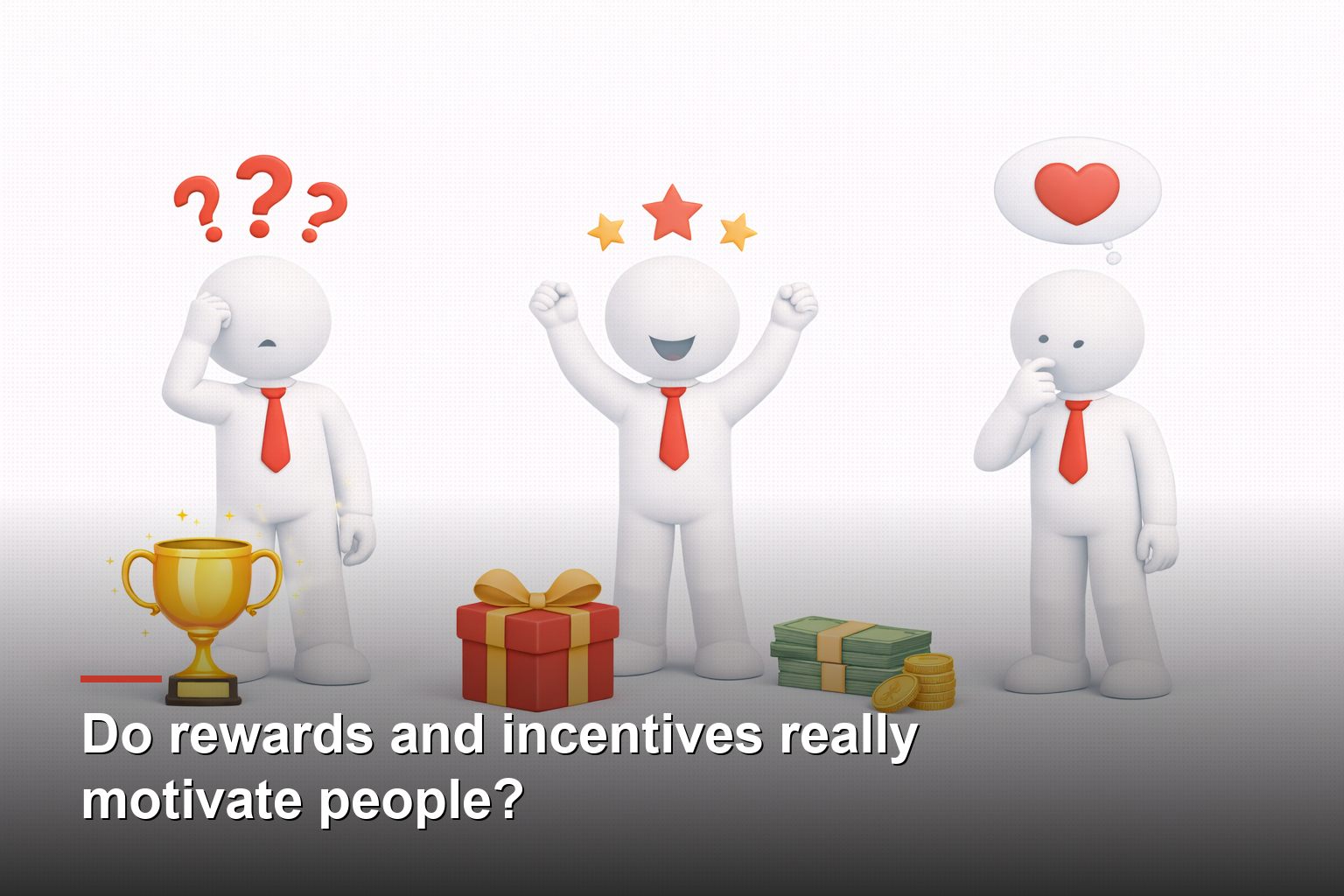
  • Do rewards and incentives really motivate people?

    Do rewards and incentives really motivate people?

    Press  ·  4 min read

    Let’s formulate it better: rewards and incentives motivate people to make them calm and motivated to work and be more productive?1. Introduction

    The practice of offering rewards, gifts or incentives to employees is widespread in all organizations. In the context of SMEs it often represents the most immediate lever with which we try to increase engagement, satisfaction and performance. However, scientific literature indicates that these tools produce very different effects based on the nature of the work, the perception of fairness and the underlying psychological dynamics. The central question is therefore the following: Do rewards and incentives really motivate people?


    2. Incentives and motivation: what the research says

    Studies on motivation, particularly in the field of work psychology, distinguish between extrinsic motivation e intrinsic motivation. “Carrot and stick” systems, based on logic if… then…, fall into the first category.

    2.1 The limit of extrinsic systems

    The research of Deci, Ryan and collaborators (1985, 2000) shows that economic and material rewards work only for routine work, repetitive, mechanistic. In such activities, rewards can increase speed and accuracy, as long as:

    • the work is objectively simple and standardized

    • operational autonomy is guaranteed

    • the reward system is clear, transparent and consistent

    This framework is also consistent with the approach of reward systems reported in HR manuals and in studies on remuneration policies, where variable leverage generates results in highly structured tasks with measurable outputs.

    2.2 When incentives become counterproductive

    In the roles they require creativity, problem solving, conceptualization, decision making, economic incentives produce the opposite effect: they reduce motivation, creativity and availability for voluntary commitment.

    This phenomenon is known as overjustification effect, according to which external reward “crushes” intrinsic motivation, shifting the focus from interest in the task to the desire to obtain the reward.


    3. The theoretical framework: the Self-Determination Theory

    The Self-Determination Theory (Deci & Ryan) represents today the most accredited theory for understanding human motivation. It identifies four fundamental conditions for an individual to be motivated, effective and involved in their role.

    3.1 Pay equity

    Compensation must be fair relative to the market and internally consistent. In the absence of equity there is no incentive capable of compensating for the perception of injustice.

    3.2 Autonomy

    The person must be able to choose how to organize part of their work. Autonomy does not mean the absence of control, but the possibility of making decisions within clear margins.

    3.3 Mastery

    The worker must have the opportunity to improve, learn and perfect technical and behavioral skills. The absence of growth reduces motivation.

    3.4 Purpose

    People want to contribute to something meaningful. The purpose may or may not coincide with the company objective, but it must be perceived as having meaning.

    If these conditions are not respected, no incentive will generate lasting motivation.


    4. Why personalized rewards work better than standard rewards

    Research on recognition theory shows that people respond more positively to forms of reward that enhance identity, specific contribution, and observable behaviors. Generic recognition, such as “nice work,” has limited impact. On the contrary, feedback that links the employee’s personality and action to company objectives improves engagement and strengthens the sense of belonging.

    This logic is consistent with the models of remuneration policies and reward systems described in the HR literature, according to which an effective incentive lever must be situational, proportionate and integrated into the performance management .


    5. Answer to the initial question: do rewards and incentives motivate people?

    In light of scientific evidence, the answer is NO, at least in the traditional form in which many companies continue to use them.

    Incentives motivate Alone in very specific contexts and for routine tasks. For all other roles, which represent the majority in modern organizations, motivation derives from autonomy, fairness, possibility of growth and sense of work.

    Rewards can be useful, but only as a complement, not as a primary lever.


    Bibliography

    • Deci, E. L., & Ryan, R. M. (1985). Intrinsic Motivation and Self-Determination in Human Behavior. Springer.

    • Deci, E. L., & Ryan, R. M. (2000). The “What” and “Why” of Goal Pursuits. Psychological Inquiry.

    • Pink, D. (2009). Drive: The Surprising Truth About What Motivates Us. Riverhead Books.

    • Hackman, J. R., & Oldham, G. R. (1976). Motivation through the Design of Work. Organizational Behavior and Human Performance.

    • OD&M Consulting. Reward Systems. Design guide.


    Webography

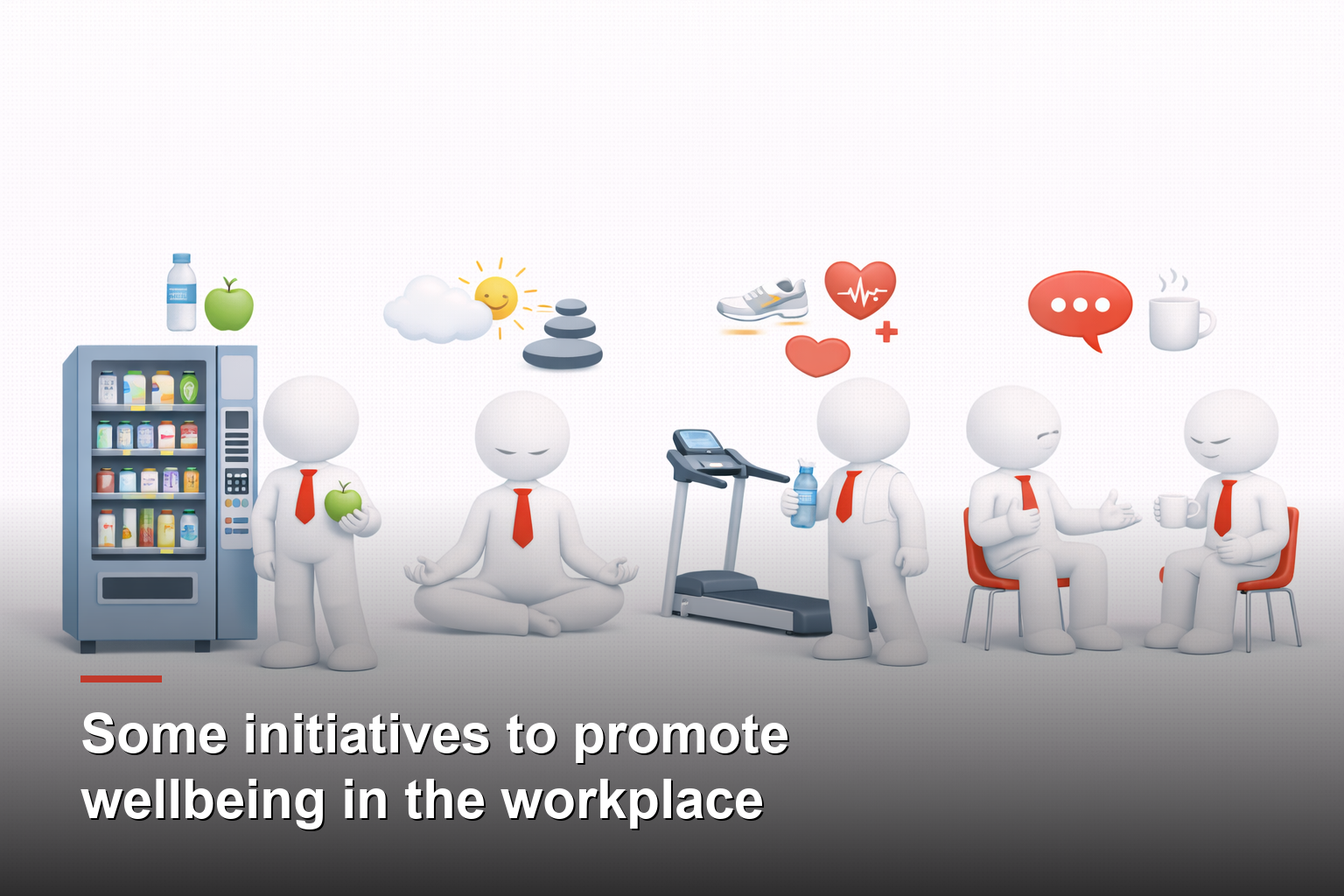
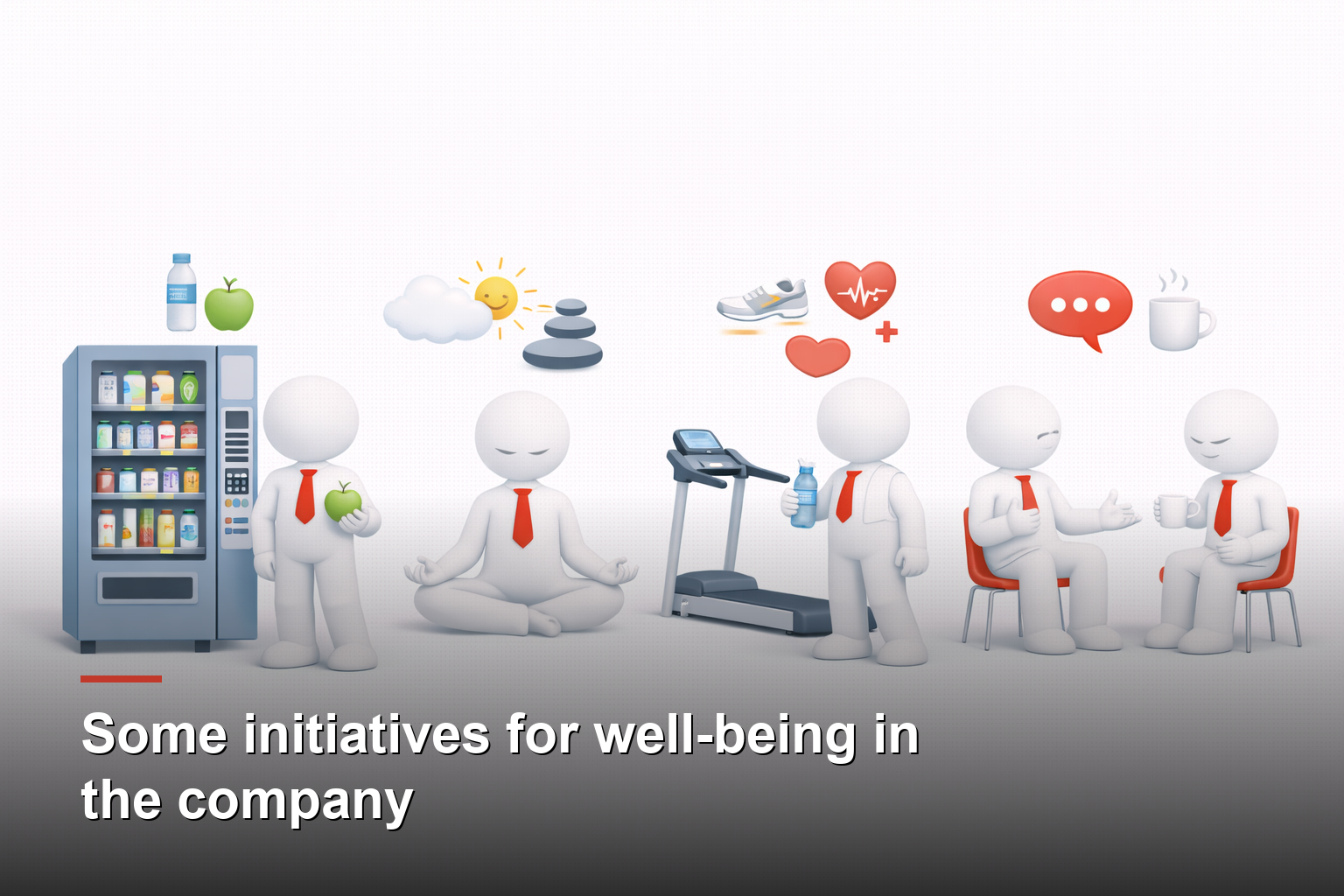
  • Some initiatives for well-being in the company

    Some initiatives for well-being in the company

    Engagement  ·  3 min read

    Initiatives for well-being, engagement and therefore the employee motivation they are often considered as cash benefit programs. However, they are not always effective.

    Both well-being and engagement levels are recognized as leading indicators of organizational performance and even a company’s market value. However, well-being initiatives can, sometimes, only produce a positive impact if employees participate actively and without creating confusion they must be designed, communicated and carried out with great care and continuity by directly involving the workers themselves.

    When it comes to employee engagement and well-being and engagement initiatives, we need to think of employees as if they were customers. This means they require as much attention as you would spend attracting new customers and retaining existing ones, so it can be useful to think about how we typically set up an advertising campaign.

    A.I.D.A. , one of the longest-standing models used in both marketing and advertising (perhaps a little obsolete but still effective today), is also excellent for planning a wellness event. A.I.D.A. is the acronym for Attention, Interest, Desire and Action, which perfectly illustrates the path that each staff member should take to achieve the most significant results.

    Attention: ensure that the staff is stimulated

    “Make sure you effectively communicate the timing and content of the event to all departments. Timing is also crucial, you don’t need to plan one event at a time…” he says Neil Pagnam, one of Personal Group’s Business Development Directors.

    When it comes to getting their attention, communication is key. However, it is important to use a multi-channel strategy based on employee preferences to ensure that all employees are engaged with messages they understand.

    While older members of the workforce may prefer to speak on the phone, by email or better yet face to face, Millennials are more likely to respond to digital channels and push services, such as instant messaging and app notifications.

    Interest – offer benefits that pique their interest

    It’s not just your communication methods that need to be adapted to your workforce for wellbeing and engagement initiatives, it’s also important to offer benefits that are relevant to their needs and expectations.

    It may be helpful to have a conversation with HR to find out what kind of things would appeal to your employees.

    Desire: create the desire for the benefits you intend to provide

    Consider how you present the benefits.

    Knowing that these benefits are chosen by a variety of staff, not just directors, we need to think carefully about which ones and how to deliver them.

    Action: Actively involve employees

    “The journey doesn’t stop once employees have joined the benefits program. Sustaining use requires the full attention of the launch itself.”

    It is important to use the benefits in a way that is as easy as possible for your staff.

    This can be done by ensuring that your HR benefits and services are easily accessible. The simplest and most effective way to do this is to use the power of your smartphone!

    Chances are, most of your employees have access to their own smartphone or have been provided with a company phone to allow them to complete their daily tasks. The implementation of an Employee Benefits and Engagement App will reach staff anytime, anywhere.

    Remember, you can’t just launch a benefits platform.

  • 5 practices that will reinvigorate your strategy

    5 practices that will reinvigorate your strategy

    Work  ·  3 min read

    Every human resources professional, or personnel director, knows that people are an organization’s main competitive advantage, but not all organizations live by this belief. Not because the company chooses to ignore its employees, it simply and unconsciously neglects the workforce. When you consider the ever-changing technological environment and the consistent amount of innovation, it’s easy to see how this happens.  Here are 5 practices that will reinvigorate your employee engagement strategy.

    1.Create a transparent workplace  Seems simple enough, right? Find ways to let employees know and know what’s happening at all levels of the company. They will feel more involved; more faithful than he would be if he were left in the dark. Organizations often focus too much on hiding information from employees. This can lead to chatter and a feeling of distrust in the workplace. Being transparent organizations means developing an inclusive environment. This creates a greater sense of engagement and encourages employees to invest their future in the company.

    2. Encourage open communication  The foundation of a transparent organization is open communication. Encourage open communication at every level: from the new employee up to the CEO. Consider an open-door policy. Creating a culture of honesty can help manage a crisis should it arise. This will lead to employees feeling more comfortable voicing their opinions and will ultimately be a happier workforce.

    3. Encourage collaboration Being part of a team naturally fosters commitment. Teams work primarily on the fact that multiple people can work together. In other words, they must commit to each other to achieve a goal. Introduce new technologies to offer greater engagement and cohesion. For example, a simple cloud solution like Google Docs or Hangouts will help reduce worries.

    4.Investment in employees This is vital to an engagement strategy. Undervalued employees will ultimately seek out potential employers who will offer what they are looking for. It is important to provide development opportunities. Offer your employees the opportunity to enhance or enhance their existing skills. This drives greater business connectivity and engagement.

    5.Employee well-being. Among the 5 practices that will reinvigorate the strategy, this is the last but certainly very important: focus on creating an environment that promotes employee well-being and creating a healthier work environment. Many employees place greater importance on living a healthy lifestyle. A’2017 survey revealed that nearly half of 1,000 employees surveyed leave a job where an employer doesn’t care about their well-being. It is for this reason that employee engagement programs should consider healthy options.

    Engagement is more than just employees working together. It’s about creating an environment that inspires loyalty and breeds ambition.  A healthy employee engagement program is also a vital component of a successful retention program, and in a world that continues to see a shortage of skilled workers, keeping your workers in-house becomes critical.

  • Inefficiency lies in working relationships

    Inefficiency lies in working relationships

    Work  ·  5 min read

    1. Introduction

    Corporate productivity is often interpreted as the result of more or less advanced technical skills, operational tools or organizational models. However, a significant part of the scientific literature indicates that the main source of inefficiency in organizations lies in work relationships. Professional relationships, the quality of leadership and the internal climate generate direct impacts on turnover, engagement and individual and collective performance.

    SMEs, due to their informal structure and the concentration of decisions in a small number of figures, are particularly exposed to the effects of unmanaged relational conflicts. The evidence reported confirms the centrality of the human factor as a critical lever of organizational functioning.


    2. Evidence on the relational nature of inefficiency

    2.1 Conflicts, complaints and hidden costs

    According to the Chartered Institute of Personnel and Development (CIPD, 2017), an employee spends on average 12 days a year complaining about processes, colleagues or management. This time, often invisible in economic accounts, erodes productivity and fuels a negative organizational climate.

    In parallel, employers dedicate over 13 days a year to the management of internal conflicts. The opportunity cost of this commitment affects the company’s ability to dedicate time to strategic development and innovation.

    2.2 Engagement and quality of relationships

    Only the 30 percent of workers declares himself actively engaged (Gallup, 2023). The data is not just a cultural indicator, but a measure of the quality of professional relationships, the clarity of objectives and perceived support.

    The Saratoga Institute highlights that the80 percent of resignations are caused by relationship problems, in particular conflicts with the direct superior. This evidence confirms the systemic impact of daily leadership on organizational well-being.

    2.3 Waste of managerial time and lack of trust

    Managers lose between 25 and 30 percent of the day to manage unproductive discussions, misinterpretations, personal conflicts and procedural misunderstandings. Trust in leaders is significantly low. Only the 30 percent of employees declares that he trusts his superior, a fact that directly affects commitment and collaboration.

    In the end, two-thirds of workers feel undervalued, and when evaluated, believes that the process does not correctly represent their contribution.

    These phenomena make up a clear picture: the loss of efficiency does not lie in skills, processes or the labor market, but in the fragility of the relational system and the leadership models adopted.


    3. Theoretical interpretation: why do work relationships generate inefficiency?

    Organizational relations theory (Schein, 2010) highlights that every business system functions on the basis of implicit norms, expectations and communication models. When these elements lack coherence or clarity, tensions emerge and manifest themselves in the form of:

    • interpersonal conflicts

    • decline in engagement

    • growing turnover

    • poor collaboration

    • operational inefficiency

    The literature on Psychological Contract (Rousseau, 1995) confirms that the perception of fairness, recognition and support is a key determinant of performance. A violated psychological contract leads to defensive behaviors, demotivation and organizational abandonment.


    4. The new approach required of businesses

    If the main cause of inefficiency lies in working relationships, companies must adopt a model that does not limit itself to informing but transform behaviors, relationships and culture. The evidence suggests some priority levers.

    4.1 Transform, don’t inform

    Traditional training, oriented towards the transmission of content, has limited impact if it is not integrated with development programs, coaching, feedback and growth-oriented performance systems.

    4.2 Promote self-management

    Accountability (self-management) reduces conflicts, increases autonomy and allows workers to solve problems more quickly. Hackman and Oldham’s (1976) research on job design confirm that autonomy and meaningfulness of work improve performance and satisfaction.

    4.3 Leave operational autonomy

    Self-determination theory (Deci & Ryan, 2000) shows that people are more productive when they perceive autonomy and trust. Excess control generates resistance and defensive behaviors.

    4.4 Orientation to the future

    Developing concrete growth paths reduces turnover and fuels engagement. The learning organization model(Senge, 1990) highlights that the ability to continuously learn is a condition for competitiveness.

    4.5 Build lasting collaborative relationships

    Positive relationships reduce stress, increase the quality of work and improve the ability to deal with complex problems. The World Class Manufacturing and the Toyota Way (Liker & Meier, 2007) demonstrate that structured cooperation leads to superior performance and operational stability.


    5. Conclusions

    The data clearly shows that the main business inefficiency does not come from people, but from the way they interact. A weak relationship system generates high costs, slow decisions, turnover, conflicts and inefficiencies that no software or technical reorganization can compensate for.

    Companies that invest in the quality of relationships, leadership, clarity of roles and the growth of people see a clear and stable improvement in performance.

    To identify the areas in which an organization is losing efficiency, a targeted preliminary check can be useful, capable of quickly analyzing critical relational issues and management systems.


    Bibliography

    • CIPD. (2017). Managing conflict at work. Chartered Institute of Personnel and Development.

    • Deci, E., & Ryan, R. (2000). Self-Determination Theory. Psychological Inquiry.

    • Gallup. (2023). State of the Global Workplace Report. Gallup Press.

    • Hackman, J. R., & Oldham, G. R. (1976). Motivation through the design of work. Organizational Behavior and Human Performance.

    • Liker, J. K., & Meier, D. (2007). Toyota Talent. McGraw-Hill.

    • Rousseau, D. (1995). Psychological Contracts in Organizations. Sage Publications.

    • Schein, E. H. (2010). Organizational Culture and Leadership. Jossey Bass.

    • Saratoga Institute. (2004). Employee Retention Survey. Saratoga Institute Research.

    • Senge, P. (1990). The Fifth Discipline. Doubleday.


    Webography

  • The principles of motivation in the company

    The principles of motivation in the company

    Engagement  ·  2 min read

    The principles of motivation in the company

    Being unmotivated in the workplace costs American industry hundreds of billions of dollars a year in lost productivity and lost sales. QThis, however, is changing rapidly. In recent years, hundreds of companies have entrusted top management with strategies to motivate their employees and find ways to increase employee loyalty and productivity. More and more of these executives have the word “motivation” in their priorities. 

    The Occupy Wall Street movement and the famous television series Undercover Boss they reflect underlying needs that drive the emergence of the need to deal more and more precisely with motivation within companies. The world is asking for a more human form of work that truly values ​​people. Many Americans, and others, enjoy watching episodes of Undercover Boss which demonstrate how top management understands the importance and personal needs of employees. Apple suffered a major loss on Wall Street when it became clear that its new iPad would be built by hundreds of thousands of Chinese working in conditions that almost no Americans would tolerate. It then subsequently changed its business practices.

    For decades it was easy to ignore the principles of motivation in the company because motivation itself was difficult to define and almost impossible to measure. But for a growing number of organizations, the question now is not whether motivation matters, but rather how to achieve it and perform best. 

    For organizations dedicated to employee engagement and the  principles of motivation in the company have begun to increase their motivation, such as McDonalds, New York Stock Exchange, Whole Foods, Container Store, Southwest Airlines, Stew Leonard and many others, it is more of a field test than an exact science because the books provide little guidance on how to proceed.

    However, it is easy to confuse leadership with involvement and motivation. Leadership, of course, is essential for engagement and motivation. It simply describes  the personal skills required of people who manage other people at any level to achieve results.  The process of motivating people well in the company requires more than just good leadership and an overall goal. It requires everyone in the company to be informed and clear about what the company mission is and how they can contribute to it and also benefit from it. It also requires providing people with the skills or abilities to contribute and pushing them to get involved, share and collaborate. It’s about translating leadership into results through an appropriate framework of tools and tactics. It requires not just making promises, but also maintain them every step of the way.  

  • Three fundamental levers for companies

    Three fundamental levers for companies

    Work  ·  3 min read

    vThree fundamental levers for companies

    Building a diversity strategy is a structural priority for many organizations. Diversity is not an isolated initiative. It is a paradigm that runs through the entire work experience and influences the quality of decision-making processes, innovation and competitive ability. Strategic human resource management literature shows that high-diversity systems foster learning, reduce bias, and develop more robust solutions. Diversity therefore becomes a factor linked to value, not a symbolic objective.

    The first step is to recognize the broad nature of the topic. Diversity is about talent acquisition, culture, leadership, assessment, career paths and listening methods. The organization must question how the processes influence attraction, selection, motivation and permanence. The manuals dedicated to organizational well-being show that a sense of belonging, perceived fairness and quality of relationships represent the pillars of an inclusive environment.

    Talent acquisition represents the first field of application. Bringing heterogeneous profiles into the company requires the ability to broaden the search pool, review languages, criteria and channels. The evidence shows that the presence of just one different candidate in the shortlists reduces the probability of this being hired, because the evaluation process tends to focus on the profile perceived as most familiar. Diversity must therefore be integrated into the design of the process, not added ex post. HR management is responsible for defining broader pipelines, collaborating with professional communities and reviewing evaluation metrics in light of the expected cultural impact.

    Recruiting requires an active presence in the digital places where professional conversations happen. There selection it cannot be based on the simple publication of adverts. Seeking diverse candidates involves listening, talking, and observing social networks that represent underrepresented groups. Digital platforms allow you to map skills, interests and professional paths. The strategic management of professional services firms remembers that the ability to attract talent arises from reputation, clarity of value and quality of the initial exchange.

    A diversity strategy then requires attention to organizational commitment. Inclusion manifests itself in the continuity of relationships and in the perception of growth possibilities. A culture that values ​​diversity must make internal paths visible, guarantee access to development programs and build a leadership model that supports equity and participation. The analysis of remuneration policies and reward systems shows how recognition mechanisms impact the motivation and retention of employees belonging to different groups.

    Listening is an essential element. Surveys and focus groups help understand perceptions, obstacles and expectations. Work psychology highlights that the sense of belonging arises from the opportunity to make one’s voice heard and to see one’s experience recognized in company processes. The organization that listens develops a greater ability to adapt. Reduces turnover. It strengthens cohesion and encourages participation in decision-making processes.

    An effective diversity strategy is built through cycles of observation, intervention and learning. The company must monitor the impact of decisions, identify inconsistencies, evaluate attrition data and interpret differences between areas or functions. Diversity thus becomes a central component of the HR system. Not an image initiative.

    An inclusive culture requires continuity and responsibility. Organizations that achieve lasting results treat diversity as a strategic factor that produces value over time. HR management has the task of building the conditions that allow employees to contribute according to their abilities and perspectives. Each individual brings a cognitive richness that broadens the company vision. Diversity becomes a competitive advantage when the organization recognizes and integrates this plurality.


    ESSENTIAL BIBLIOGRAPHY

    Avallone F., Bonaretti M., Organizational Wellbeing .
    University manual of Human Resources Strategy.
    Kaiser S., Ringlstetter M.J., Strategic management of professional services companies .
    OD&M Consulting, Reward Systems. Design guide .


    WEBGRAPHY


    Harvard Business Review, Why Diverse Teams Are Smarter.

  • Bibliography on motivation

    Bibliography on motivation

    Engagement  ·  11 min read

    Bibliography on MOTIVATION updated in February 2026


    Institute for High Performance (2011) What Executives Really Need to Know about Employee Engagement, June 2011; summarized in Hastings, R.R., Study Explores Mysteries of Employee Engagement, SHRM, 26 October 2011.
    Aitken, G., Marcs, N., Purcell, J., Woodruffe, C. and Worman, D. (2006) Reflections on Employee Engagement, London: CIPD.
    Alfes, K., Truss, C., Soane, E.C., Rees, C. and Gatenby, M. (2010) Creating an Engaged Workforce, London, CIPD.
    Allen, K.E. and Cherrey, C. (2000) Systematic Leadership: Enriching Meaning in Our Work, Lantham, MD: University Press of America.
    Amabile, T.M. and Kramer, S.J. (2010) ‘What really motivates workers’, Harvard Business Review, vol. 88, no. 1 (January/February), pp. 44–5.
    Employee Engagement 2.0: Hot to Motivate Your Team for High Performance, by Kevin Kruse
    Carrots and Sticks Don’t Work: build a Culture of Employee Engagement with the Principles of RESPECT, by Paul Marciano
    Employee Engagement for Everyone: 4 Keys to Happiness and Fulfillment at Work, by Kevin Kruse
    Employee Engagement: Tools for Analysis, Practice, and Competitive Advantage, by William Macey et al
    Intrinsic Motivation at Work, by Kenneth Thomas
    Employee Engagement Lessons From the Mouse House, by Pete Blank
    The Art of Engagement: Bridging the Gap Between People and Possibilities, by Jim Haudan
    Employee Engagement for Dummies, by Bob Kelleher
    Louder Than Words: Ten Practical Employee Engagement Steps That Drive Results, by Bob Kelleher
    Manager’s Guide to Employee Engagement, Scott Carbonara
    Human resource management. BEARDWELL, J.
    Employee engagement: What exactly is it? SOLDIERS, P.
    Employee engagement: What exactly is it?
    Creating an Engaged Workforce: Findings from the Kingston Employee Engagement Consortium Project. CIPD
    PSYCHOLOGICAL CONDITIONS OF PERSONAL ENGAGEMENT AND DISENGAGEMENT AT WORK. KAHN, W.A.
    Measuring and Managing Employee Work Engagement: A Review of the Research and Business Literature. ATTRIDGE, M.
    Employee engagement. Kingston Business School, Kingston University. KULAR, S.
    Employee Engagement and Manager Self-Efficacy. LUTHANS, F. AND PETERSON, S.J.
    First, break all the rules. BUCKINGHAM, M. AND COFFMAN, C.
    Engagement, Assertiveness and Business Performance – A New Perspective. CLELAND, A., MITCHINSON, W. AND TOWNSEND, A.
    To be fully there: psychological presence at work. KAHN, W.A
    What engages employees the most or, The Ten C’s of employee engagement. SEIJTS, G. H. AND CRIM, D.
    Getting engaged. RUTLEDGE, T.

    ACAS. (2010) Managing attendance and employee turnover. London: ACAS. Available at: http://www.acas.org.uk.

    Angelo S Denisi, Ricky W Griffin: (2009) Human Resources Management, Biztantra Publication, New Delhi 2nd edition.

    Aquino, K., Griffeth, R.W., Allen, D.G., Hom, P.W. (1997). Integrating justice constructs into the turnover process: A test of a referent cognitions model. Academy of Management Journal, 40, 1208-1227.

    Armsgtrong Michael, Armstrong’s Handbook of Human Resource Management. Kogan Pagr, London. 2009

    Baltes, B.B., Briggs, T.E., Huff, J.W., Wright, J.A., & Neuman, G.A. (1999) Flexible and compressed workweek schedules: A meta-analysis of their effects on work-related criteria. Journal of Applied Psychology, 84, 496-51.

    Bohlander George, Scott Snell and Artyhur Sherman: Managing Human Resources SouthWestern College Publishing. Thomson Learning. US. 12the Edition 2001. Productivity-quality of work life-profits

    Branham, L. (2005). Planning to become an employer of choice. Journal of Organizational Excellence, 24, 57-68

    Business Development Bank of Canada (2006). BDC Perspective: Recruit and retain your workforce. www.bdc.ca

    Canadian Federation of Independent Business (CFIB). (2005). Succession can breed success. http://www.cfib.ca/success/pdf/BDC_presentation.pdf.

    Cooney, J. (2006). Mentoring – Low Cost, Big Benefits. The Conference Board of Canada. http://www.conferenceboard.ca/humanresource/mentoring- inside.htm

    Cascio Waynbe F. Managing Human Resources: Productivity, Quality Work Life, Profits: Tata McGraw-Hill Publishing Company Limited, New Delhi. 7th Edition2006.

    Dalton, D.R., & Mesch, D.J. (1990). The impact of flexible scheduling on employee attendance and turnover. Administrative Science Quarterly, 35, 370-38.

    Fombrun, C. J., & Shanley, M. (1990). What’s in a name: Reputation-building and corporate strategy. Academy of Management Journal, 33, 233-258.

    Foot, David. (2000). Boom, Bust and Echo-2000. Stoddard Publishing. Toronto: ON. Gallup Study (2006). Feeling good matters in the workplace Gallup Management Journal

    Gans, N. and Zhou, Y.-P (2002) . Managing learning and turnover in employee staffing. Operations Research 50 (2002) 991–1006. Gans, N., Koole, G. and Mandelbaum (2003), A. Telephone call centers: tutorial, review and research perspectives. Manufacturing and Service Operations Management

    Gregory P. Smith. 401 Proven Ways to Retain Your Best Employees. Chart Your Course Publications, Georgia. 2007.Griffeth, R.W., & Hom, P.W. (2001). Retaining valued employees. Thousand Oaks, CA: Sage

    Griffeth, R. W., Hom, P. W., & Gaertner, S. (2000). A Meta-Analysis Of Antecedents.

    Correlates Of Employee Turnover: Updates, Moderator Tests, And Research Implications For The Next Millennium. Journal of Management, 26, 463-488.

    Hrebiniak, L.G., & Alutto, J.A. (1972). Personal And Role-Related Factors In The Development of Organizational Commitment. Administrative Science Quarterly, 17, 555-573.

    Improving Staff Retention. HR Studies, No 863. London: IDS. JANAS, K.M. (2009) Keeping good people during bad times. Workspan. 52,,66-70.

    John A Pearce II & Richard B. Robinson, Jr. Strategic Management: Formulation, Implementation & Control Tata McGraw-Hill Publishing Company Limited, New Delhi. 2005 Edition.

    LAWLER, E.E. (2008) Why are we losing all our good people? Harvard Business Review. 86,.41-46,48,50-51. Lockwood, N.R. (2006).

    March, J.G., & Simon, H.E. (1958). Organizations. New York: John Wiley. Marr, Lisa. Grace. (2006, March 1). Every 7 seconds another boomer turns 50.

    Massachusetts Business Roundtable and the UMass Boston Emerging Leaders Program Team (2009). Corporate Social Responsibility and Employee Recruitment and Retention:

    Muchinsky, P.M. (1977). Employee absenteeism: A review of the literature. Journal of Vocational Behavior, 10, 316-34.

    Muchinsky, P.M., & Morrow, P.C. (1980). A Multidisciplinary Model Of Voluntary Employee Turnover. Journal of Vocational Behavior, 17, 263-290. O’Donnell, Sarah. (2006)

    Parker, O. (2006).The Real Bottom Line on Training: It’s How, Not How Much. The Conference Board of Canada.http://www.conferenceboard.ca/humanresource/training-inside.htm

    Porter, L.W., & Steers, R.M. (1973). Organizational, work, and personal factors in employee turnover and absenteeism. Psychological Bulletin, 80, 151-17

    Price, J. L., & Mueller, C. W. (1981). A casual model of turnover for nurses. Academy of Management Journal, 24, 543-56.

    Raines, Claire. (2003). Connecting Generations. Crisp Publications, Menlo Park: CA. RANKIN, N. (2008) The drivers of staff retention and employee engagement. IRS Employment Review. No 901, 1 July. 13pp.

    Rappaport, A., Bancroft, E., & Okum, L. (2003). The aging workforce raises new talent management issues for employers. Journal of Organizational Excellence, 23, 55-66. Robinson, S.L. (1996). Trust and breach of the psychological contract. Administrative Science Quarterly, 41, 574-599.

    Scott, K.D., & McClellan, E.L. (1990). Gender differences in absenteeism. Public Personnel Management, 19, 229-253.

    Secretan, Lance (1999). Inspirational Leadership: Destiny, Cause and Calling, The Secretan Center, (1999), ISBN 0-9694561-9-0

    Steel, R.P., Griffeth, R.W., & Hom, P.W. (2002). Practical retention policy for the practical manager. Academy of Management Executive, 16, 149-162.

    Steers, R. (1977). Antecedents and outcomes of organizational commitment. Administrative Science Quarterly, 22, 46-56.

    SUFF, R. (2010) Labor turnover rates and costs: IRS survey 2010.IRS Employment Review. 14 June, 9pp

    TAYLOR, S. (2002) The employee retention handbook. Developing practices. London: Chartered Institute of Personnel and Development.

    Zohar, E., Mandelbaum, A. and Shimkin, N (2002). Adaptive behavior of impatient customers in tele-queues: theory and empirical support. Management Science, 48, 566–583.

    Cynthia D. Fisher, Lyle G. Schoenfeldt, and James B. Shaw – Human Resource Management. Biztantrta, New Delhi

    Adamsky Howard (2005), “6 Ways Recruiters Can Support Building a Better Organization: Initiatives to Focus on in the Coming Year,”

    American Society of Health-System Pharmacists (2003), “ASHP Guidelines on the Recruitment, Selection, and Retention of Pharmacy Personnel,” Am J Health-Syst Pharm, 60, pp.587 -93

    Chartered Institute of Personnel and Development (CIPD) (2005), “Recruitment, Retention and Turnover,”

    Cook, Mike (2007), “Keep the People You Need in the Outsourced Economy,” Web document: URL: www.humanresources.about.com.

    Dibble, S. (1999), Keeping Your Valuable Employees, John Wiley and Sons, New York.

    Figg Jonathan (1999), “Power Staffing 101 -Recruitment and Retention Strategies of Internal Auditing Executives – Cover Story,” .

    Fitz-enz, J. (1997), “It is Costly to Lose Good Employee,” Workforce, 76.8, pp.50 – 51.

    Flippo, Edwin B. (1984), Personnel Management, (4th ed), McGraw Hill, New York.

    Foster, Ian and Kendra Krolik (2008), “Managing Employee Retention,”

    Gage, Kathleen (2005), “Increase Profits through Employee Retention,”

    Haggerty, Deb (2002), “Five Steps to Fireproof Your Hiring Process,”

    Harris, J. and Brannick, J. (1999), Finding and Keeping Great Employees, AMA publications, New York.

    Jucius, M. J. (1973), Personnel Management, Homewood: Richard D. Irwin, Illinois.

    Kaiser, Kate and Hawk Stephan (2001), “An Empirical Study on the Recruitment and Retention of IT Personnel,” paper presented at the Decision Sciences Institute 32nd Annual Meeting.

    Khanna, Sushama (2008), “Increasing Employee Retention through Employee Engagement – ​​A challenge for HR,” Annual Handbook of Human Resource Initiatives.

    VISION—The Journal of Business Perspective Vol. 12 l No. 4 l October–December 2008 Employees’ Perspective on Human Resource Procurement Practices as a Retention Tool 69

    Leder, Sam (1999), “Hiring and Keeping Salespeople,”

    Legge, Bob (2008), “Ten Strategies for Employee Retention in Call Centers,”

    Punia, B. K. and Priyanka Sharma (2008), “Organisational Employee Development Initiatives and their Impact of Retention Intentions: The Case of Indian IT Industry,” Amity Business Review, 9.1, 2008, pp. 12 – 23.

    Punia, B. K. and Priyanka Sharma (2008), “Why Do Employees Seek Alternative Employment and What Makes Them Stay:

    MacHatton, Michael T., Van Dyke, Thomas and Steiner, Robert (1997), “Selection and Retention of Managers in the US Restaurant Sector,” International Journal of Contemporary Hospitality Management, 9.4, pp.155 – 160.

    Meyer, John, Topolnytsky, Laryssa, Krajewski, Henryk and Gellatly Ian. (2003), Best Practices: Employee Retention, Tomson–Carswell, Toronto.

    Milkovich George T. and Boudreau Johri W. (1997), Human Resource Management,, Irwin, Chicago. Newton, Mark (2005), “Finding Great People!” Gwinnett Business Journal.

    Punia, B. K. (2004), “Employee Empowerment and Retention Strategies in Diverse Corporate Cultures: A Prognostic Study,” Vision: The Journal of Business Perspective, 8.1, pp. 81 – 91.

    Punia, B. K. and Luxmi (2003), “Employees’ Retention in Cross-Cultural Environment-A Challenge for the Future Organizations,” The Journal of Indian Management and Strategy, 7.6, pp.35 – 40.

    The Case of Indian IT Industry,” Asia Pacific Business Review, 4.2, pp. 20 – 28.

    Robert Half International (2008), “Even in Current Economy, Employee Retention Top Concern,”

    Sirota Survey Intelligence (2006), “Holding on to Newer Employees is Key to Improving Worker Retention Rate,” Purchase, .

    Smith, Gregory P. (2001), Here Today, Here Tomorrow, Dearborn Trade Publishing, Chicago.

    Srivastava, Vinay K. and Shailesh Rastogi (2008), “Employee Retention: By Way of management Control Systems, ACM Ubiquity, 9.16, pp.22 – 28.

    Taylor, Craig R. (2008), Employee Retention Strategies: Learning and Development’s Vital Role in Keeping Great Talent, Maitland Center Parkway Maitland, FL: TalentKeepers 1060.

    Winninger, Thom (2007), “Grow Smart Retaining through Training,”

    Fitz-enz, J. (1997). It’s costly to lose good employees. Workforce, 50, 50.

    Fried, Y., & Ferris, G. R. (1986). The dimensionality of job characteristics: Some neglected issues. Journal of Applied Psychology, 71, 419-426.

    Gall, M., Borg, W., & Gall, J. (1996). Educational Research: An Introduction (Sixth ed.). White Plains: Longman Publishers.

    Garger, E. (1999). Holding on to high performers: A strategic approach to retention. Compensation & Benefits Management, 15(4), 10-17.

    Giacalone, R., Knouse, S., & Montagliani, A. (1997). Motivation for and prevention of honest responding in exit interviews and surveys. The Journal of Psychology, 131(4), 438.

    Maslow, A. H. (1943). A Theory of Human Motivation. Psychological Review, 50, 394-395.

    McClelland, D. C. (1961). The Achieving Society. New York: Free Press.

    McLagan, P. (1989). Models for HRD Practice. Training & Development Journal, 43(9), 49-59.

    McMillan, J. (1998). Educational Research (2 ed.). New York: HarperCollins College Publishers.

    Mitchell, T. R. (1982). Motivation: New Direction for Theory, Research, and Practice. Academy of Management Review, 81.

    O’Malley, M. (2000). Creating Commitment: How to Attract and Retain Talented Employees by Building Relationships That Last (Vol. 1). New York: John Wiley & Sons, Inc.

    Pinder, C. (1984). Work Motivation: Theory, Issues, and Applications. Glenview: Scott, Foresman and Company.

    Porter, L., & Lawler, E. (1968). Managerial Attitudes and Performance. Homewood: Irwin.

    The Journal of the American Academy of Business, Cambridge * September 2004 60

    Rich, C. (1999). Incentive compensation challenges: Attracting and retaining key employees. The Human Resource Professional, 12(2), 12-15.

    Robbins, S. (1993). Organizational Behavior (6 ed.). Englewood Cliffs: Prentice-Hall.

    Simons, T., & Pelled, L. (1999). Understanding executive diversity: more than meets the eye. Human Resource Planning, 22(2), 49-52.

    Smith, M. (2000). Getting Value from Exit Interviews. Association Management, 52(4), 22.

    Steers, R., & Porter, L. (1983a). Motivation & Work Behavior (3 ed.). New York: McGraw-Hill Book Company.

    Steers, R., & Porter, L. (1983b). Motivation and Work Behavior (Third ed.). New York: McGraw-Hill Book Company.

    Summers, J. (1999). How to grow your career management program. HR Focus, 76(6), 6.

    Swanson, R. (2001). The Theory Challenge Facing Human Resource Development Profession. AHRD Annual Conference.

    Tan, D., Morris, L., & Ramero, J. (1996). Changes in attitude after diversity training. Training and Development, 50(9), 54-56.

    Vroom, V. H. (1964). Work and motivation. New York: Wiley.

    Williams, C., & Livingstone, L. (1994). Another look at the relationship between performance and voluntary turnover. Academy of Management Journal, 37(2), 269(30).


  • The 14 principles of Management: the history

    The 14 principles of Management: the history

    Work  ·  3 min read

    THE HISTORY

    Henri Fayol (1841-1925) was a French management theorist and his theories of management and work organization were widely influential in the early twentieth century. He was a mining engineer working for a mining company, French Commentry-Fourchamboult-Decazeville, initially as an engineer. He later moved into general management and became Chief Executive Officer from 1888 to 1918. During his tenure as Chief Executive Officer he wrote various articles on “administration” and in 1916 the Bollettino de la Société de l’ Industrie Minérale, printed his “Administration, Industrielle et Générale – Prévoyance, Organisation, Commandement, Coordination, Contrôle”. In 1949 the first translation into English appeared:  “General and Industrial Management” by Constance Storrs.

    THE 14 PRINCIPLES

    1. Division of Labor. Specialization allows the individual to develop experience and continually improve his skills. So it can be more productive.
    2. Authority. The right to give orders, with which must go the balanced responsibility of his function.
    3. Discipline. Employees must obey, but this has two sides: Employees will obey orders only if management does its part in providing good leadership.
    4. Unity of Order. Each worker should have only one leader with no other conflicting lines of order.
    5. Unity of Management. People engaged in the same kind of activity must have the same goals in a single program. This is essential to ensure unity and coordination in the enterprise. The unity of order does not exist without unity of direction but does not necessarily depend on it.
    6. Subordination of individual interest(to the general interest). Management must understand that companies’ objectives are always paramount.
    7. Salary. Payment is an important motivator although, analyzing a number of possibilities, Fayol points out that there is nothing like a perfect system.
    8. Centralization(or Decentralization). The rank depends on the state of the business and the quality of its staff.
    9. Scalar chain(Line of Authority). A hierarchy for management units is necessary. But lateral communication is also critical, as long as superiors know that such communication is happening. The scalar chain refers to the number of levels of the hierarchy from the last authority to the lowest level of the organization. It should not be ultra elastic and consist of too many layers.
    10. Order. Both the material order and the social order are necessary. The former minimizes wasted time and unnecessary handling of materials. The second is achieved with organization and selection.
    11. Equity. In conducting business, “a combination of kindness and justice” is necessary. Treating employees well is important to achieving fairness.
    12. Staff Stability. Employees work better if they are assured of job security and career development. Insecure employment and a high employee turnover rate will negatively affect the organization.
    13. Initiative. Allow all staff to show that their initiative is in some way a source of strength for the organization. Even if it involves sacrificing the “personal vanity” of many managers.
    14. Esprit de Corps. Management must support the morale of its employees. Furthermore, he suggests that: “true talent is necessary to coordinate effort, encourage perspicacity, use each person’s abilities and reward each person’s merit without arousing possible jealousy and disturbing harmonious relationships.


  • Insight into motivation

    Insight into motivation

    Motivation  ·  5 min read

    It sounds simple, and it is! Spending time with employees and getting to know them is an easy and effective way to engage employees and get motivation tips from them.

    Knowing their families, backgrounds and personal goals allows a business owner or manager to develop a stronger relationship with them. Find a time of day to say hello, ask them how their families are doing, or find out about their hobbies. This is a quick and direct practice that can make the employee feel that you care about them as an individual and not just as a worker. Insights Employee Engagement Management

    Provide them with the tools for success. Insights Employee Engagement Management As a manager you need to make sure your employees understand what they are doing. Training within their specific job descriptions can give them more confidence in what they are doing. When one team member is unsure about what they should do or how to handle a situation, productivity can grind to a halt as they try to resolve the situation. If it becomes too overwhelming, there’s a chance that a small hiccup can become a much bigger problem. Even if additional coaching or training is needed, providing employees with a solid foundation for future tasks is a good step towards increasing their level of engagement.

    Let them know how the company is doing. They are the backbone of the company and many times its success or failure will depend on them. Having an interest in the company is good for them and they should be made aware of its successes, concerns and struggles. Provide employees with a briefing not only on the company’s successful initiatives, but also on those that haven’t worked so well. So you allow your team to know what works and what doesn’t, giving them the opportunity to develop new ideas for the weakest areas, and to continue to be proactive in the sectors where they operate.

    Allow them to grow. You’ve talked to them and seen the potential in their abilities to help your business grow. The team you assembled was chosen for a reason. Now, as their manager, you need to give them a chance to showcase the skills to accomplish the assigned task.

    Among the important motivation tips is the one that seems to be least understood by companies. Give them the opportunity to express themselves so that they do their job well.

    If an employee comes to you with an idea that may not be what you’re looking for, choose to respond in a way that doesn’t discourage them from continuing to try and develop other concepts.

    Offering encouragement and appreciation for their work is important.  Many companies have multiple levels of management, each requiring everyone to answer to someone else. One of the important employee engagement practices, and among the motivation tips, is supporting employees when faced with a difficult situation. Regardless of the type of business, employees will face adversity from customers, other employees, and probably yours too. As a manager, you may be required to intervene to rectify a situation and, at times, it may mean choosing a side. A task that is not always easy, but employee support is important within the company.

    Recognize your team for their hard work. A manager who recognizes hard work well done is an essential motivator in developing best employee engagement practices. To be a successful manager, it’s good to understand what form of recognition works best for your staff. Words of encouragement can go a long way in this regard. A “good job” or “thank you” regarding a task may be just what that employee needed to hear to get the job done.

    Listen and act on employee feedback. Listening to what your customers have to say is important, but so is listening to your employees. Having regular meetings to determine which areas of the work environment need improvement is an important part of motivation in the company. Using a company questionnaire or even a monthly meeting and giving a voice to your staff is essential to making them feel part of the company. If there is a situation within the company that goes unnoticed or unperceived by management, it sends an unfavorable message to your staff. If they know that management cares and hears their concerns, they will continue to maintain a high level of commitment instead of becoming discouraged and disengaged.

    Create a fear-free work environment. Insights Employee Engagement ManagementSo many companies tend to operate in a performance-based environment. Insights Employee Engagement Management This type of atmosphere is a favorable environment for fear and uncertainty to thrive in, so maintaining consistent employee engagement is particularly difficult or nearly impossible.

    Allowing employees to make choices without having to run everything up the chain of command: autonomy. These environments based on lack of operational autonomy can also lead to the fear of being constantly reprimanded and motivation disappears. Running a business where employees are punished for mistakes is a bad choice!!!

    Motivate, inspire and coach employees. Not only should your employees understand the scope of their work, but as their manager, you should too. Creating a positive work environment starts with happy employees, but it doesn’t end there. The tone is set by the management staff from the start, and a good way to achieve a positive tone is to be more than their boss: be the best coach they could have. If you see an employee struggling with a task, approach them to see if you can help in any way. Let them show you how well they can do. For employees to feel passionate about their work and strive for only the best results, they need to know that the company trusts them.

  • Improve engagement in the company

    Improve engagement in the company

    Engagement  ·  3 min read

    Three ways to improve engagement in the company

    For years, human resources managers and employers have searched for that formula that would allow them to better engage their employees. They tried new benefits, overhauled company culture and even supported career development. While these initiatives were not bad and completely wrong, they could not solve the problem of low employee engagement.

    Recently, Quantum Workplace released a relationship (English only) in which they surveyed around 300 companies regarding their employee engagement strategy and HR priorities. Only 12% of those companies considered themselves very engaged: engaged!!! 12%!!!

    But as the report turns out, all those companies had some interesting things in common.

    Here are three ways many companies have been able to improve their employee engagement.

    1. Have an ongoing employee engagement strategy: all year round

    One of the biggest differences between engaged and disengaged organizations was how they approached the topic of employee engagement and involvement. Nearly 78% of highly engaged companies conduct employee engagement initiatives year-round. In fact, 50% of disengaged companies said they only focus on engagement for a short period of time, as if the rest of the year didn’t matter. You can’t learn a new language unless you speak it often. Likewise, organizations cannot improve employee engagement unless they focus on daily improvement. A year-round engagement strategy means monitoring and tracking performance metrics regularly. And then making small adjustments iteratively.

    1. Follow up on employee investigations

    Most organizations conduct employee surveys. However, they are only useful if you do something about it. And it means much more than creating a graph showing what percentage of employees feel engaged and presenting it to management. The results of the engagement survey will only tell you how employees feel about their jobs and for you to understand how to improve things. You’ll be happy to know that the extra effort went a long way. According to the relationship by Quantum Workpace, if a manager follows employees’ lead in the survey, then they will be 12 times more likely to be engaged the following year.

    1. Do without annual interviews

    With companies like Adobe scrapping their Year Performance Review, business leaders are starting to realize how terrible annual reviews are. But it is the most involved organizations that understood this a long time ago. According to the relationship Quantum Workplace, 54.6% of engaged companies ensured that their managers had one-on-one conversations with their employees every 1-3 months. On the other hand, 77.8% of disengaged companies still rely on annual interviews. If you want to empower your employees to perform at their best, you need to tell them how they are doing regularly and not wait until the end of the year. This will help both you and your employees discover problems earlier and address them quickly.

    If you really want to improve employee engagement you need to be more involved in the process. It means talking to employees more, understanding and analyzing their perspectives, and taking initiatives every day to incrementally improve it.

    ESSENTIAL BIBLIOGRAPHY

    Avallone F., Bonaretti M., Organizational Wellbeing .
    University manual of Human Resources Strategy.
    OD&M Consulting, Reward Systems. Design guide .


    WEBGRAPHY

    Quantum Workplace, Employee Engagement Trends Report.
    Inail, Work-related stress (2017) .


  • 10 tips to increase motivation

    10 tips to increase motivation

    Engagement  ·  2 min read

    1. Agree on what motivation means with employees for your company. The first step to delve into the human processes of what “moves” people, what drives them to come to work every day. And again: what drives them to work well with seriousness, responsibility and, why not, having fun.

    2. Make motivation part of your business strategy. If engagement has such a significant impact on productivity and achieving desired business results. It should therefore be a part of the overall business strategy.

    3. Select the appropriate tools and methods for measuring and reporting the metrics that will evaluate the degree of motivation.

    4. Therefore invest in leadership development programs designed to improve leaders’ ability to engage and motivate the team.

    5. Also make sure executives have a constant flow of resources on the topic of motivation. In other words, executives/managers must constantly study motivation… otherwise, what kind of executives/managers would they be?

    6. Ensure leaders and managers act on feedback and data.

    7. Put motivation on the list of topics for management meetings. Also in this case the topic is considered as a significant part of the company strategy.

    8. Establish commitment goals, milestones and KPIs.  At the end of the day the goal is to improve key areas such as customer satisfaction, employee retention, collaboration and company culture.

    9. Measure the impact of your programs and use data to make informed decisions. A data-driven approach is the best way to improve most things. If the data dictates a change in strategy, use it.

    10. Similarly to tip n.9, therefore maintain a focus on the management and improvement of the company culture. Sometimes this includes culture transformation techniques – not always an easy endeavor.  Companies that exhibit the highest levels of commitment make culture a top priority.

    All this is simple but not easy. It requires continuous and constant attention, discipline and follow-up. But the result will be effective.

  • Because employee commitment is two-way

    Because employee commitment is two-way

    Engagement  ·  3 min read

    A significant part of employee engagement is giving them a “voice.” They explain it well MacLeod and Clarke report in Striving for Success: Employee engagement strategies enable people to be the best they can at work, recognizing that this can only happen if they feel respected, involved, heard, well led and valued by those they work for and with.”

    However, sometimes employers, entrepreneurs, managers overlook that employee engagement is a two-way process. If we expect employee commitment to be the result of bringing results to the company surely the same level of commitment should be expected from their managers? Once the results al questionnaire on employee involvement in the company have been received and analysed, it is up to managers to act on these results and give meaningful feedback to employees.  There are simple practical measures to take in their routine, day by day, to see and achieve a change in the culture of a typical workplace. The advice given by LinkedIn CEO Jeff Weiner, who tweeted the following:

    With a 97% approval rating from its employees in Glassdoor his advice certainly seems worth heeding.

    Inspire

    People are inspired by actions rather than titles or hierarchical positions. This means that a manager must show employees that he deserves their respect with his own actions instead of believing that just because he is the manager he must inspire on his word. Managers should be willing to help employees and emphasize that they are available to develop skills and potential rather than using the “stick” to get what is required. Furthermore, showing enthusiasm towards the company’s goals and objectives is very important.

    Empower

    Providing employees with the right tools to do their jobs is an important part of getting the right motivation from employees. Enhancing their skills as well as providing the right tools is equally important. Many use the systems of performance management which, in addition to monitoring performance and being useful for assigning any rewards, are very useful for understanding how the employee is engaging and what he needs to do even better to express his full potential.

    Listen

    It’s always worth listening to your employees and takes much less time than you might think. Listening can be done both during the normal course of daily work and also in classic one-to-one conversations on a regular basis. The employee engagement survey is a key part of listening, only on a larger scale.

    Appreciate

    If an employee has done a good job, the manager should, indeed MUST,  be ready and willing to point it out by appreciating what he or she has done. Not only that, you MUST tell them Why they did well. People always do their jobs better if they feel valued, appreciated, in order to provide positive reinforcement for the achievement of subsequent objectives. This aspect should be an integral part of every company’s culture.

    Here’s an example of what a LinkedIn employee said:

    LinkedIn is truly an incredible place to work. Feeling important, being treated with respect, and having independence and job autonomy… I feel lucky to work here every day.

  • Motivation in the company with new technologies

    Motivation in the company with new technologies

    Engagement  ·  3 min read

    The internet, mobile devices and cloud technologies allow  businesses and workers to be more connected than ever.
    Statistics show that in 2018, over 5 million English citizens were at work house . Over 30 percent of those who work remotely believe their productivity has increased consequentially.

    It’s no surprise that companies are adapting to new work cultures to meet the changing needs of workers. Fortunately, there are new technologies that can help companies bring some flexibility into a traditional office, fostering a culture aimed at fostering high levels of employee engagement.

    As every project manager knows, communication is KING. For many companies that have employees spread across the globe, communication between colleagues for specific projects can be difficult. Slack, online platform, aims to simplify this for example. Slack allows employees and teams to communicate through open, private, or direct channels with one another. Channels can be created for anything: teams, projects, themes, and more. Slack also allows team members to upload files, PDFs and images. Its versatility ease of communication and flow of materials.

    How technology is transforming motivation in the company is also demonstrated by cloud computing services, such as Dropbox  among the simplest and most famous, which can make it easier to collaborate and work on documents and projects with colleagues who work remotely. Employees can access and work on documents wherever they are. I mention Dropbox but there are at least 10 other cloud computing ones online: free and paid. The point is not so much the tool but how technology is transforming motivation in the company. The simple fact of being at home and managing operational time in full autonomy with the support of these cloud computing makes the employees free and therefore motivated.

    So true employee engagement is not simply work. Employees need to hear whether their performance is good or not. So they want to be valued. New technological tools can help with this by offering the ability to give and receive feedback on projects and goals in real time. Applications like Impraise e Reflectsee they allow team members to connect and can help employees request and receive real-time feedback. These applications track employee progress allowing for instant feedback at any point in the project cycle. Impraise, in particular, also allows employees to immediately request targeted feedback, when they ask for it.

    There is no doubt that if the work culture changes and therefore the company evolves accordingly it can allow for greater flexibility in the workplace. The beauty of the workplace lies in the culture it offers to its employees. The few applications highlighted here and many other new technologies can certainly help foster greater collaboration and engagement among employees regardless of where they are located.

  • Advice on motivation in the company

    Advice on motivation in the company

    Engagement  ·  5 min read

    Advice on motivation in the company

    It sounds simple, and it is! Spending time with employees and getting to know them is an easy and effective way to engage employees and get motivation tips from them.

    Knowing their families, backgrounds and personal goals allows a business owner or manager to develop a stronger relationship with them. Find a time of day to say hello, ask them how their families are doing, or find out about their hobbies. This is a quick and direct practice that can make the employee feel that you care about them as an individual and not just as a worker.

    Provide them with the tools for success. As a manager you need to make sure your employees understand what they are doing. Training within their specific job descriptions can give them more confidence in what they are doing. When one team member is unsure about what they should do or how to handle a situation, productivity can grind to a halt as they try to resolve the situation. If it becomes too overwhelming, there’s a chance that a small hiccup can become a much bigger problem. Even if additional coaching or training is needed, providing employees with a solid foundation for future tasks is a good step towards increasing their level of engagement.

    Let them know how the company is doing. They are the backbone of the company and many times its success or failure will depend on them. Having an interest in the company is good for them and they should be made aware of its successes, concerns and struggles. Provide employees with a briefing not only on the company’s successful initiatives, but also on those that haven’t worked so well. So you allow your team to know what works and what doesn’t, giving them the opportunity to develop new ideas for the weakest areas, and to continue to be proactive in the sectors where they operate.

    Allow them to grow. You’ve talked to them and seen the potential in their abilities to help your business grow. The team you assembled was chosen for a reason. Now, as their manager, you need to give them a chance to showcase the skills to accomplish the assigned task.

    Among the important motivation tips is the one that seems to be least understood by companies. Give them the opportunity to express themselves so that they do their job well. If an employee comes to you with an idea that may not be what you’re looking for, choose to respond in a way that doesn’t discourage them from continuing to try and develop other concepts.

    Offering encouragement and appreciation for their work is important.  Many companies have multiple levels of management, each requiring everyone to answer to someone else. One of the important employee engagement practices, and among the motivation tips, is supporting employees when faced with a difficult situation. Regardless of the type of business, employees will face adversity from customers, other employees, and probably yours too. As a manager, you may be required to intervene to rectify a situation and, at times, it may mean choosing a side. A task that is not always easy, but employee support is important within the company.

    Recognize your team for their hard work. A manager who recognizes hard work well done is an essential motivator in developing best employee engagement practices. To be a successful manager, it’s good to understand what form of recognition works best for your staff. Words of encouragement can go a long way in this regard. A “good job” or “thank you” regarding a task may be just what that employee needed to hear to get the job done.

    Listen and act on employee feedback. Listening to what your customers have to say is important, but so is listening to your employees. Having regular meetings to determine which areas of the work environment need improvement is an important part of motivation in the company. Using a company questionnaire or even a monthly meeting and giving a voice to your staff is essential to making them feel part of the company. If there is a situation within the company that goes unnoticed or unperceived by management, it sends an unfavorable message to your staff. If they know that management cares and hears their concerns, they will continue to maintain a high level of commitment instead of becoming discouraged and disengaged.

    Create a fear-free work environment. So many companies tend to operate in a performance-based environment. This type of atmosphere is a favorable environment for fear and uncertainty to thrive in, so maintaining consistent employee engagement is particularly difficult or nearly impossible.

    Allowing employees to make choices without having to run everything up the chain of command: autonomy. These environments based on lack of operational autonomy can also lead to the fear of being constantly reprimanded and motivation disappears. Running a business where employees are punished for mistakes is a bad choice!!!

    Motivate, inspire and coach employees. Not only should your employees understand the scope of their work, but as their manager, you should too. Creating a positive work environment starts with happy employees, but it doesn’t end there. The tone is set by the management staff from the start, and a good way to achieve a positive tone is to be more than their boss: be the best coach they could have. If you see an employee struggling with a task, approach them to see if you can help in any way. Let them show you how well they can do. For employees to feel passionate about their work and strive for only the best results, they need to know that the company trusts them.

  • 6 deadly sins of the carrot and the stick

    6 deadly sins of the carrot and the stick

    Entrepreneur  ·  3 min read

    6 deadly sins of the carrot and stick in summary:

    These are the deadly sins of Daniel H. Pink which show us why it is not advisable and completely useless to adopt If… Then… type rewards:

    1) They can decrease performance

    2) They can block creativity

    3) They can block good deeds

    4) They can encourage cheating, shortcuts and bad behavior

    5) They can be addictive

    6) They can encourage short-term thinking

    The type rewards If… Then… they represent widespread tools in managerial practices. Many reward systems continue to be based on this conditional scheme, even if the literature shows structural limits. Daniel H. Pink summarizes these limitations in a series of vices that explain why such rewards are ineffective in managing people. Organizational evidence shows how these levers do not support performance, motivation and learning. Strategic human resource management requires systems that enhance autonomy, competence and meaning, avoiding models that reduce the complexity of human behavior.

    The first flaw concerns the reduction of performance. Conditional rewards direct attention to an external goal and distract from the quality of the task. Research on incentive systems shows that when attention shifts to the incentive, cognitive depth is reduced and performance declines, especially on non-standardized tasks. This effect is evident in functions that require analysis, decisions and management of complexity.

    The second vice concerns creativity. Studies on intrinsic motivation show that conditional rewards narrow cognitive scope, reduce the ability to generate alternatives, and limit divergent thinking. Pink links this dynamic to a perceptual compression that hinders innovative solutions. Professional development-oriented HR systems require contexts that foster exploration, not structured constraints.

    The third vice concerns the blocking of prosocial actions. When a behavior arises from internal motivation, adding an external reward can reduce the perceived value of the gesture. Psychological contract theory shows how motivation is based on implicit exchanges of trust and recognition. The introduction of conditional rewards alters this balance and reduces spontaneous willingness to collaborate.

    The fourth vice concerns incorrect behavior. The incentive effect can generate deviations, shortcuts or attempts to manipulate the evaluation criteria. The literature on reward systems highlights this risk. Models such as profit sharing or individual bonuses, if poorly designed, can fuel opportunistic behavior and reduce the quality of exchange between colleagues. The system becomes fragile. The organization suffers the consequences.

    The fifth vice concerns addiction. People begin to respond only to external stimulus. Intrinsic motivation weakens. Professional behavior becomes reactive and not self-regulated. Work psychology highlights how the dependence on conditional rewards transforms the HR system into a costly and progressively ineffective mechanism. The organization must increase the incentive lever to maintain the same level of response. The cycle becomes unsustainable.

    The analysis of the deadly sins described by Pink invites us to rethink reward systems. Companies that focus on quality, learning and responsibility build models based on autonomy, clarity of objectives and continuous feedback. Studies on organizational well-being show that systems that support internal motivation improve climate, cooperation and stability of performance over time. HR management must therefore reduce the dependence on conditional levers and enhance schemes that strengthen competence and meaning.

    As Pink states, “People don’t perform at their best when pushed. They do it when they feel free to commit.” HR management has the task of building environments that make this freedom possible.


    ESSENTIAL BIBLIOGRAPHY

    Pink D.H., Drive. The Surprising Truth About What Motivates Us.
    Avallone F., Bonaretti M., Organizational Wellbeing .
    Kaiser S., Ringlstetter M.J., Strategic management of professional services companies .
    OD&M Consulting, Reward Systems. Design guide .
    University manual of Human Resources strategy.


    WEBGRAPHY

    Inail, Work-related stress (2017) .
    Springer, Professional Service Firms Management .


  • Six methods for dealing with resistance to change

    Six methods for dealing with resistance to change

    Engagement  ·  1 min read

    Kotter and Schlesinger specified the following six (6) change methods for dealing with resistance to change:

  • What are epic advisers?

    What are epic advisers?

    Entrepreneur  ·  1 min read

    The EPIC ADVISERS model Of Stephen Banhegyi it is an African leadership structure based on tedi attribution and self-perception. Most of the models that are used to teach leadership principles were developed by Western consultants and professors. According to Banhegyi, effective leadership requires the understanding and exercise of certain characteristics of the person who exercises the role of leader. The model suggests that the production of myth, meaning and reality through story telling is one key leadership skills.

  • Managing next-generation performance

    Managing next-generation performance

    Motivation  ·  5 min read

    Managing new generation performance: a great challenge that McKinsey explains well in its article.
    Companies that follow with purpose are more likely to create significant long-term value generation, which can lead to better financial performance, higher employee engagement, and greater customer trust.

    Focus on the purpose of the organization

    What is the core purpose of your company and where can you make a unique and positive impact on the market? Now more than ever, you need answers to these questions: Purpose is not a choice but a necessity.

    Managers and HR managers (personnel directors or whatever)  can articulate and shape desired individual mindsets and behaviors related to purpose by identifying “moments that matter” in company culture and translating purpose into a set of leadership and employee norms and behaviors.

    For example, commercial vehicle manufacturer Scania organizes an annual “Climate Day”, during which the company stops operations for an hour to hold sustainability training courses, in line with its aim to “drive the transition to a sustainable transport system”.

    Managers and HR managers (personnel directors or whatever)  can also ensure that clear changes are made to recruitment and skills development processes by determining the characteristics of a “purpose-driven” employee and incorporating these attributes into recruitment, development and succession planning.

    Managers and HR managers (personnel directors or whatever)  can also incorporate purpose-driven metrics into compensation and performance decisions. Companies across all industries have been undertaking these metrics lately. For example, Seventh Generation, a maker of cleaning and personal care products, recently included sustainability goals for the company’s entire workforce in its incentive system, in service of its goal of being a zero-waste company by 2025. Shell plans to set short-term carbon emissions targets and link executive compensation to performance against them.

    Think deeply about talent

    Organizations that can reallocate talent in step with their strategic plans are more than twice as likely to outperform their competitors. Managing next generation performance is useful for connecting talent to value top talent should be moved into critical roles that drive value. This means moving away from a traditional approach, where critical roles and talent are interchangeable and based on hierarchy.

    Bringing the best people into the most important roles requires a disciplined look at where the organization truly creates value and how top talent contributes. Consider Tesla’s effort to create a culture of fast-moving innovation or Apple’s obsessive focus on user experience. These cultural priorities are at the heart of these companies’ value agendas. The roles needed to transform these priorities into value are often linked to research and development and filled by creative and talented people.

    To enable this change, managers and HR managers (personnel directors or whatever)  should rigorously manage talent by creating an analytics capability to mine data to hire, develop and retain the best employees.

    Create the right motivation for employees

    Companies know that better work experience of employees means better profitability. Successful organizations work together with their people to create personalized, authentic, and motivating experiences that tap into the purpose of strengthening individual, team, and organizational performance.

    Managers and human resources managers (personnel directors or whoever) play a crucial role in shaping the employee experience. Organizations where HR facilitates a positive experience for employees are 1.3 times more likely to report organizational outperformance, one has shown McKinsey research . This has become even more important during the pandemic, as organizations work to build team morale and a positive mindset.

    Managers and human resources managers (personnel directors or whoever) should facilitate and coordinate the employee experience. Organizations can support this by helping HR evolve, strengthening the capabilities of the function so that it becomes the architect of the employee experience. Airbnb, for example, has renamed the CHRO role as global head of employee experience. PayPal has focused on HR capabilities and processes to create a better employee experience, including coaching HR professionals on measuring and understanding that experience and using technology more effectively.

    Introduce next-generation performance management

    Managing next-generation performance for companies that are experimenting with a wide variety of approaches to improve the way they manage performance is certainly not easy but essential. According to a global McKinsey survey , half of those interviewed said that the performance management did not have a positive effect on employee performance or the organization. Two-thirds reported implementing at least one significant change to their systems performance management.

    We identified three practices – manager coaching, linking employee goals to company priorities, and differentiated compensation – that increase the likelihood that a system of performance management positively influences employee performance. HR plays an important role in incorporating these practices into performance management by supporting the goal-setting process, decoupling compensation and development discussions, investing in manager capacity building, and incorporating technology and analytics to streamline the performance management process.

    To strengthen an organization’s agility, HR should ask the following questions:

    • We can enable more effective decision making by pushing decisions to the edges of the organization, creating psychological safety that empowers people and builds capacity?
    • How can we accelerate the shift to a more diverse and deeply motivated talent base, supported by a human-centered culture that enables superior performance and superior experience?
    • Which organizational areas or end-to-end value creation streams would benefit most from shifting to new ways of working and organizing?
  • Human behavior is shaped to a large extent…

    Human behavior is shaped to a large extent…

    Engagement  ·  3 min read

    The quality of professional relationships guides career trajectories, performance and well-being. Relational capital influences choices, interpretation of events and emotional stability in organizational contexts. The people we work with shape daily decisions, influence priorities and define informal standards that over time become implicit criteria for behavior. Bandura’s social learning theory shows that group observation builds internalized norms and action patterns that guide conduct at work.

    In the corporate context this assumption takes on an operational role. Relationships do not act as neutral factors. Every interaction changes the level of our professionalism. An environment with dysfunctional behaviors normalizes dynamics that lower the quality of decisions. Clarity is reduced. The organizational climate slows down performance and weakens the ability to choose. Organizational well-being manuals show that the structure of relationships influences stress, psychological safety and the perception of fairness, elements that support or weaken internal motivation.

    Strategic human resources management identifies relationships as a critical node in the value cycle. The behavior observable in groups affects commitment, performance and the quality of decision-making processes. The literature places the relational dimension among the factors that support sustainable performance and continuity of organizational systems. When relationships become inconsistent, manipulative or fragmented, the organization loses internal coherence. Managers go into reactive mode. The processes are based on emergency compensation rather than method.

    Choosing healthy professional relationships represents a strategic investment. Surrounding yourself with people who maintain high standards, respect commitments, make clear requests and take responsibility develops environments that support discipline, attention and quality of decisions. Work psychology highlights how the quality of relational exchange supports professional identity, self-regulation capacity and sense of autonomy. In the work-related stress assessment models published by Inail, the link between effective relationships, perception of control and reduction of psychosocial risk factors emerges.

    Working with solid people facilitates a culture of professionalism. It increases the quality of work and reduces costs resulting from turnover and inefficiencies, as shown by the main human capital management manuals. The informal structure of relationships becomes a lever that supports HR systems and stabilizes performance over time. Organizational research confirms that the quality of interpersonal exchange influences motivation, learning and the ability to maintain behaviors consistent with company objectives.

    Some studies on HR management highlight that internal relations act as a governance mechanism and not as a boundary variable. High relationship standards define a context that fosters clarity, alignment and continuity. They become a component of the system, not an accessory factor. In the absence of this protection, organizations normalize ambiguity, produce invisible costs and fuel dynamics that compromise performance.

    The relationship, in short, becomes a predictor of professional success. Choosing healthy environments is an individual responsibility and a strategic lever for HR systems. As Bandura states, “individuals build their own competence through observation of the actions of others”, reminding us that the environment is not a background but a force that directs our trajectory.


    ESSENTIAL BIBLIOGRAPHY

    Bandura A., Social Learning Theory, Prentice Hall.
    Avallone F., Bonaretti M., Organizational Wellbeing .
    Kaiser S., Ringlstetter M.J., Strategic management of professional services companies .
    Womack J., Jones D., Roos D., The Machine That Changed the World .


    WEBGRAPHY

    Inail, Methodology for the assessment and management of work-related stress risk (2017) .
    Springer, Strategic Management of Professional Service Firms .


  • “The shopping list” The problem with the CV is not the graphics….

    “The shopping list” The problem with the CV is not the graphics….

    Job Interview  ·  1 min read

    …that’s what he doesn’t say.

    90% of CVs I read communicate no value. And it’s not the candidate’s fault. In 26 years I have analyzed over 1,000,000 CVs. Almost everyone makes the same mistake: they describe tasks, not results and make the classic “shopping list”.

    a woman is reading a resume at a table

    The problem is simple: the interviewer doesn’t want to know what you did.

    They want to know what you can do today and what impact you can generate tomorrow. An effective CV must contain:
    – measurable results
    – context
    – numbers
    – specific skills
    – keywords consistent with the role
    – a credible narrative
    – zero generic phrases (“problem solving”, “team player”… useless)

    The selector has 10 seconds. A CV that does not communicate value within the first visual pass… is already discarded. Not to mention the ATS.

  • The role of organizational systems in the performance of SMEs

    The role of organizational systems in the performance of SMEs

    Entrepreneur  ·  4 min read

    1. Introduction

    In small and medium-sized Italian companies, a narrative appears to be recurring that attributes responsibility for unsatisfactory results to people. The difficulty in finding skills, the apparent lack of motivation of collaborators and the discontinuity of performances are often interpreted as individual problems. However, the analysis of processes, organizational culture and coordination mechanisms reveals a different scenario. Scientific research on human resource management shows how worker behavior is the result of the structure in which they operate, onboarding systems, managerial practices and role clarity.
    The socio-technical paradigm, since the 1960s, suggests that performance depends on the alignment between the technical and social dimensions of the company. In SMEs this alignment is often fragile, leading to inefficiencies, high turnover and inconsistent results.

    2. The limit of individual attribution of bankruptcy

    Attributing critical issues to people produces a cognitive error known as fundamental attribution error (Ross, 1977). Empirical evidence shows that when a worker fails a task, in most cases the problem lies in the lack of standardized processes, poor setting of expectations or misaligned leadership.

    2.1 Onboarding and expectations

    The literature indicates that the first days on the job are crucial for future performance. Bauer and Erdogan (2011) highlight that structured onboarding increases engagement, retention and learning speed. If a new hire doesn’t understand the goals within the first week, the limitation is not individual but systemic. The absence of checklists, materials, clear roles and a dedicated contact person produces uncertainty and slowdowns.

    2.2 Inconsistent leadership and managerial variability

    Ulrich (2012) highlights that a high-performance organization does not depend on the quality of individual managers but on the coherence of the leadership system. When each manager applies different management criteria, collaborators do not have a common framework, a condition that generates arbitrary interpretations, conflicts and operational inefficiency.

    2.3 Turnover as a system indicator

    According to Work Institute research (2023), more than 90 percent of resignations are “avoidable” and attributable to organizational factors such as workload, lack of development, poor communication and managerial inconsistency. A turnover higher than 15 percent in SMEs does not reflect the labor market, but the weakness of the HR system and people management processes.

    3. Systems as performance architecture

    High-performance companies do not depend on individuals but on the set of organizational systems that guide behaviors, decisions and operational routines. The literature on the High Performance Work System (HPWS) (Becker & Huselid, 1998) highlights that the effectiveness of the company depends on the coherence between:

    recruiting and selection systems
    onboarding processes
    clear and measurable job design
    aligned leadership
    transparent performance metrics
    shared organizational culture

    When these elements work as a integrated system, significant improvements are observed in productivity, quality, time and retention.

    4. Impact of systems on culture and outcomes

    Culture does not arise spontaneously. It is the outcome of processes, practices, rituals and organizational choices. Schein (2010) states that the behaviors observable in the company derive from the reference systems that guide people’s daily lives. This is why the construction of clear and replicable systems generates predictability, psychological safety and a sense of effectiveness.
    Evidence on World Class Manufacturing and the Toyota Production System confirms that the creation of standardized processes reduces variability, improves quality and increases overall performance (Liker & Meier, 2007). In such models, you don’t need “heroes” but solid procedures, continuous training and constant feedback.

    5. Operational implications for SMEs

    To improve performance it is not enough to replace people or intensify controls. It is necessary to intervene on the structure. Priority actions include:
    definition of roles and expected outputs
    building a guided onboarding
    standardization of critical processes
    leadership alignment
    systematic performance measurement
    reviewing the culture based on observed behaviors
    The evidence-based approach shows that the person excels when the system supports him.

    6. Conclusions

    SMEs that continue to interpret failure as an individual problem risk crystallizing a defensive and ineffective culture. Companies that instead adopt a systemic logic reduce turnover, stabilize performance and build a context capable of attracting and retaining talent. The scientific research is clear. It’s not people who fail. These are the systems that don’t allow you to work well. Organizational design is therefore the primary lever for the competitiveness of SMEs.
    For a preliminary diagnosis of the organizational system it is possible to request an introductory analysis to identify critical issues, risks and opportunities for improvement.

    Bibliography

    Bauer, T. N., & Erdogan, B. (2011). Organizational Socialization: The Effective Onboarding of New Employees. APA Handbook.
    Becker, B. E., & Huselid, M. A. (1998). High Performance Work Systems and Firm Performance. Research in Personnel and Human Resource Management.
    Liker, J. K., & Meier, D. (2007). Toyota Talent: Developing Your People the Toyota Way. McGraw-Hill.
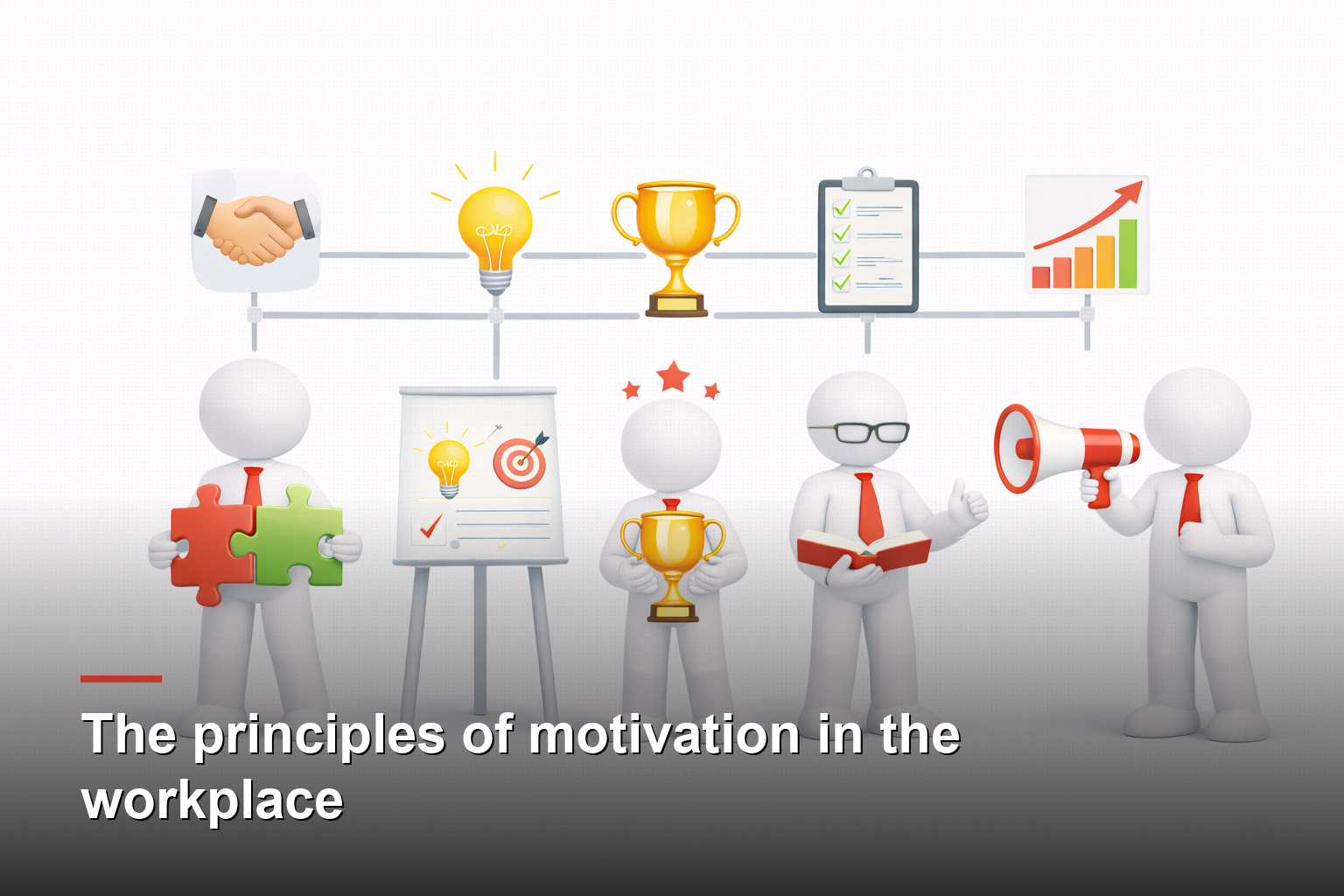
    Ross, L. (1977). The intuitive psychologist and his shortcomings: Distortions in the attribution process. Advances in Experimental Social Psychology.
    Schein, E. H. (2010). Organizational Culture and Leadership. Jossey Bass.
    Ulrich, D. (2012). HR from the Outside In. McGraw-Hill.

    Webography

    Work Institute (2023). Retention Report. https://workinstitute.com
    Society for Human Resource Management (SHRM). Effective Onboarding Practices. https://www.shrm.org
    Harvard Business Review. Why Employees Leave Organizations. https://hbr.org
    McKinsey & Company. The organization blog: performance, leadership and operating models. https://www.mckinsey.com
    MIT Sloan Management Review. High-Performance Work Systems. https://sloanreview.mit.edu

  • In just over 6 months three #managers have changed

    In just over 6 months three #managers have changed

    Entrepreneur  ·  1 min read

    In just over 6 months three changes #manager. It’s not bad luck. It’s a signal.

    When a manager comes in and out in a few weeks, the error doesn’t arise from the profile. It arises from the corporate structure. The manager arrives, finds #roles nuanced, #goals mobile, written delegations without operational power. Try to intervene: you encounter silent walls. He understands a simple thing. The position promised authority, the organization granted exposure and that point comes out. Three managers in six months indicate one #Direction incapable of defining the mandate. They indicate one #selection based on the prestige of #curriculum, not on #responsibility real. They indicate a #onboarding absent. They indicate a#agency ready to demand results, not to support #decisions. The real cost does not concern the next insertion. It’s about the #trust internal.

    When I look at company data, e

    – Every exit reinforces the teams’ cynicism.

    – Each change reduces alignment.

    – Every failure makes it less credible #leadership.

    The useful question is not about blame. It’s about the #system. What structure makes the exit of those who enter inevitable? As long as this response is missing, the #turnover managerial becomes a rule. Managerial stability depends on clarity of #role, #governance consistent, solid relationship with management. It doesn’t depend on individual talent. #Kotter connects the failures of #leadership to organizations lacking strategic alignment. If this pattern repeats, stopping is worth more than hiring again.


  • Integrated system of HR metrics for the governance of human capital in the two-year period 2026-2027

    Integrated system of HR metrics for the governance of human capital in the two-year period 2026-2027

    Work  ·  3 min read

    1. Context and problem

    Many #organizations measure #HR indicators in a fragmented, retrospective or purely administrative way. Some don’t measure anything. The result is a poor ability to:

    • identify the real causes of #turnover,
    • intervene promptly on #onboarding, #leadership and #workloads,
    • anticipate organizational risks (#burnout, #skillgap, #pay misalignment),
    • support strategic #decisions with reliable data.

    The project I propose responds to the need for move from #descriptivemetrics to #decisionalmetrics, linked to concrete actions and economic results.

    2. Objectives of the intervention

    • Building a #Essential and action-oriented HR dashboard, avoiding over-measurement.
    • Strengthen the decision-making capacity of #Management and #HR about people, #roles and systems.
    • Reduce hidden costs (#turnover, wrong #hires, organizational inefficiencies).
    • Enable one predictive reading risks and future skills.
    • Prepare the organization for emerging themes: #salary transparency, #hybridwork.


    3. Methodology

    Approach evidence-based and business-oriented, structured around three principles:

    1. Measuring what drives decisions, not what is just available.
    2. Link each metric to a managerial action explicit.
    3. Differentiate core, tactical and strategic metrics, depending on company priorities.


    4. Architecture of the metrics system

    4.1 Fundamental metrics (governance baseline)

    Consolidated but recalibrated metrics from a managerial perspective:

    • Voluntary #Turnover for #manager Analysis broken down by reporting line, to identify critical issues #leadership and #climate. → Primary indicator of managerial quality.
    • Time-to-fill on critical positions Measures the organization’s ability to replace key roles without loss of operational continuity.
    • Real cost of hiring Inclusion of external fees, internal time, onboarding and curve #productivity. → Basis for evaluations of #ROI of #recruiting.
    • #Retention at 90 days Indicator of onboarding effectiveness and consistency between promise and reality of the role.
    • Internal #mobility rate Relationship between internal development and leaving the organization for professional growth.


    4.2 Evolutionary metrics (2026–2027)

    Metrics oriented towards prevention, sustainability and the future of the organization:

    • Employee Sentiment Score (continuous) Dynamic detection via short pulse surveys, 1:1 post check-in and (where permitted) analysis of communication patterns.
    • Collaboration Equity Index Analysis of opportunities #collaboration, visibility and networking between in-person and remote populations.
    • Burnout Risk Score Composite indicator based on workloads, meeting density, over-connection signals and subjective perception.
    • Predictive analysis of skills gaps Comparison between future skills required (12–18 months) and internal developable pool.
    • Diversity in the leadership pipeline Evaluation of real access to senior roles, mentorships and high visibility projects.
    • Pay Equity Ratio controlled Analysis of remuneration consistency for the same role and performance, with a view to compliance and sustainability.
    • Meeting Effectiveness Score Measurement of the organizational impact of meetings on time, productivity and value generated.
    • Speed ​​of feedback-to-action Average time between collection f#feedback and visible decision/action.
    • Purpose Alignment Score Perceived alignment between work performed, meaning and company values, as a predictor of retention.


    5. Metric selection logic

    The project does not provide for the adoption of all metrics, but a targeted choice:

    • 3 permanent core metrics (e.g. turnover for managers, 90 day retention, sentiment score)
    • 3–5 tactical metrics Consistent with the current critical issues of the organization (e.g. recruiting, leadership, workloads)
    • 2–3 strategic metrics To anticipate risks and future decisions (skill gap, pay equity)


    Key Criterion: no metric without an associated decision.

    6. Operational phases

    1. Initial diagnosis Analysis of existing data, HR systems, managerial maturity.
    2. Selection and definition of metrics Clarity on formulas, data sources and decision thresholds.
    3. HR dashboard design Directional, readable and action-oriented summary.
    4. Management–HR–Manager Alignment Translating metrics into behaviors and responsibilities.
    5. Pilot launch and review Controlled perimeter testing, adjustments and scaling.


    7. Deliverables

    • Custom HR metrics framework
    • Management dashboard (KPI + actions)
    • Decision-making guidelines for managers
    • Periodic metrics review template
    • Organizational intervention recommendations


    8. Customer value

    • Avoidable turnover reduction
    • Better quality of decisions about people and roles
    • Greater managerial accountability
    • Anticipation of organizational risks
    • Alignment between strategy, people and performance


    9. Result indicators (project KPIs)

    • ↓ Voluntary turnover on critical roles
    • ↓ Average time to cover key positions
    • ↑ 90 day retention
    • ↑ Qualified internal mobility
    • ↓ Indirect HR costs and organizational inefficiencies
    • ↑ Speed ​​of response to feedback and weak signals
  • When the role is not aligned in the company

    When the role is not aligned in the company

    Work  ·  1 min read

  • How do you really reward employees?

    How do you really reward employees?

    Work  ·  1 min read

    HOW ARE EMPLOYEES REALLY REWARDED?
    The correct answer is not: “with a hashtagbonuses”.
    The correct answer is: “with a hashtagsystem”.
    Many hashtagSMEs reward episodically:
    hashtagprize at the end of the year
    – increase to retain a person
    hashtagincentive negotiated on a case-by-case basis
    hashtagprize discretionary
    Result? Perception of arbitrariness, hashtagdemotivation silent, turnover of the best. An effective reward system must respect at least these 4 structural criteria:
    1. hashtagSTRATEGICALIGNMENT
    The prize must arise from hashtaggoals related to margin, productivity, quality or growth. If it doesn’t impact the income statement, it’s not a system: it’s a cost.
    2. hashtagMEASURABILITY
    Clear objectives, defined KPIs, transparent formulas. As highlighted in the design of incentive systems in dozens of academic studies, the structure and calculation criteria are crucial for the motivational effect.
    3. hashtagECONOMIC SUSTAINABILITY
    A healthy system finances itself: the hashtagperformance generates value and part of the value is redistributed. This is the coherent and underlying logic with the approaches hashtagGainSharing e hashtagProfit Sharing.
    4. PERCEPTION OF hashtagEQUITY
    According to Vroom’s expectancy theory:
    Motivation = Value × Probability × Connection between effort and outcome.
    If the connection isn’t clear, motivation collapses. Attention:
    The economic reward is only one lever of the Total Reward. Recognition, professional growth, training, autonomy and role clarity have a structural impact on retention.
    I remember that a well-designed reward system can:
    A) Reduce the hashtagturnover by 10–20%
    B) Increase the hashtagproductivity up to 8%
    C) Free up managerial time currently spent on individual negotiations
    Rewarding does not mean “being generous”. It means building a mechanism that guides behaviors and results.
    What is your model today: episodic or systemic? Does your system really reward performance…or are you just handing out money to avoid conflict?
    hashtagPerformanceManagement hashtagReward Systems hashtagHRStrategy hashtagIncentive


  • No onboarding = Turnover within 6 months

    No onboarding = Turnover within 6 months

    Motivation  ·  3 min read

    In September 2025 I analyzed an SME with a turnover of 28%. !!!
    The cause? No onboarding.
    The “standard procedure” was this:

    Day 1: “This is your station.”
    Day 2: “Follow her and learn.”
    Day 3: Chaos.

    A person without effective onboarding is 3 times more likely to leave the company within 180 days. Why? Because he doesn’t know what to do, how to do it, who to do it with, why to do it. Onboarding is not hospitality but anticipated strategic productivity.
    In October 2025 we rebuilt it in 5 phases and to date, after 5 months, turnover has dropped by 55%.

    C5-step structured checklist for onboarding, designed with anti-turnover logic, oriented to reduce resignations in the first 6–12 months, increase time-to-productivity and strengthen the psychological contract.

    The model is designed for SMEs and industrial/multi-sector companies and is directly applicable.

    1. STRATEGIC PRE-ONBOARDING

    Context and problem. Much of the early turnover arises before entry: misaligned expectations, ambiguity about role and context, organizational silence.

    Objective: Reduce entry anxiety, align expectations, strengthen the decision to choose the company.

    Operational checklist

    • Final job description validated by HR and direct manager
    • Clarity on: goals for the first 90 days (non-activity,expected results)
    • Written communication from:
    • role
    • priority
    • success criteria
    • Sending Welcome Pack (organization chart, operational values, business context, code of ethics, more…)
    • Formal appointment of an internal contact person (manager or tutor)
    • First day / first week agenda plan
    • Setup of IT tools, accesses, badgesBefore of the entrance

    Deliverable

    • Document “First 90 days – what it means to succeed here”

    KPIs

    • % resignation within 30 days
    • No-show / pre-entry second thoughts

    2. RECEPTION AND ORIENTATION (day 1 – week 1)

    Context and problem. The first impact determines the perception of professionalism of the organization.

    Objective: Create operational safety, clarity and sense of legitimacy in the role.

    Operational checklist

    • Structured welcome (not improvised)
    • Formal meeting with:
      • HR (rules, contract, expectations)
      • Direct manager (priorities and work style)
    • Clear presentation of:
      • structure
      • decision-making processes
      • “how things really work”
    • Delivery of organizational chart + key relationship map
    • Explicit explanation of whatNot is required in the first 30 days
    • Initial planned support (not random)

    Deliverable

    • “Week 1 Complete” Checklist

    KPIs

    • Perceived engagement week 1
    • Operational errors due to disorientation

    3. GUIDED OPERATIONAL INTRODUCTION (30–60 days)

    Context and problem. The biggest risk is abandonment sense of inadequacy or organizational loneliness.

    Objective: Bring the person to being operate with confidence, not just “active”.

    Operational checklist

    • Structured support plan (who → what → for how long)
    • Measurable and realistic 30- and 60-day goals
    • Weekly manager–employee checks (15–30 min)
    • Timely feedback on:
      • what works
      • what to correct
      • what is not a priority
    • Clarity on quality standards and decision-making autonomy
    • Progressive reduction of tiling (not clean cut)

    Deliverable

    • “Progress Review 30–60 days” sheet

    KPIs

    • Time to productivity
    • Repeated errors
    • Level of autonomy achieved

    4. CONSOLIDATION AND ALIGNMENT (60–90 days)

    Context and problem. Many leave when they realize that they see no future or do not understand the evaluation criteria.

    Objective: Make the medium-term pact explicit: performance, growth, mutual expectations.

    Operational checklist

    • Structured placement assessment interview
    • Alignment on:
      • annual objectives
      • evaluation criteria
      • performance indicators
    • Open discussion on:
      • real difficulties
      • skills gap
      • necessary supports
    • Clarity on possible development (not promises,conditions)
    • Formal confirmation of role and responsibilities

    Deliverable

    • 90 day interview report
    • Individual development plan (if relevant)

    KPIs

    • Turnover within 6 months
    • Perceived quality of direct leadership

    5. INTEGRATION AND ACTIVE RETENTION (3–12 months)

    Context and problem. Turnover is not prevented with “motivation”, but with continuity systems.

    Objective: Transform insertion into stable professional membership.

    Operational checklist

    • ☐ Integration into performance management processes
    • ☐ Structured feedback at least quarterly
    • ☐ Workload and priority monitoring
    • ☐ Involvement in decisions consistent with the role
    • ☐ Active listening for weak disengagement signals
    • ☐ Annual role-person consistency check

    Deliverable

    • Annual evaluation
    • Update of objectives and responsibilities

    KPIs

    • Turnover < 12 months
    • Retention high performer
    • Engagement scores

    Value for the company

    • Reduction of early turnover (–20% / –40%)
    • Lower replacement and training costs
    • Increased productivity in the first 6 months
    • Better reputation as an employer


  • Training is not a benefit. It’s a productive investment

    Training is not a benefit. It’s a productive investment

    Training  ·  7 min read

    Training is not a “soft” cost, but a productive infrastructure that reduces errors, turnover and dependence on top management, increasing scalability and performance.
    The real risk is not training people and losing them, but not training them and blocking the company’s competitiveness.

    In the Italian managerial debate, training is still often placed in the area of ​​discretionary costs. It is perceived as a “soft” element, useful for improving the climate, engagement or corporate image, but rarely as a structural lever of economic competitiveness. This approach is conceptually incorrect and strategically dangerous.

    The history of production systems demonstrates the opposite. In the volume  The Machine That Changed the World they comparatively analyze global industrial models and show how the best performing systems systematically invest in people’s skills. Not episodically, not as a function of public incentives, not as an emergency response to a problem, but as a permanent architecture of the operating model.

    Lean production does not arise from control. It arises from the widespread ability to improve the process. And the ability to improve the process is a skill, not a casual intuition.

    If training were only an individual advantage, Toyota would not have built a global competitive system based on continuous improvement. “World class” companies would not have integrated learning into their core processes. They would not have made distributed problem solving, intelligent standardization, incremental improvement structural.

    Training, therefore, is not a reward. It is a productive infrastructure.


    1. Training as a productivity lever, not as an additional cost

    To understand the strategic role of training it is necessary to shift the focus from the individual to the systemic dimension.

    When a company invests in skills it is not simply improving the CV of its people. The system’s capacity to:

    • prevent errors,

    • reduce variability,

    • speed up decisions,

    • innovate processes,

    • standardize good practices,

    • reduce critical dependencies.

    In other words, it is reducing organizational entropy.

    Productivity is not just a function of machines, technology and financial capital. It is above all a function of coordination capacity and widespread competence. Without skills, technology does not generate advantage. Without skills, processes are not respected. Without skills, procedures become bureaucracy and not a lever of efficiency.

    The Operational Excellence paradigm, which integrates TQM, Lean Production, Just in Time and continuous improvement systems, is based on a clear assumption: people must be able to understand, analyze and improve their work. There is no operational excellence without operational expertise.


    2. The three invisible costs of lack of training

    Companies that consider training a cost to be reduced underestimate three structural costs that do not immediately appear in the income statement, but which directly impact margins.

    2.1 The cost of error

    Procedures not understood generate rework, waste, delays and non-compliance. Every error produces a multiplicative effect: wasted time, organizational stress, interfunctional conflicts, loss of credibility towards the customer.

    The error is not just a technical defect. It is a sign of systemic deficit.

    In lean systems, errors are treated as learning opportunities. In unstructured systems, the error is handled as individual fault. The difference is substantial. In the first case, organizational knowledge is generated. In the second, fear and repetition of the error are generated.

    Training does not eliminate the error. But it reduces the probability that it will turn into a structural loss.

    2.2 The cost of turnover

    The perception of professional growth is one of the main retention factors. Research on organizational well-being highlights how development, autonomy and a sense of progress are crucial for staying in the company.

    Turnover is not just a replacement problem. It is a loss of competence, a loss of organizational memory, a waste of managerial time. Each exit involves:

    • search and selection cost,

    • onboarding cost,

    • loss of productivity in the transition period,

    • overload on colleagues,

    • potential loss of customers.

    The real cost of a resignation frequently exceeds two or three gross annuities of the employee, considering indirect impacts. Yet many companies still do not correlate training and retention.

    2.3 The cost of dependence on the owner

    An organization without widespread skills remains centralized. Decisions are concentrated in a few hands. The founder or management becomes the bottleneck.

    This generates three consequences:

    • decision-making slowdown,

    • cognitive overload of the vertex,

    • inability to climb.

    A company that depends on the owner is not scalable. It cannot grow beyond the individual capacity of the founder. Training distributes expertise and therefore distributes controlled decision-making power.

    In systemic terms, training is a tool of responsible decentralization.


    3. The false dilemma: “What if I train them and then they leave?”

    The most frequent question in SMEs is: “What if I invest in training and then the employee leaves?”

    The correct question is: “What if I don’t form it and it stays?”

    An out-of-date contributor:

    • slows down innovation,

    • generates inefficiency,

    • requires constant supervision,

    • increases management’s decision-making burden,

    • blocks organizational transformation.

    The persistence of obsolete skills is more dangerous than the loss of trained talent. Because obsolescence spreads throughout the system.

    Training is not a guarantee of permanence. But the absence of training is almost a guarantee of stagnation.


    4. Training and reward systems: economic coherence

    Training cannot be isolated from the system performance management. If skill development is not linked to objectives, is not measured and is not integrated into incentive systems, it effectively becomes a cost.

    Regarding reward systems, it is highlighted that variable remuneration must be consistent with measurable objectives and with the real contribution to the creation of value. Skills development is an integral part of that architecture.

    An incentive system that rewards short-term results but does not invest in skills creates a dangerous distortion: immediate output is maximized while sacrificing future sustainability.

    Training must be:

    • linked to KPIs,

    • integrated into evaluation processes,

    • included in a development plan consistent with the strategy.

    Only in this way does it become a competitive lever.


    5. Training as a strategic infrastructure

    From a strategic management perspective, training is a highly leveraged intangible resource.

    Professional services firms, for example, base their competitive advantage on knowledge, reputation and human capital. The strategic management of skills is therefore central to the very survival of the organization.

    In a context characterized by:

    • digitalization,

    • technological acceleration,

    • continuous regulatory change,

    • growing competitive pressure,

    competence becomes a critical asset. Not investing in training is equivalent to not investing in plant maintenance.

    The difference is that the deterioration of skills is less visible than the deterioration of a machine. But the effects are just as serious.


    6. Measuring the ROI of training

    The main limitation in training management is the failure to measure the economic return.

    Measuring ROI doesn’t mean reducing training to an Excel sheet. It means connecting investment and result.

    Examples of metrics:

    • error reduction,

    • cycle time reduction,

    • reduction of complaints,

    • increase in productivity,

    • reduction in turnover,

    • climate improvement,

    • increase in talent retention.

    The ROI of training is not immediate. But it is measurable in the medium term through consistent indicators.

    A company that only measures costs and does not measure benefits produces a partial analysis.


    7. The responsibility of the Management

    Many entrepreneurs say that training does not generate value. In most cases the problem is not training, but its design.

    If training:

    • it is not linked to KPIs,

    • it is not designed in systemic logic,

    • is not consistent with the strategy,

    • is not followed by operational application,

    it will not generate value.

    The responsibility lies with governance.

    Effective training requires:

    1. Needs analysis.

    2. Connection with strategic objectives.

    3. Measuring results.

    4. Integration into reward systems.

    5. Monitoring over time.

    Without architecture, training becomes an event. With architecture, it becomes leverage.


    8. Training and organizational culture

    Company culture is not a slogan. It is the set of behaviors accepted and replicated.

    A learning-oriented culture:

    • tolerate error as an opportunity,

    • promotes structured feedback,

    • encourages continuous improvement,

    • enhances technical and managerial competence.

    A control-oriented culture:

    • punishes the error,

    • centralizes decisions,

    • discourages autonomy,

    • blocks innovation.

    Training is a tool for cultural transformation. Not because it automatically changes behaviors, but because it creates awareness and a common language.

    Without a common language there is no effective coordination.


    9. The link between training and scalability

    Business scalability requires replicable systems.

    Replicable systems require:

    • clear standards,

    • widespread skills,

    • competent middle leadership,

    • formalized processes.

    Training is the mechanism through which the organizational model is transferred.

    Without training, growth breeds chaos. With training, growth breeds structure.


    10. Strategic conclusion

    Training is not a benefit. It’s not welfare. It’s not a motivational gesture.

    It’s a productive investment.

    Companies that treat it as an additional cost reduce their competitive ability over time. Companies that integrate it into performance systems and operational processes build organizational resilience.

    The final question is not whether training costs money.

    The question is: how much does it cost not to do it?

    Does your company measure the economic return on training or still consider it a “soft” cost?

    #HRStrategy #Training #PerformanceManagement #LeanOrganization #Leadership #Turnover #PMI

  • From Smart work granted… to the governed organizational system

    From Smart work granted… to the governed organizational system

    Entrepreneur  ·  4 min read

    February 2026. Several large organizations (Stellantis, Amazon, Meta, JPMorgan, Goldman Sachs, Tesla, PwC) are bringing thousands of people back in attendance. The theme is not ideological (“control vs trust”), but economic-organizational:

    • there is alignment between perception of productivity (87% of employees perceive themselves as more productive remotely – Microsoft) and managerial measurement (only 12% of managers agree).

    • Estimated productive hours gap (5.14 remote hours vs 7.79 in-person hours – Bureau of Labor Statistics 2024).

    • Lack of clear KPIs and accountability in hybrid working models.

    • Strategic risk of substitutability of skills if the job is completely remote (offshore growth +32% since 2019 in the USA).

    Real problem:
    In most companies, smart working has not been designed as an organizational system. It was granted. In the absence of a system of objectives, measurement and leadership for results, return becomes a stabilization choice.

    Strategic question:
    Do we want to govern work or suffer it?

    2. Objectives of the intervention

    1. Restore coherence between strategy, organization and work model.

    2. Recover measurable productivity (+6% / +12% in 12 months).

    3. Reduce organizational ambiguity and decision-making dead times.

    4. Increase managerial accountability.

    5. Mitigate turnover risk and loss of engagement.

    6. Reduce risk of substitutability of skills.

    3. Methodology

    Evidence-based and systemic approach, integrating:

    • HR value cycle logic (people → relationships → performance → valorization)

    • Performance evaluation systems and link to objectives and behaviors

    • Structured implementation of performance management (assignment of objectives → continuous feedback → evaluation of results)

    • Redefinition of roles, responsibilities and job descriptions

    4. Operational phases

    PHASE 1 – Organizational diagnosis (4–6 weeks)

    Objective: understand if the problem is remote working or the absence of a system.

    Activity:

    • Current KPI analysis (productivity, absenteeism, time-to-decision, turnover).

    • Mapping roles and responsibilities.

    • Quality assessment of individual objectives.

    • Managerial saturation analysis.

    • Targeted survey on perception vs performance measurement.

    Outputs:

    • Real vs perceived productivity gap report.

    • Organizational criticality map.

    • Identification of remote roles vs roles with relational value.

    PHASE 2 – Redefinition of the organizational model (6–8 weeks)

    Objective: decide the model, don’t suffer it.

    Possible models:

    1. Total return (5/5) for highly interdependent roles.

    2. Structured hybrid model (3+2) with mandatory days for teams.

    3. Selective remote only for roles measurable by output.

    Key interventions:

    • Redefinition of job description and responsibilities

    • Introduction of individual and team KPIs

    • MBO review and reward systems

    • Definition of “presence with value” (not passive presence).

    Outputs:

    • Structured return policy.

    • Formalized KPI system.

    • Presence matrix vs generated value.

    PHASE 3 – Performance and accountability system (8–12 weeks)

    Without a system, the return is only physical.

    Implementation:

    • Assignment of quarterly measurable objectives

    • Monthly structured feedback.

    • Evaluation sheets with scope of results + behaviors

    • Connection between performance and incentives

    Outputs:

    • Corporate performance framework.

    • Directional dashboard.

    • Quarterly productivity report.

    PHASE 4 – Strategic communication of the return

    Return fails if it is perceived as “control”.

    Key message:

    We don’t go back to check. We come back to generate measurable value.

    Actions:

    • Town hall with data.

    • Guidelines for managers on how to communicate specifically and constructively

    • Concise, clear and action-oriented message (functional writing)

    • Managerial toolkit for feedback management.

    PHASE 5 – Monitoring and stabilization (6 months)
    • Productivity KPI monitoring.

    • Engagement and turnover analysis.

    • Progressive organizational corrections.

    • Workload review.

    5. Deliverables / Outputs
    • Organizational diagnosis report.

    • New formalized organizational model.

    • Smart working/return policy.

    • Complete performance management system.

    • Directional KPI dashboard.

    • Managerial communication toolkit.

    • Incentive plan linked to results.

    6. Value for the customer (CEO / Management)

    Economic benefits
    • Recovery 1.5–2.5 average productive hours/day.

    • Reduction in turnover 10–20%.

    • Reduction in decision-making inefficiency costs.

    • Greater defensibility of key skills.

    Organizational benefits
    • Clarity of roles.

    • Goal-oriented leadership.

    • Reduction of internal conflicts.

    • Meritocratic culture.

    7. Result indicators (KPIs)

    • Productivity by FTE.

    • Average decision time.

    • Voluntary turnover.

    • Absenteeism.

    • % objectives achieved.

    • Engagement scores.

    • Average cost per replacement.

    8. Intervention options

    Level 1 – Strategic Diagnosis (PMI)

    Duration: 6 weeks
    Output: report + model recommendation.

    Level 2 – Organizational Redesign

    Duration: 4 months
    Includes KPI, job description, policy.

    Level 3 – Complete HR Governance Transformation

    Duration: 9–12 months
    Includes:

    • Integrated performance system

    • MBO review

    • Variable incentive

    • Leadership development

    • Structured HR governance

    9. Final positioning

    Agile working has not failed.
    It fails when it is not designed.

    Return is not a disciplinary measure.
    It is an organizational governance choice.

    The real alternative is not “yes or no office”.
    It is this:

    Have we built a system capable of generating measurable value regardless of the workplace?


  • You never get feedback after the interview. The problem isn’t where you think.

    You never get feedback after the interview. The problem isn’t where you think.

    Job interview  ·  5 min read

    . And .

    Wait. Days, sometimes weeks.

    Then you convince yourself that maybe you said something wrong, that maybe the CV wasn’t enough, that maybe you weren’t convincing enough in your last answer.

    Wrong.

    The silence you receive after an interview rarely depends on what you did or said in that room.

    It depends on how the process works on the other side.

    And understanding it changes everything.


    The selection interview is not a symmetrical conversation

    Many candidates arrive at the interview convinced that it is an equal meeting: you introduce yourself, they evaluate, and at the end of the process they communicate the outcome.

    Reasonable. But that’s not how it works in most organizations.

    The selection interview is a tool used by the company, structured to collect predictive information on the candidate’s future behavior (Zerilli, 1994; Gandolfi, 2003).

    Communication of the outcome is not an integral part of the process. It is, in most cases, a discretionary courtesy.

    And courtesies, under operational pressure, are the first to fail.


    A typical selection process involves several phases: curricular screening, first cognitive interview, possible assessment center, technical interview with the line manager, comparative evaluation between candidates, final decision (Boldizzoni, 2002; Human Resources Management, Bruni et al.).

    Each phase introduces variables.

    The line manager has changed priorities. The position was frozen. An internal application has arrived. The budget was rediscussed. The process took longer for organizational reasons that have nothing to do with you.

    Meanwhile, on the other side, you wait. And you interpret silence as judgment.

    It’s not.

    Silence is almost always a sign of disorganization or operational overload, not an evaluation of your person.


    The real problem: you’re reading the wrong signal

    When a candidate doesn’t receive feedback, the automatic response is to look for the error within themselves.

    This is a precise cognitive distortion: the confirmation bias applied to self-evaluation. We seek confirmation of our inadequacy in a fact – silence – which does not contain it.

    The result is doubly harmful:

    ▪ You enter the next interview with a load of insecurity built on non-existent evidence.

    ▪ You change your presentation in response to feedback that never came.

    But there is a second, more subtle level of the problem.

    to. It reveals a lot about the quality of that organization’s selection process.

    And this is useful information. If you can read it.


    What does the silence of an organization really say?

    A selection process is, among other things, the first real interface a candidate has with the company culture.

    How a company manages communications with candidates — including those who are not selected — is an indicator of the quality of its internal processes and the respect with which it treats people.

    The HR literature on candidate experience is consistent on this point: the negative perception of the selection process translates into measurable reputational damage on the employer brand, especially in labor markets where candidates are also potential customers or representatives (Aguinis, 2013).

    Put bluntly: a company that doesn’t find the time to communicate the outcome of an interview probably has the same standards in managing the people within it.

    It’s not a condemnation. It is a fact to be evaluated.


    . .

    You can’t control whether a company will give you feedback.

    You can control whether you turn silence into useful information or a self-defeating narrative.

    Here are three concrete cognitive and operational shifts:

    Ask in advance. Before the interview ends, ask what the expected time frame for the process is and how the outcome will be communicated. It’s not pressure. It’s managing expectations. Anyone who can’t answer probably doesn’t have a structured process.

    Define an internal deadline. If you have no news by the communicated date, send a sober and precise follow-up message. Only one follow-up. Then take silence as the answer and move on.

    Don’t change your presentation based on silence. If you don’t know what went wrong, you can’t fix it. And often there is nothing to correct.


    A note for those involved in selection

    If you are reading this article from an HR or management role, the message is simple.

    The cost of silence is not zero.

    Every candidate who leaves a process without feedback is a contact who has had a negative experience with your organization. In markets where reputation and word of mouth matter, this has real economic value, even if it is never measured.

    Structuring minimal, standardized communication for unsuccessful candidates is not a kindness. It is a governance choice for HR processes.


    In summary

    Silence after the interview is not a judgment.

    It is, in almost all cases, the result of unstructured processes, operational overload and organizational priorities that don’t concern you.

    Stopping reading it as a message about your suitability is the first step to managing a job search methodically rather than anxiously.

    And the method makes the difference in the job market.


    If this is the first time you’ve read one of my posts: I’m Alberto and I work with candidates in transition on career repositioning, personal branding and active search strategies.

    I use LinkedIn to meet people who face this path with head and determination.

    If you are also in this phase, write to me.


    Bibliographic references

    Zerilli A. (1994), Recruitment, selection and onboarding of staff, Franco Angeli, Milan.

    Gandolfi G. (2003), The selection process: tools and techniques, Franco Angeli, Milan.

    Boldizzoni D. (ed., 2002), Human resources management, Il Sole 24 Ore, Milan.

    Aguinis H. (2013), Performance Management, 3rd ed., Pearson, Upper Saddle River.

    Bruni A., Gherardi S. (2007), Study working practices, Il Mulino, Bologna.

  • Opinion-based ratings = stagnant performance.

    Opinion-based ratings = stagnant performance.

    Work  ·  3 min read

    In companies, performance evaluation risks remaining an organizational ritual. A meeting at the end of the year in which the manager assigns a grade and the employee nods most of the time. In this exchange there is no development. The central point is clear. The vote represents an opinion. Opinion does not guide performance. Opinion does not build responsibility. The opinion does not support coherent decision-making.

    1. The judgments do not follow common criteria and change between managers.
    2. Reward systems lose alignment with results.
    3. Conflicts remain hidden for months and undermine trust.

    This happens because the system does not measure. Interpret. Evaluation remains an exercise in perception, not a tool for governing the organization.

    An effective performance system does not evaluate people. Measure expected outcomes, standards and behaviors. Measurement creates order. Reduces arbitrariness. It makes leadership clearer. When we stop relying on “I think” and introduce understandable, shared and verifiable KPIs, the way we work changes. People understand direction. Managers communicate consistently. The company acquires a concrete basis for rewarding, developing and correcting.

    In practice, measurement increases motivation because it sets precise expectations. It improves productivity because it allows you to remove waste. It strengthens accountability because everyone sees the relationship between actions and results. The evaluation becomes a daily tool, not an annual appointment. The performance conversation turns into a journey. The error stops being a problem. It becomes data to be analysed.

    Theoretical evidence confirms this logic. The measurement models described in the scientific literature show that performance increases when the system integrates clear objectives, detectable standards and direct connection with variable remuneration. Evaluation works when it guides the relationship between person and role and when it allows the organization to decide quickly and in an aligned manner.

    The most solid companies have a common characteristic: they do not delegate performance to perception and transform it into a structured process that generates value.

    The collaborator is the protagonist of his own professional evolution.

    A choice that requires method, clarity and discipline. A choice that allows us to build a fairer and more productive working environment. Performance does not arise from judgment. It comes from measurement.

    If you want a first free preliminary x-ray of your performance system, write to me from the “contacts” page

    Reference bibliography

    Avallone F., Bonaretti M. (2003). Organizational well-being. To improve the quality of work in public administrations. Rubbettino Editore.

    De Carlo N., Falco A., et al. (2017). The methodology for the assessment and management of work-related stress risk. Inail – Department of Occupational Medicine.

    Kaiser S., Ringlstetter M. (2011). Strategic management of professional services companies. Theory and practice. Springer.

    Liker J.K., Meier D. (2007). Toyota Talent. Developing Your People the Toyota Way. McGraw-Hill.

    OD&M Consulting (s.d.). Reward systems. Design guide. OD&M.

    Womack J.P., Jones D.T., Roos D. (1990). The Machine That Changed the World. MIT – Rawson Associates.

    Yamashina H. (2005). World Class Manufacturing. FCA Case Study and operational implementations.

    AA.VV. (2008). Strategy, Human Resources and Value. University manual of Human Resources Management.
    Chapters 11 and 12: Manage performance e Evaluate human resources.

    Formez PA (1999). Project Cycle Management. Training manual. Presidency of the Council of Ministers.

    AA.VV. (2020). The new organizational manual. Methods for job descriptions, responsibilities and corporate governance systems.

  • WHAT IS THE BUDGET TO BUILD AN HR FUNCTION? Less than you think!

    WHAT IS THE BUDGET TO BUILD AN HR FUNCTION? Less than you think!

    Engagement  ·  2 min read

    Almost every CEO I meet for the first time tells me the same thing: “I need to structure HR, but I don’t have budget for an entire department.”

    It’s the wrong framing. You don’t need a department. You need a minimum functional system.

    I have built and reorganized HR functions in dozens of Italian companies over the last 27 years. The minimum that works is always the same combination.

    3 tools. 

    2 processes. 

    1 dedicated person.  

    🟥 The 3 tools without which there is no HR function: A standard job description system; for each role there must be a document that describes responsibilities, expected KPIs and required skills. Without this, you select in a vacuum and evaluate by feel. A written onboarding protocol; the first 30-90 days of a new resource must be planned, not improvised. 20% of voluntary resignations occur in this window. An HR dashboard with 4 minimum KPIs; turnover by department, time-to-hire, absenteeism, cost per hire. If you don’t measure, you don’t manage.

    🟥 The 2 processes that keep everything else going: Structured selection; not the free conversation, but a process with defined phases, explicit evaluation criteria and traceability of decisions. It costs the same time and reduces hiring errors significantly. Performance evaluation; at least two/three structured moments a year in which manager and collaborator discuss objectives, feedback and development. An informal conversation in the corridor is not enough.

    🟥 The dedicated person: Does not have to be a full-time senior figure, at least at the beginning and must have one fundamental thing: protected time to do HR. Not half an hour between one emergency and another. Not when it advances. HR done like this does not exist; only emergencies disguised as personnel management exist. This is the minimum. It doesn’t solve everything but it creates the conditions for people to be managed methodically and not by sensation.

    And this alone, in an average company, is worth between 10 and 20% less turnover in the space of 12-18 months.

    Write me privately if you want to understand where to start in your specific situation.

  • How to write an effective CV in 2025: the complete guide

    How to write an effective CV in 2025: the complete guide

    Curriculum  ·  3 min read

    75% of CVs are discarded by an algorithm before a recruiter reads it. Not by a person: by a software called ATS (Applicant Tracking System). If your resume isn’t built to pass this filter, it doesn’t matter how good you are: you’ll never get called.

    In this guide we see how to write a effective CV in 2025, starting from the right structure up to optimization for automatic screening systems.

    Why your CV isn’t getting responses

    There are four most common causes. Before: The CV is not optimized for ATS systems and is automatically deleted before a human sees it. Second: the structure lists tasks instead of results, and a recruiter who reads “responsible for managing the team” doesn’t understand what you actually did. Third: there is a lack of clear professional positioning — who you are, for what type of role, with what distinctive value. Fourth: the format is not compatible with screening systems (tables, text boxes, colors, non-standard fonts).

    How to optimize a CV for ATS systems

    ATS optimization requires attention to four elements.

    Ad keyword. Analyze the job advert and identify key words specific to the role. Use them in your CV, preferably in the same forms used in the advert. An ATS system that searches for “project management” may not recognize “project management”.

    Simple format. Avoid tables, text boxes, headers and footers with critical information (name, contacts), images embedded in the text. ATS systems read text linearly and often do not correctly interpret complex structures.

    Standard section titles. Use recognizable headings: “Work Experience”, “Education”, “Skills”. Creative titles like “My Journey” or “What I Can Do” are ignored by automated systems.

    File in correct format. Save the CV in .docx or .pdf text (not scanned). A PDF created from a scanned image is not readable by the ATS.

    The optimal structure of an effective CV

    An effective CV for the Italian and international market has four fundamental sections, in this order.

    Headline and professional summary. Three or four lines at the top of the first page that say who you are, for what type of role and with what specific value. Not “economics graduate with experience in the commercial sector”, but “B2B Account Manager with 7 years of experience in the software sector: +35% average turnover per customer.”

    Work experience with quantified results. For each experience: company, role, period, and – above all – 3-4 measurable achievements. Not “Managed the sales team” but “Lead a team of 8 sales managers to 28% revenue growth in 18 months.”

    Technical skills and soft skills. Clean list of tools, languages, methodologies, certifications. Soft skills must be demonstrated in achievements, not declared in a list.

    Training and certifications. Qualification, university, year. Any certifications relevant to the target role.

    The recruiter has 6 seconds: how to use them

    Eye-tracking studies show that a recruiter spends on average 6-7 seconds on the first reading of a CV. In that time he must understand: who you are, for what role, with what relevant experience.

    This means that your name, job title and the two or three most relevant achievements must be immediately visible at the top of the first page. Everything else is detail to be read at a later time – if the first reading is convincing.

    A well-written two-page CV always beats a poorly written one-page CV. The goal isn’t brevity: it’s clarity and relevance.

    How I help you build a CV that works

    I work with professionals and managers who apply for senior positions, who change sectors, or who get no response after months of applying. The problem is almost never the person: it’s how they are presented.

    Let’s analyze your current CV together, identify specific critical issues and build a profile that positions you differently from other candidates. With the ATS systems that find it, with the human recruiter that reads it all the way through.

    If you want to understand how to improve your CV, start here.

  • How to prepare for a job interview: the practical guide with the STAR method

    How to prepare for a job interview: the practical guide with the STAR method

    Job interview  ·  4 min read

    There preparation for the interview it is the factor that most often separates candidates invited from those who receive an offer. It’s not a question of talent or experience: it’s a question of method.

    In this guide we see how to prepare for a job interview in a structured way: from research on the company to difficult questions, from managing anxiety to the STAR method.

    Before the interview: research that makes the difference

    A prepared candidate arrives at the interview already knowing these things about the company: the business model (how it earns money and for whom), the main products or services, recent news (acquisitions, new markets, results), the values ​​declared on the site and on LinkedIn, and the profile of the recruiter or manager with whom they will speak.

    This research serves two things. First: Personalize your answers so they’re relevant to that specific company, not generic. Second: ask intelligent questions at the end of the interview — something that most candidates overlook but actually makes a great impression.

    The STAR method for answering behavioral questions

    Behavioral questions follow the pattern “Tell me about a time when…” or “How did you handle a situation when…”. They are the most common in structured interviews and the most difficult to answer without a method.

    The STAR method solves this problem with a four-part structure.

    S — Situation: the specific context you were in. Not generic (“in my years in the company”) but precise (“in the second quarter of 2023, during the migration to the new CRM”).

    T — Tasks: the task or goal you had to achieve. What you were asked to do, or what problem you needed to solve.

    A — Action: what did YOU actually do. Not the team, not the company: you. This is the most important part and the one that candidates often make too vague.

    R — Result: the measurable impact of your action. A number is always better than a generality: “reduced onboarding times by 40%” is more convincing than “improved the onboarding process”.

    Difficult questions: how to answer without improvising

    Some questions stump almost all candidates. The most frequent.

    “What are your weaknesses?” The answer that works describes a real area for improvement (not a fake weakness), explains how you are working on it, and if possible cites a result already achieved. “I struggled to delegate during the rapid growth phases of the team. I worked on this by structuring weekly check-ins: I increased delegation by 40% while maintaining quality.”

    “Why do you want to leave your current job?” Always speak positively (what you are looking for, not what you are running away from), without criticizing the current employer. The recruiter will use this answer to evaluate your professional maturity and your ability to communicate diplomatically.

    “Where do you see yourself in five years?” The recruiter doesn’t want to know your exact plans: he wants to understand if you have ambitions consistent with the role and if you have a clear professional direction. You don’t need a precise answer: you need consistency with the position you are applying for.

    How to manage interview anxiety

    Interview anxiety is reduced with structured preparation: the more prepared you are on possible questions, the less the unpredictable scares you. Useful techniques.

    Real simulation is the most effective. It’s not enough to imagine the answers: you have to say them out loud, preferably with someone who acts as your interlocutor and gives you feedback. The first time you say an answer out loud is almost always worse than the second — and the real conversation has to be at least the third or fourth time you say it.

    Cognitive reframing helps: the interview is not an exam in which you risk failing, it is a dialogue between two parties who are evaluating each other. You too are evaluating the company. This change in perspective reduces the feeling of asymmetric judgment that generates anxiety.

    Focus on results, not on impression. Focusing on “what did I do that was concrete and measurable” instead of “what impression am I making” shifts your attention from anxiety to the facts — and the facts are on your side.

    The interview begins before you enter

    Logistics management is part of the preparation: arrival time (never late, ideally 5-10 minutes before), clothing consistent with the company culture (which you can understand from the employees’ LinkedIn profiles), material to bring (printed CV, portfolio if relevant, notebook for notes).

    If you need support in preparing specifically for a role or company, let’s work together.

  • How to motivate employees: the 5 real causes of demotivation in the company

    How to motivate employees: the 5 real causes of demotivation in the company

    Entrepreneur  ·  3 min read

    According to Gallup’s latest State of the Global Workplace, only 23% of the world’s workers are actively engaged in their work. In Italy the percentage drops to 5%. It’s not a problem of salaries: companies that pay well but don’t build the right organizational conditions have the same disengagement rates as those that pay less.

    In this article we see the 5 real causes of EDemployee motivation and what you can concretely do as an entrepreneur or manager to reverse the trend.

    1. Ambiguous or ever-changing goals

    When an employee doesn’t know exactly what’s expected of them — or when priorities change every week — they can’t know whether they’re doing well or poorly. This uncertainty is exhausting. People don’t get demotivated because the work is difficult: they get demotivated because they don’t know where to direct their energies.

    The solution isn’t a one-time document of annual goals: it’s a system of frequent check-ins where goals are confirmed, adjusted, or clarified. Clarity is not an organizational luxury — it is the basic condition for working well.

    2. Lack of structured feedback

    65% of employees would like to receive more feedback (source: Officevibe). Most receive an annual evaluation, often generic, often late in relation to the behaviors it evaluates. Feedback given six months after an episode does not serve to improve: it only serves to judge.

    Effective feedback is specific (on observable behaviors, not personal characteristics), timely (close to the event), growth-oriented (suggests how to improve), and two-sided (leaves room for the employee’s response). Building this type of culture requires method, not goodwill.

    3. Poor management

    “People don’t leave companies: they leave managers.” It’s one of the most cited data points in HR — and also one of the most ignored in practice. 70% of voluntary turnover is attributable to the relationship with the direct supervisor (Gallup).

    A manager who does not delegate (or who delegates without support), who does not recognize contributions, who manages the team with micro-control or, on the contrary, with total absence, is not an individual problem: it is an organizational problem that the company must resolve with structured managerial development paths.

    4. Lack of visible growth prospects

    The most capable employees are also the most ambitious. If they don’t see a clear growth path within the company, they look outside for it. Not necessarily a promotion: it could be the expansion of responsibilities, access to more challenging projects, a recognized specialization.

    Demotivation from stagnation is particularly costly because it affects the best people — those who have the most alternatives. HR data shows that the risk of abandonment is three times higher for those who do not perceive growth opportunities.

    5. Toxic culture and climate of mistrust

    An environment in which information is kept confidential, in which credit is given arbitrarily, in which mistakes are punished rather than learned — is an environment in which people stop risking, proposing, doing 20% ​​more. Engagement drops before anyone thinks of leaving: people stay physically but leave mentally.

    Changing an organizational culture requires time and consistency in leadership behaviors, not internal communications and values ​​pinned up on noticeboards.

    How to build the conditions for motivation

    Motivation cannot be bought with benefits: it is built with organizational design. Clear objectives, structured feedback, capable managers, visible growth paths and a climate of trust are the foundations. They are also exactly what most Italian SMEs haven’t fixed.

    If your team seems listless, the first step is not team building: it is understanding which of these 5 mechanisms is broken and intervening methodically. Find out how I work on this.

  • High corporate turnover: real causes, hidden costs and how to stop it

    High corporate turnover: real causes, hidden costs and how to stop it

    Engagement  ·  3 min read

    Every year, in a company with high turnover, people leave who take away skills, relationships with customers, organizational memory and production capacity. The visible costs – recruiting, replacement training, management time – are only the part of the iceberg that has emerged.

    According to the Society for Human Resource Management, the real cost of each replacement varies between 50% and 200% of the departing employee’s annual salary. For managerial or highly specialized positions, it can exceed 300%.

    The real cost of turnover that no one accounts for

    The direct cost is easy to see: the hours of recruiting, the selection costs, the months of onboarding in which the new hire is not yet producing at 100%. But the indirect cost is often five times larger.

    When an expert person leaves, the relationships with the clients he managed, the informal processes he knew and which are not written anywhere, the trust of the team he had built, and the know-how accumulated over years of work leave with him. All this is lost and must be rebuilt — if it ever will be completely.

    There is also a contagion effect. An exit, especially if voluntary and if the person was respected, increases private conversations in the team about opportunities elsewhere. Turnover is never an isolated event: it is a sign of an organizational problem which, if not resolved, produces other exits.

    The most frequent causes of voluntary turnover

    HR data converges on the same causes, in order of frequency.

    Poor management. 70% of voluntary turnover is related to the relationship with the direct superior. A manager who does not recognize contributions, does not delegate, does not support growth or manages arbitrarily is the main cause of losing top talent.

    Lack of growth prospects. Employees with the most external market — the ones you want to keep — are also the most sensitive to the absence of an internal development path. If they don’t see where they can go by staying, they go elsewhere.

    Pay imbalance. Not necessarily low salaries overall: salaries perceived as unfair compared to the contribution given, or compared to the market. Pay transparency has become an important retention variable, especially for younger generations.

    Toxic organizational culture. Micromanagement, favoritism, lack of communication, climate of mistrust. These elements push people to leave even when they are paid well and the work is not difficult.

    Burnout and overload. Especially in SMEs with lean structures, the risk is that the best people find themselves doing the work of two or three figures. The result is exhaustion, loss of motivation and quitting.

    How to reduce turnover: the levers that work

    There is no single solution. Turnover is the symptom of one or more organizational problems: identifying them precisely is the first step.

    Structured exit interviews. Every voluntary exit is a learning opportunity. An exit interview conducted by an external person (not the direct manager) and with standardized questions produces much more useful data than informal conversations.

    Stay interview. Don’t wait for people to come out and ask them why. Stay interviews — structured conversations with the employees you want to have — identify exit risks before they become resignations.

    Defined growth paths. For each key role, a clear map of the skills required to advance, with objective criteria and indicative timelines. Not a vague promise: a system.

    Management development. If the manager is the main cause of turnover, investing in managers’ skills has the highest return on investment ever in HR.

    Where do we start

    The first step is always the diagnosis: understanding which of these causes is the most relevant in your specific case. A HR Assessment company maps the critical areas and defines intervention priorities with data, not with impressions.

    If turnover in your company has become a structural problem, starts with an analysis session.

  • Performance management in SMEs: building a system that really works

    Performance management in SMEs: building a system that really works

    Entrepreneur  ·  4 min read

    In many Italian SMEs the “performance evaluation system” is still a form filled out once a year, in which the manager marks some generic items such as “initiative”, “punctuality” and “team spirit” from 1 to 5. Then he signs it, the employee signs it, and the two see each other again in twelve months.

    This is not performance management. It is an organizational ritual that does not produce any measurable improvement and which often deteriorates the relationship between manager and collaborator.

    True performance management is a continuous process: defined objectives, KPIs by role, frequent and structured feedback, recognition of results and real-time course correction. Let’s see how to build it.

    Why annual evaluation doesn’t work

    The annual evaluation has three structural problems.

    The first is the recency bias: the manager tends to evaluate based on the last few months, not the entire year. Someone who did a great job from January to September and had a difficult fourth quarter is rated negatively. Those who have had a mediocre year and have recovered in the last month get a higher rating than they deserve.

    The second is the temporal disconnection: feedback on behavior from eight months ago does not help improve. You can’t intervene on something that has already happened so long ago. Feedback is only useful if it is close to the event it evaluates.

    The third is the lack of intermediate objectives: if the objectives are defined in January and reviewed only in December, there is no course correction mechanism during the year. In a rapidly changing business environment, this means evaluating people on targets that may have become irrelevant months earlier.

    KPIs by role: how to define them so they are useful

    An effective KPI (Key Performance Indicator) has three characteristics. It is specific and measurable (not “improve customer satisfaction” but “bring the Net Promoter Score from 34 to 45 by June”). It is controllable by the person being evaluated (it does not depend on external factors on which he has no influence). It is relevant to the company’s results (linked to a real business objective).

    For each key role, 3-5 KPIs are defined, no more. More KPIs mean less focus: if everything is important, nothing is a priority.

    A salesperson has KPIs such as conversion rate, turnover per customer, number of new customers acquired. An HR manager has KPIs such as time-to-hire, 12-month retention rate, percentage of performance objectives achieved in the team. A production manager has KPIs such as OEE (Overall Equipment Effectiveness), defect rate, compliance with delivery times.

    The continuous feedback loop: how to implement it

    A continuous performance management system is built on three recurring elements.

    Monthly or bi-weekly check-ins. Short meetings (20-30 minutes) between manager and employee in which the status of objectives is verified, obstacles are identified and priorities are adjusted if necessary. Not an evaluation: a business conversation.

    Specific and timely feedback. Whenever relevant behavior occurs – positive or in need of improvement – the manager intervenes within 24-48 hours with structured feedback. The SBI model (Situation-Behavior-Impact: the specific situation, the behavior observed, the impact it had) is among the most effective.

    Quarterly review of objectives. Every quarter we check whether the KPIs are still relevant, whether priorities have changed and whether the objectives need to be adapted. This avoids evaluating people on outdated targets.

    How the SME can implement a real system without bureaucracy

    The good news is that an effective performance management system does not require expensive software or complex processes. It requires consistency and method.

    The starting point is the clarity of roles: each person must know exactly what is expected of them, with what criteria they will be evaluated and what resources they have available. Without this basis, any evaluation system produces frustration, not performance.

    The second step is to train managers: the skills of giving feedback, setting objectives and managing difficult conversations are not acquired naturally. They develop with guided practice and support.

    The third is consistency over time: a performance management system only works if it is applied regularly, not just at times when there is a problem.

    If you want to understand how to build this system in your company, start here.