
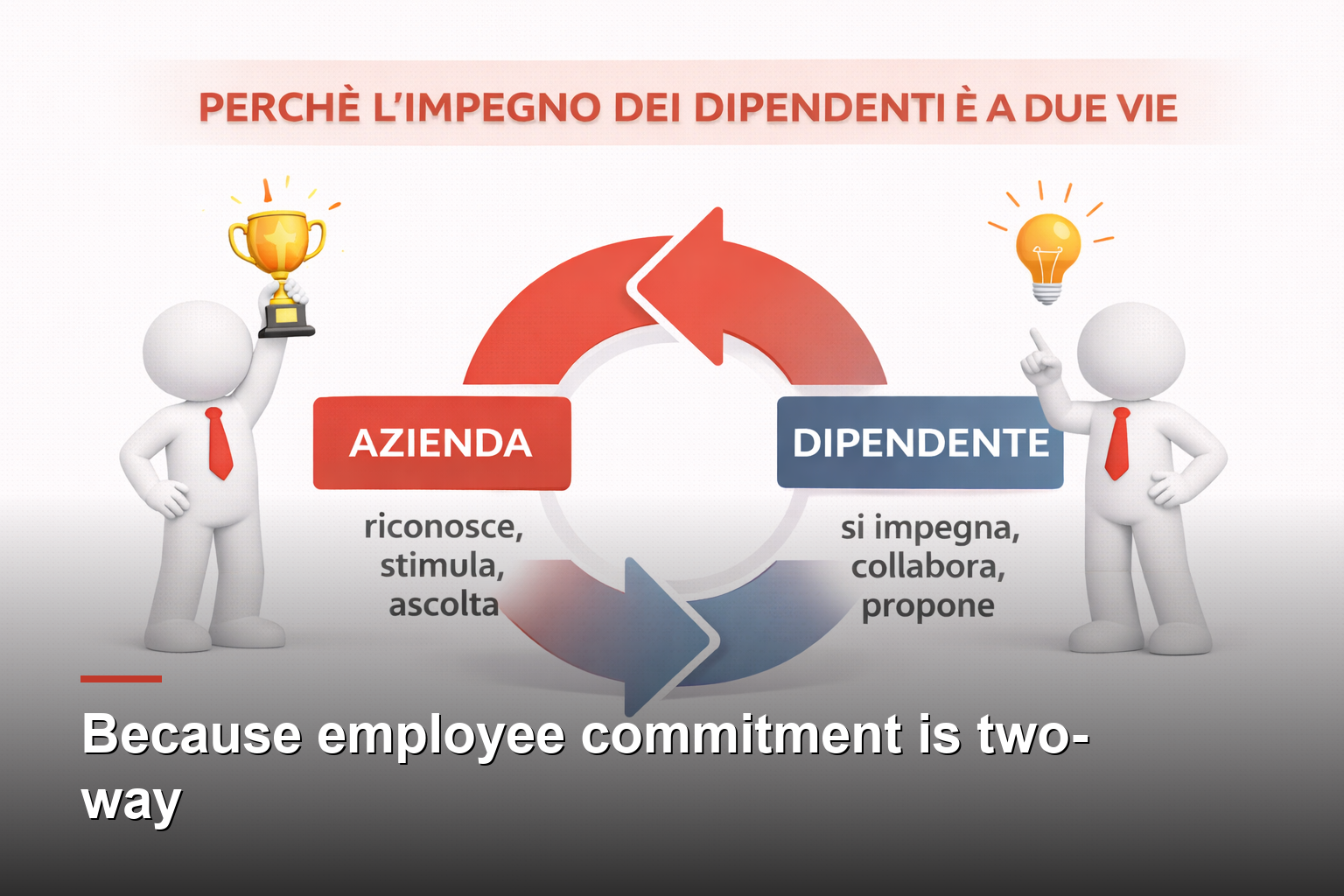
A significant part of employee engagement is giving them a “voice.” They explain it well MacLeod and Clarke report in Striving for Success: “Employee engagement strategies enable people to be the best they can at work, recognizing that this can only happen if they feel respected, involved, heard, well led and valued by those they work for and with.”
However, sometimes employers, entrepreneurs, managers overlook that employee engagement is a two-way process. If we expect employee commitment to be the result of bringing results to the company surely the same level of commitment should be expected from their managers? Once the results al questionnaire on employee involvement in the company have been received and analysed, it is up to managers to act on these results and give meaningful feedback to employees. There are simple practical measures to take in their routine, day by day, to see and achieve a change in the culture of a typical workplace. The advice given by LinkedIn CEO Jeff Weiner, who tweeted the following:
With a 97% approval rating from its employees in Glassdoor his advice certainly seems worth heeding.
Inspire
People are inspired by actions rather than titles or hierarchical positions. This means that a manager must show employees that he deserves their respect with his own actions instead of believing that just because he is the manager he must inspire on his word. Managers should be willing to help employees and emphasize that they are available to develop skills and potential rather than using the “stick” to get what is required. Furthermore, showing enthusiasm towards the company’s goals and objectives is very important.
Empower
Providing employees with the right tools to do their jobs is an important part of getting the right motivation from employees. Enhancing their skills as well as providing the right tools is equally important. Many use the systems of performance management which, in addition to monitoring performance and being useful for assigning any rewards, are very useful for understanding how the employee is engaging and what he needs to do even better to express his full potential.
Listen
It’s always worth listening to your employees and takes much less time than you might think. Listening can be done both during the normal course of daily work and also in classic one-to-one conversations on a regular basis. The employee engagement survey is a key part of listening, only on a larger scale.
Appreciate
If an employee has done a good job, the manager should, indeed MUST, be ready and willing to point it out by appreciating what he or she has done. Not only that, you MUST tell them Why they did well. People always do their jobs better if they feel valued, appreciated, in order to provide positive reinforcement for the achievement of subsequent objectives. This aspect should be an integral part of every company’s culture.
Here’s an example of what a LinkedIn employee said:
“ LinkedIn is truly an incredible place to work. Feeling important, being treated with respect, and having independence and job autonomy… I feel lucky to work here every day.