
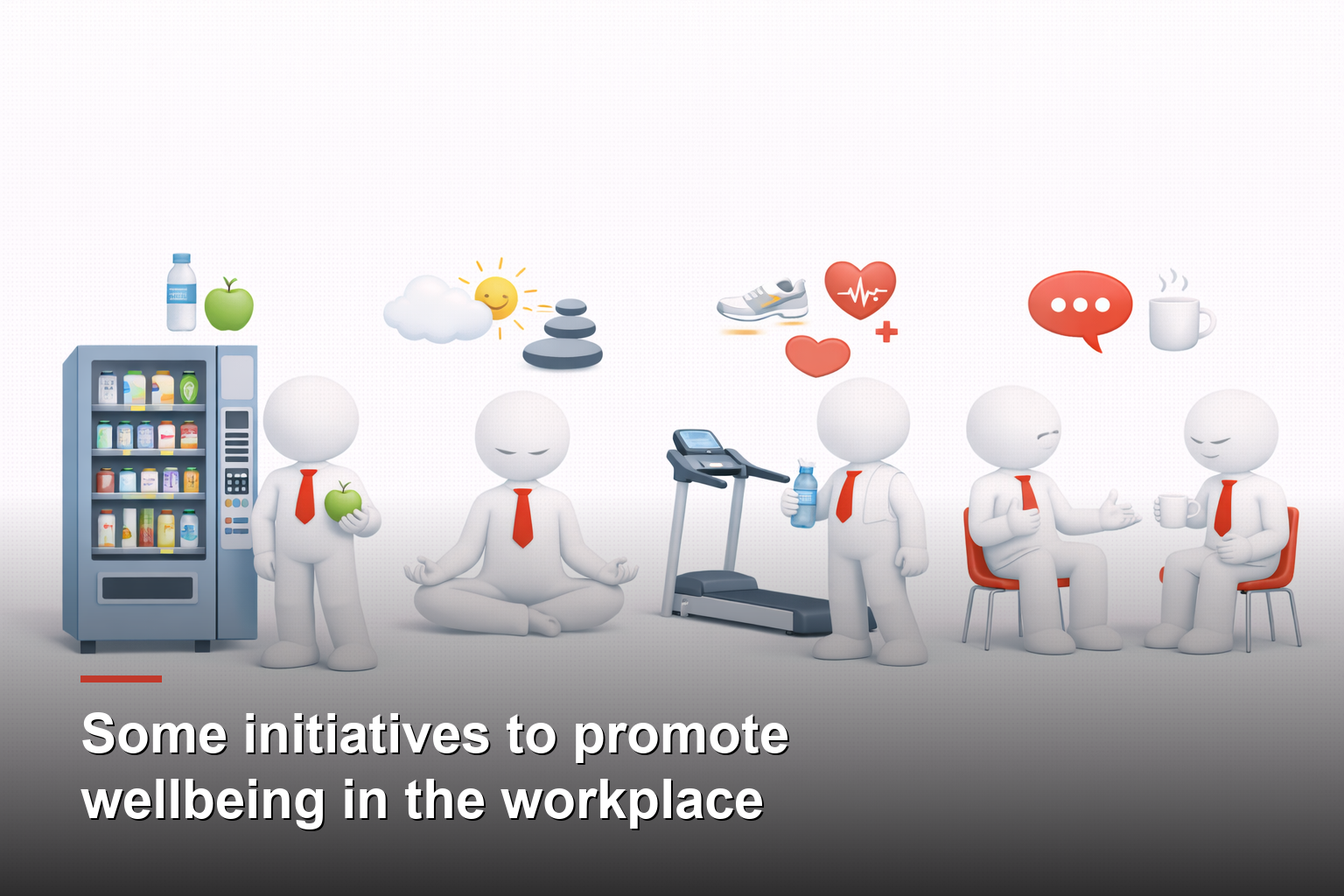
Initiatives aimed at employee wellbeing, engagement and, consequently, motivation are often viewed as benefit schemes expressed in monetary terms. However, they are not always effective.
Both levels of wellbeing and engagement are recognised as key indicators of organisational performance and even a company’s market value. However, wellbeing initiatives can, at times, only have a positive impact if employees actively participate; to avoid confusion, they must be designed, communicated and implemented with great care and consistency, involving the employees themselves directly.
When discussing employee engagement and initiatives for wellbeing and engagement, we must think of employees as if they were customers. This means they require the same attention one would devote to attracting new customers and retaining existing ones; therefore, it can be useful to consider how we typically set up an advertising campaign.
A.I.D.A., one of the longest-standing models used in both marketing and advertising (perhaps a little outdated but still effective today), is also excellent for planning a wellbeing event. A.I.D.A. stands for Attention, Interest, Desire and Action, which perfectly illustrates the path every member of staff should follow to achieve the most significant results.
Attention: ensure staff are engaged
“Make sure you effectively communicate the timing and content of the event to all departments. Timing is also crucial; there’s no need to plan one event at a time…”, says Neil Pagnam, one of Personal Group’s Business Development Directors.
When it comes to capturing their attention, communication is key. However, it is important to use a multi-channel strategy based on employees’ preferences to ensure that all staff are engaged with messages they can understand.
Whilst older members of the workforce may prefer to speak on the phone, via email or, better still, face-to-face, Millennials are more likely to respond to digital channels and push notifications, such as instant messaging and app alerts.
Interest – offering benefits that spark their interest
It is not just your communication methods that need to be tailored to the workforce for wellbeing and engagement initiatives; it is also important to offer benefits that are relevant to their needs and expectations.
It might be useful to have a chat with HR to find out what sort of things would appeal to your employees.
Desire: creating a desire for the benefits you intend to provide
Consider how you present the benefits.
Given that these benefits have been chosen by a diverse group of staff, and not just by managers, we need to think carefully about which ones to offer and how to deliver them.
Action: actively engage employees
“The journey doesn’t stop once employees have signed up to the benefits scheme. Supporting their use requires just as much attention as the launch itself.”
It is important to make the benefits as easy as possible for staff to use.
This can be achieved by ensuring that your benefits and HR services are easily accessible. The simplest and most effective way to do this is to harness the power of the smartphone!
It is likely that most of your employees have access to their own smartphone or have been provided with a company phone to enable them to carry out their daily tasks. Implementing an Employee Benefits and Engagement App will reach staff anytime, anywhere.
Remember, you can’t simply launch a benefits platform.