
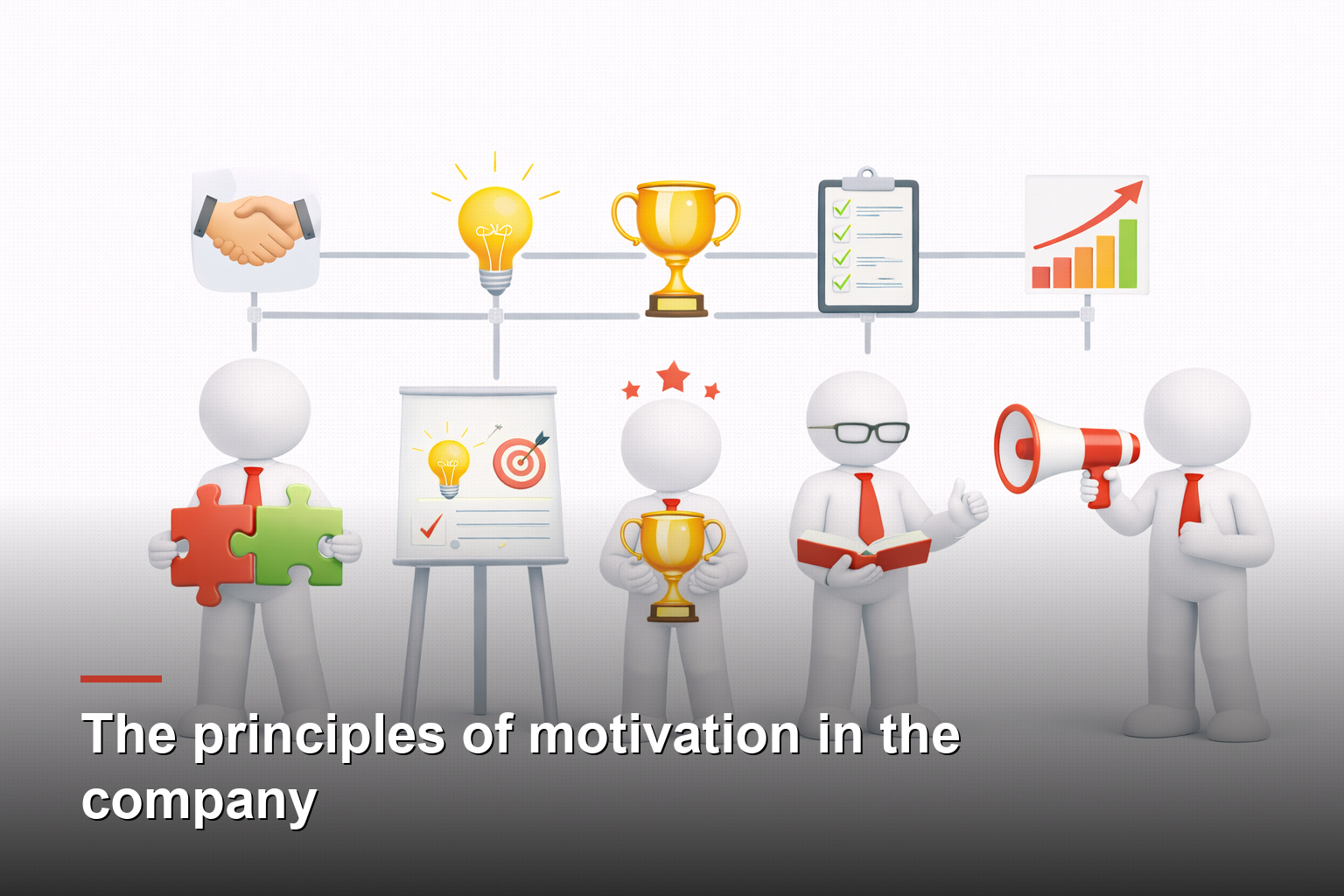
The principles of motivation in the company
Being unmotivated in the workplace costs American industry hundreds of billions of dollars a year in lost productivity and lost sales. QThis, however, is changing rapidly. In recent years, hundreds of companies have entrusted top management with strategies to motivate their employees and find ways to increase employee loyalty and productivity. More and more of these executives have the word “motivation” in their priorities.
 The Occupy Wall Street movement and the famous television series Undercover Boss they reflect underlying needs that drive the emergence of the need to deal more and more precisely with motivation within companies. The world is asking for a more human form of work that truly values people. Many Americans, and others, enjoy watching episodes of Undercover Boss which demonstrate how top management understands the importance and personal needs of employees. Apple suffered a major loss on Wall Street when it became clear that its new iPad would be built by hundreds of thousands of Chinese working in conditions that almost no Americans would tolerate. It then subsequently changed its business practices.
For decades it was easy to ignore the principles of motivation in the company because motivation itself was difficult to define and almost impossible to measure. But for a growing number of organizations, the question now is not whether motivation matters, but rather how to achieve it and perform best.
For organizations dedicated to employee engagement and the principles of motivation in the company have begun to increase their motivation, such as McDonalds, New York Stock Exchange, Whole Foods, Container Store, Southwest Airlines, Stew Leonard and many others, it is more of a field test than an exact science because the books provide little guidance on how to proceed.
However, it is easy to confuse leadership with involvement and motivation. Leadership, of course, is essential for engagement and motivation. It simply describes the personal skills required of people who manage other people at any level to achieve results. The process of motivating people well in the company requires more than just good leadership and an overall goal. It requires everyone in the company to be informed and clear about what the company mission is and how they can contribute to it and also benefit from it. It also requires providing people with the skills or abilities to contribute and pushing them to get involved, share and collaborate. It’s about translating leadership into results through an appropriate framework of tools and tactics. It requires not just making promises, but also maintain them every step of the way.